
Wood Shear Stress Formulas and Calculator

Wood shear stress is a critical factor in the design and construction of wooden structures, as it can lead to failure if not properly calculated. The shear stress formulas for wood are based on the material's properties and the load applied to it. Engineers and builders use these formulas to determine the maximum allowable shear stress in wood and ensure the structural integrity of their designs. This article provides an overview of the wood shear stress formulas and offers a calculator to simplify the calculation process. The calculator is a valuable tool for professionals working with wood.
Wood Shear Stress Formulas and Calculator: Understanding the Mechanics of Wood
The calculation of wood shear stress is crucial in various engineering and construction applications. Wood, as a material, has unique properties that influence its behavior under different types of loads, including shear. Shear stress in wood occurs when a force is applied parallel to the surface of the wood, causing it to deform by sliding along a plane parallel to the direction of the force. This can happen in various scenarios, such as in wooden beams, joints, and frames. Understanding and calculating shear stress is essential to ensure the structural integrity and safety of wood constructions.
Introduction to Shear Stress in Wood
Shear stress in wood is a critical factor in the design and analysis of wooden structures. Unlike metals, wood is an anisotropic material, meaning its mechanical properties vary depending on the direction of the wood grain. The longitudinal, tangential, and radial directions in wood exhibit different strengths and stiffnesses, affecting how wood responds to shear forces. Engineers and architects must consider these properties when designing structures to withstand various loads, including those that induce shear stress.
Calculating Shear Stress in Wood
To calculate shear stress in wood, one must consider the force applied and the cross-sectional area of the wood perpendicular to the force direction. The formula for shear stress (τ) is τ = F / A, where F is the shear force and A is the area over which the force is distributed. However, for wood, the calculation may involve more complex formulas that account for the material's orthotropic properties and the specific conditions of the structure, such as moisture content and the presence of defects.
Wood Shear Stress Formulas
There are several formulas used to calculate shear stress in wood, depending on the specific application and the type of wood. For example, the formula for the shear modulus (G) of wood can be used in conjunction with the shear strain to find the shear stress. The shear modulus of wood varies with the grain direction and can be estimated using different empirical formulas that consider factors like the density of the wood and its moisture content.
| Factor | Influence on Shear Stress |
|---|---|
| Wood Grain Direction | Affects the shear modulus and, consequently, the shear stress resistance of the wood. |
| Moisture Content | Increases in moisture content can decrease the shear strength of wood. |
| Density of Wood | Generally, higher density woods have higher shear strengths. |
| Defects in Wood | Knots, cracks, and other defects can significantly reduce the shear strength of wood. |
| Load Duration | The duration of the load affects the shear strength of wood, with shorter durations allowing for higher stresses. |
Wood Shear Stress Calculator
A wood shear stress calculator is a tool used by engineers and designers to quickly calculate the shear stress in wooden elements. These calculators can be software programs or online tools that require input of specific parameters such as the type of wood, its dimensions, the applied force, and the desired safety factors. They can help in designing wooden structures that are safe and efficient, taking into account the complex properties of wood and the various factors that influence its shear strength.
Applications of Wood Shear Stress Calculations
The calculation of shear stress in wood has numerous practical applications in construction and engineering. It is essential for designing wooden beams and frames that must support heavy loads without failing. Additionally, understanding shear stress is crucial in the development of wooden joints and connections, where the shear resistance of the wood and the fasteners used (like nails or bolts) must be carefully considered to ensure the joint can withstand the anticipated loads. This knowledge also applies to the evaluation and retrofitting of existing wooden structures to extend their lifespan and ensure their safety under various loading conditions.
What is the formula for shear stress of wood?

The formula for shear stress of wood is given by the equation: τ = F / A, where τ is the shear stress, F is the shear force, and A is the cross-sectional area of the wood. This formula is used to calculate the shear stress that a wooden beam or member can withstand without failing.
Understanding Shear Stress in Wood
Shear stress in wood occurs when a force is applied parallel to the grain of the wood, causing it to deform or fail. The shear strength of wood is an important property that determines its resistance to shear stress. To calculate the shear stress, the following steps can be taken:
- Determine the shear force (F) that is applied to the wood
- Calculate the cross-sectional area (A) of the wood
- Use the formula τ = F / A to calculate the shear stress (τ)
Factors Affecting Shear Stress in Wood
Several factors can affect the shear stress of wood, including the moisture content, density, and grain orientation. Moisture content can significantly impact the shear strength of wood, as high moisture levels can reduce the shear strength. The following factors can influence the shear stress:
- Moisture content: High moisture levels can reduce the shear strength of wood
- Density: The density of the wood can affect its shear strength, with denser woods generally having higher shear strength
- Grain orientation: The grain orientation of the wood can also impact its shear strength, with wood having a perpendicular grain orientation generally having higher shear strength
Types of Shear Stress in Wood
There are several types of shear stress that can occur in wood, including parallel-to-grain shear and perpendicular-to-grain shear. Parallel-to-grain shear occurs when the shear force is applied parallel to the grain of the wood, while perpendicular-to-grain shear occurs when the shear force is applied perpendicular to the grain. The following types of shear stress can occur:
- Parallel-to-grain shear: Occurs when the shear force is applied parallel to the grain of the wood
- Perpendicular-to-grain shear: Occurs when the shear force is applied perpendicular to the grain of the wood
- Torsional shear: Occurs when a twisting force is applied to the wood, causing it to deform or fail
Designing Wood Members for Shear Stress
When designing wood members, it is essential to consider the shear stress that the member will be subject to. The design should take into account the shear force, cross-sectional area, and shear strength of the wood. The following steps can be taken to design wood members for shear stress:
- Determine the shear force that the member will be subject to
- Calculate the cross-sectional area of the member
- Use the formula τ = F / A to calculate the shear stress (τ)
Testing for Shear Stress in Wood
Testing for shear stress in wood is crucial to determine its shear strength and ensure that it can withstand the shear forces it will be subject to. The testing can be done using various methods, including the block shear test and the tension shear test. The following methods can be used to test for shear stress:
- Block shear test: A test that involves applying a shear force to a wooden block to determine its shear strength
- Tension shear test: A test that involves applying a tensile force to a wooden member to determine its shear strength
- Bending test: A test that involves applying a bending force to a wooden member to determine its flexural strength and shear strength
What is the formula for calculating shear stress?
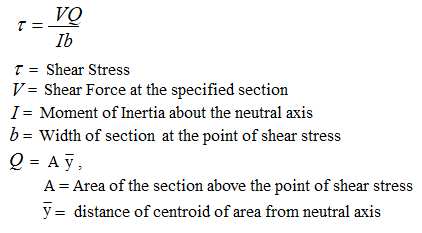
The formula for calculating shear stress is given by the equation τ = F/A, where τ is the shear stress, F is the force applied, and A is the cross-sectional area of the material. This formula is widely used in mechanics of materials to determine the shear stress that a material can withstand without failing.
Understanding Shear Stress and Its Importance
Shear stress is a critical parameter in engineering design, as it helps to determine the structural integrity of a material or a component. The shear stress formula is used to calculate the deformation and failure of materials under tensile or compressive loads. To understand the concept of shear stress, it is essential to know the following key points:
- The shear stress is a measure of the force per unit area that causes a material to deform.
- The shear modulus of a material represents its resistance to shear stress.
- The yield strength of a material is the maximum shear stress it can withstand without permanent deformation.
Factors Affecting Shear Stress Calculations
The shear stress calculations can be affected by several factors, including the material properties, geometry, and loading conditions. The shear stress formula assumes a uniform distribution of forces and stresses across the material. However, in real-world applications, the shear stress distribution can be non-uniform, leading to complex calculations. To account for these factors, the following considerations are essential:
- The material properties, such as density and elastic modulus, can influence the shear stress calculations.
- The geometry of the material, including its length and cross-sectional area, can affect the shear stress distribution.
- The loading conditions, such as tensile or compressive loads, can impact the shear stress calculations.
Applications of Shear Stress Formula
The shear stress formula has numerous practical applications in various fields, including civil engineering, mechanical engineering, and materials science. The formula is used to design and analyze structures, such as beams, columns, and shafts, under static and dynamic loads. To appreciate the significance of the shear stress formula, consider the following applications:
- Bridge design: The shear stress formula is used to calculate the shear forces and moments acting on bridge structures.
- Mechanical component design: The formula is used to design mechanical components, such as gears and shafts, to withstand shear stresses.
- Materials selection: The shear stress formula helps to select materials with suitable mechanical properties for specific applications.
Limitations and Assumptions of Shear Stress Formula
The shear stress formula is based on several assumptions and has limitations. The formula assumes a linear elastic behavior of the material, which may not be valid for non-linear or plastic materials. Additionally, the formula does not account for friction and damping effects, which can be significant in certain applications. To understand the limitations of the shear stress formula, consider the following points:
- The formula assumes a linear elastic behavior of the material, which may not be valid for non-linear or plastic materials.
- The formula does not account for friction and damping effects, which can be significant in certain applications.
- The formula is limited to static loads and does not account for dynamic loads or impact loads.
Experimental Methods for Measuring Shear Stress
Experimental methods are used to measure the shear stress in materials and structures. These methods include tensiometers, strain gauges, and photoelasticity. The experimental methods provide valuable data for validating the shear stress formula and understanding the behavior of materials under shear loads. To appreciate the significance of experimental methods, consider the following points:
- Tensiometers are used to measure the forces and moments acting on a material or structure.
- Strain gauges are used to measure the deformation and strain of a material under shear loads.
- Photoelasticity is used to visualize the stress distribution in a material under shear loads.
What is the allowable shear stress in wood?
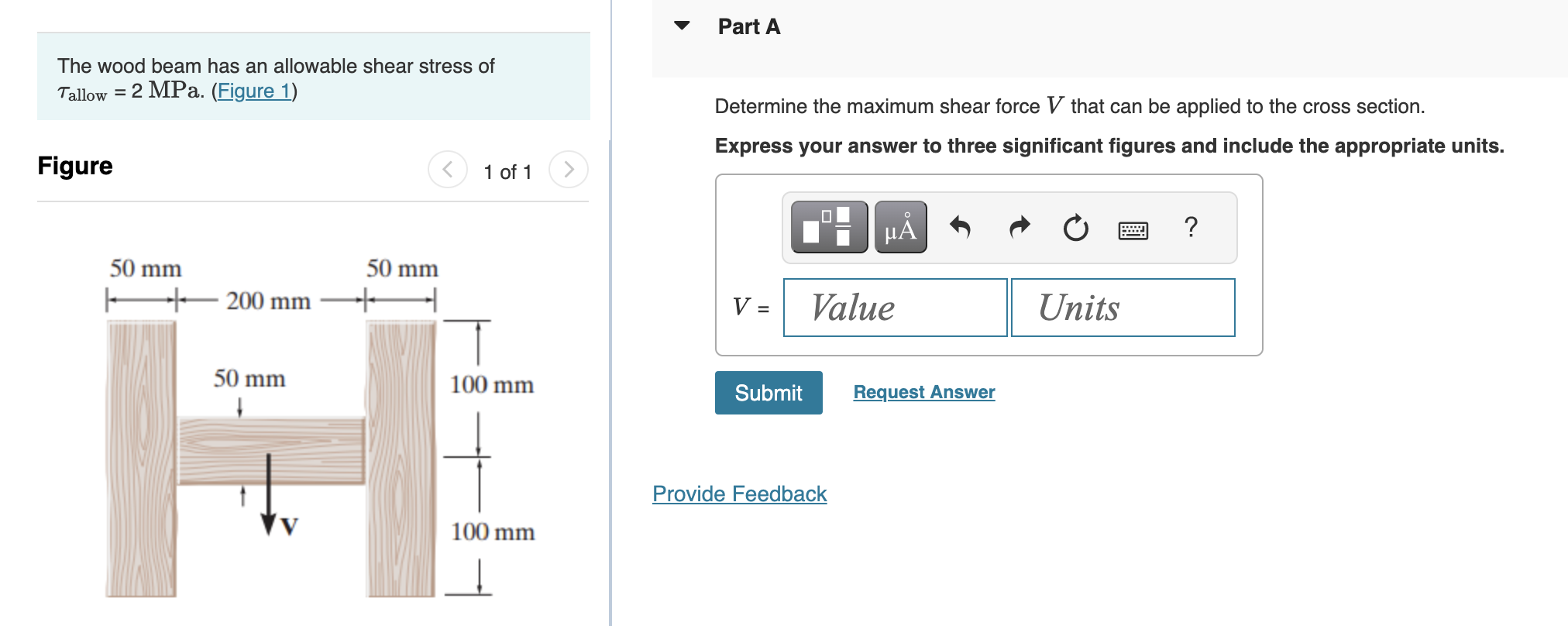
The allowable shear stress in wood is a critical factor in determining the structural integrity of wooden structures. The allowable shear stress is the maximum stress that a wooden member can withstand without failing due to shear forces. This value is typically determined through laboratory testing and is influenced by factors such as the type of wood, moisture content, and density. The allowable shear stress in wood is typically lower than the ultimate shear strength, as it is intended to provide a margin of safety against failure.
Types of Wood and Allowable Shear Stress
The type of wood used in a structure can significantly impact the allowable shear stress. Different species of wood have varying strength properties, including allowable shear stress. For example, softwoods such as pine and spruce tend to have lower allowable shear stresses than hardwoods like oak and maple. The following list highlights the allowable shear stresses for different types of wood:
- Softwoods: 100-200 psi (pounds per square inch)
- Hardwoods: 200-400 psi
- Engineered wood products: 300-600 psi
The grade and quality of the wood can also affect the allowable shear stress, with higher-grade wood typically having higher allowable shear stresses.
Moisture Content and Allowable Shear Stress
The moisture content of wood can significantly impact its allowable shear stress. As the moisture content increases, the allowable shear stress decreases. This is because moisture can weaken the wood, making it more prone to shear failure. The following list highlights the impact of moisture content on allowable shear stress:
- Dry wood (less than 19% moisture content): higher allowable shear stress
- Moist wood (19-28% moisture content): lower allowable shear stress
- Wet wood (greater than 28% moisture content): significantly lower allowable shear stress
It is essential to consider the moisture content of the wood when designing a structure to ensure that the allowable shear stress is not exceeded.
Density and Allowable Shear Stress
The density of wood can also impact its allowable shear stress. Generally, denser wood has a higher allowable shear stress than less dense wood. The following list highlights the relationship between density and allowable shear stress:
- Low-density wood (less than 0.4 g/cm³): lower allowable shear stress
- Medium-density wood (0.4-0.6 g/cm³): moderate allowable shear stress
- High-density wood (greater than 0.6 g/cm³): higher allowable shear stress
The specific gravity of the wood can also provide insight into its density and allowable shear stress.
Load Duration and Allowable Shear Stress
The load duration can impact the allowable shear stress in wood. For short-term loads, the allowable shear stress may be higher than for long-term loads. The following list highlights the impact of load duration on allowable shear stress:
- Short-term loads (less than 1 hour): higher allowable shear stress
- Medium-term loads (1-10 hours): moderate allowable shear stress
- Long-term loads (greater than 10 hours): lower allowable shear stress
It is essential to consider the load duration when designing a structure to ensure that the allowable shear stress is not exceeded.
Design Considerations and Allowable Shear Stress
When designing a wooden structure, it is essential to consider the design requirements and safety factors to ensure that the allowable shear stress is not exceeded. The following list highlights some design considerations:
- Load calculation: accurately calculate the loads that will be applied to the structure
- Material selection: select a wood species with an allowable shear stress that meets or exceeds the design requirements
- Connection design: design connections that can transfer loads without exceeding the allowable shear stress
By considering these design factors and using reliable design values, engineers can ensure that wooden structures are safe and durable. Computer modeling and finite element analysis can also be used to simulate the behavior of wooden structures under various loads and conditions.
How to calculate J in shear stress?

To calculate J in shear stress, you need to understand the concept of J-integral, which is a measure of the energy release rate during a crack growth in a material. The J-integral is defined as the energy release rate per unit area of crack growth, and it is a critical parameter in fracture mechanics. The J-integral can be calculated using various methods, including the contour integral method, virtual crack extension method, and energy release rate method.
Definition of J-Integral
The J-integral is a measure of the energy release rate during a crack growth in a material, and it is defined as the energy release rate per unit area of crack growth. To calculate the J-integral, you need to know the stress and strain fields around the crack tip, as well as the crack growth rate. The J-integral can be calculated using the following formula: J = ∫(Wdy - T∂u/∂x dx), where W is the strain energy density, T is the stress vector, and u is the displacement vector.
- The J-integral is a measure of the energy release rate during a crack growth in a material.
- The J-integral is defined as the energy release rate per unit area of crack growth.
- The J-integral can be calculated using various methods, including the contour integral method, virtual crack extension method, and energy release rate method.
Calculation Methods
There are several methods to calculate the J-integral, including the contour integral method, virtual crack extension method, and energy release rate method. The contour integral method involves calculating the J-integral by integrating the stress and strain fields around the crack tip along a closed contour. The virtual crack extension method involves calculating the J-integral by applying a virtual crack extension to the material and calculating the resulting energy release rate. The energy release rate method involves calculating the J-integral by calculating the energy release rate during a crack growth.
- The contour integral method involves calculating the J-integral by integrating the stress and strain fields around the crack tip along a closed contour.
- The virtual crack extension method involves calculating the J-integral by applying a virtual crack extension to the material and calculating the resulting energy release rate.
- The energy release rate method involves calculating the J-integral by calculating the energy release rate during a crack growth.
Importance of J-Integral
The J-integral is an important parameter in fracture mechanics, as it provides a measure of the energy release rate during a crack growth in a material. The J-integral can be used to predict the fracture toughness of a material, which is a critical parameter in designing structural components. The J-integral can also be used to analyze the stability of a crack growth in a material, which is important in predicting the failure of a structural component.
- The J-integral is an important parameter in fracture mechanics.
- The J-integral can be used to predict the fracture toughness of a material.
- The J-integral can also be used to analyze the stability of a crack growth in a material.
Applications of J-Integral
The J-integral has various applications in engineering, including fracture mechanics, fatigue analysis, and structural integrity assessment. The J-integral can be used to analyze the failure of structural components, such as pipelines, pressure vessels, and aircraft structures. The J-integral can also be used to predict the fatigue life of a structural component, which is important in designing safe and reliable structural systems.
- The J-integral has various applications in engineering.
- The J-integral can be used to analyze the failure of structural components.
- The J-integral can also be used to predict the fatigue life of a structural component.
Limitations of J-Integral
The J-integral has several limitations, including the assumption of a linear elastic material behavior, which may not be valid for nonlinear materials. The J-integral also requires a detailed knowledge of the stress and strain fields around the crack tip, which can be difficult to obtain experimentally. Additionally, the J-integral is sensitive to the choice of the contour and the mesh size, which can affect the accuracy of the results.
- The J-integral has several limitations.
- The J-integral requires a detailed knowledge of the stress and strain fields around the crack tip.
- The J-integral is sensitive to the choice of the contour and the mesh size.
Frequently Asked Questions (FAQs)
What is Wood Shear Stress and How is it Calculated?
Wood shear stress refers to the tensile stress that occurs when a wooden beam or member is subjected to a shear force, which is a force that causes the beam to deform by sliding along a plane parallel to the direction of the force. The calculation of wood shear stress is crucial in structural engineering and wood design to ensure that wooden structures can withstand various loads and stresses without failing. The formula for calculating wood shear stress is: τ = V / A, where τ is the shear stress, V is the shear force, and A is the cross-sectional area of the beam. This formula is commonly used in conjunction with other wood design formulas to determine the allowable stress of wooden members.
How Does the Wood Shear Stress Calculator Work?
The wood shear stress calculator is a software tool that helps engineers and designers calculate the shear stress and allowable stress of wooden beams and members. The calculator takes into account various input parameters, such as the beam's dimensions, wood species, and moisture content, to calculate the shear stress and allowable stress. The calculator uses complex algorithms and wood design formulas to perform the calculations, taking into account factors such as knots, splits, and other defects that can affect the strength and stability of the wood. The calculator then provides the user with the results, including the shear stress, allowable stress, and other relevant values, which can be used to design and analyze wooden structures.
What are the Different Types of Wood Shear Stress Formulas?
There are several types of wood shear stress formulas, each with its own specific application and set of assumptions. The Hankinson formula is a widely used formula for calculating the shear stress of wooden beams, and it takes into account the beam's dimensions, wood species, and moisture content. The ASTM formula is another commonly used formula, which is based on the American Society for Testing and Materials standards for wood design. The European formula is used in European countries and is based on the European standards for wood design. Each of these formulas has its own strengths and limitations, and the choice of formula depends on the specific application and design requirements.
How Can I Use the Wood Shear Stress Formulas and Calculator to Design Safe and Efficient Wooden Structures?
To design safe and efficient wooden structures, it is essential to use the wood shear stress formulas and calculator in conjunction with other wood design tools and software. The first step is to determine the design loads and stresses that the structure will be subjected to, including dead loads, live loads, and environmental loads. Next, the designer must select the wood species and beam dimensions that will be used for the structure, taking into account factors such as strength, stiffness, and cost. The wood shear stress calculator can then be used to calculate the shear stress and allowable stress of the wooden beams and members, and to optimize the design for safety and efficiency. By using the wood shear stress formulas and calculator in conjunction with other design tools, engineers and designers can create safe and efficient wooden structures that meet the required standards and regulations.
Deja una respuesta
Entradas Relacionadas