
Solid Sphere Cylinder Equation and Calculator Mass Moment of Inertia

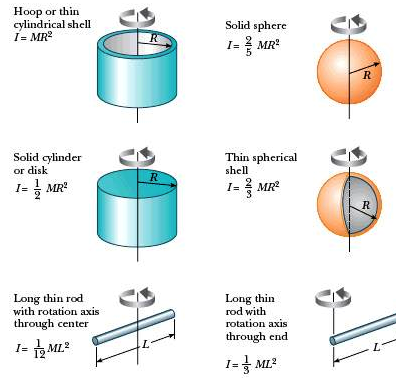
The mass moment of inertia is a fundamental concept in physics and engineering, describing an object's resistance to changes in its rotational motion. For a solid sphere cylinder, calculating the mass moment of inertia is crucial in understanding its dynamic behavior. The equation for the mass moment of inertia of a solid sphere cylinder is a function of its mass, radius, and length. This article provides an overview of the solid sphere cylinder equation and offers a calculator to determine the mass moment of inertia, facilitating the analysis and design of rotational systems. The equation is essential.
- Solid Sphere Cylinder Equation and Calculator Mass Moment of Inertia
- How do you calculate the moment of inertia for cylindrical and spherical bodies?
- How to calculate moment of inertia for a solid sphere?
- What is the moment of inertia of a cylinder of mass m?
-
Frequently Asked Questions (FAQs)
- What is the Solid Sphere Cylinder Equation and Calculator Mass Moment of Inertia?
- How is the Solid Sphere Cylinder Equation used in real-world applications?
- What are the limitations of the Solid Sphere Cylinder Equation and Calculator?
- How can I use the Solid Sphere Cylinder Equation and Calculator to solve problems in physics and engineering?
Solid Sphere Cylinder Equation and Calculator Mass Moment of Inertia
The mass moment of inertia is a basic concept in physics and engineering, and it plays a crucial role in the design and analysis of various systems, including rotating machinery, vehicles, and structures. The solid sphere and cylinder are two common shapes that are used in many applications, and their equations and calculators for mass moment of inertia are essential tools for engineers and physicists.
Introduction to Mass Moment of Inertia
The mass moment of inertia is a measure of an object's resistance to changes in its rotational motion. It depends on the object's mass distribution and its distance from the axis of rotation. The solid sphere and cylinder have unique mass distributions that affect their mass moments of inertia. The equations for calculating the mass moment of inertia for these shapes are based on their geometries and mass properties.
Equations for Solid Sphere and Cylinder
The equation for the mass moment of inertia of a solid sphere is given by:
I = (2/5) m r^2
where I is the mass moment of inertia, m is the mass of the sphere, and r is its radius.
The equation for the mass moment of inertia of a cylinder is given by:
I = (1/2) m r^2
where I is the mass moment of inertia, m is the mass of the cylinder, and r is its radius.
Calculator for Mass Moment of Inertia
A calculator for mass moment of inertia can be used to calculate the mass moment of inertia of a solid sphere or cylinder. The calculator takes the mass and radius of the object as inputs and outputs the mass moment of inertia. The calculator can be programmed to use the equations mentioned above.
Applications of Mass Moment of Inertia
The mass moment of inertia has many applications in engineering and physics. It is used to design and analyze rotating machinery, such as engines and gearboxes. It is also used to calculate the stability of vehicles and structures. The mass moment of inertia is an important factor in the design of flywheels and gyroscopes.
Table of Mass Moments of Inertia
The following table shows the mass moments of inertia for different shapes:
| Shape | Mass Moment of Inertia |
|---|---|
| Solid Sphere | (2/5) m r^2 |
| Cylinder | (1/2) m r^2 |
| Hollow Sphere | (2/3) m r^2 |
| Rectangular Prism | (1/12) m (a^2 + b^2) |
| Triangle | (1/36) m (a^2 + b^2) |
The table shows the mass moments of inertia for different shapes, including the solid sphere and cylinder. The mass moment of inertia is an important property of an object that affects its rotational motion.
How do you calculate the moment of inertia for cylindrical and spherical bodies?

To calculate the moment of inertia for cylindrical and spherical bodies, we need to understand the mass distribution and geometry of these objects. The moment of inertia is a measure of an object's resistance to changes in its rotational motion. For cylindrical bodies, the moment of inertia depends on the mass, radius, and height of the cylinder. For spherical bodies, it depends on the mass and radius of the sphere.
Introduction to Moment of Inertia
The moment of inertia is a fundamental concept in physics and engineering, and it plays a crucial role in understanding the rotational dynamics of objects. To calculate the moment of inertia for cylindrical and spherical bodies, we need to use the following formulas:
- The moment of inertia for a cylinder is given by I = (1/2)mr^2, where m is the mass and r is the radius of the cylinder.
- The moment of inertia for a sphere is given by I = (2/5)mr^2, where m is the mass and r is the radius of the sphere.
- The moment of inertia for a hollow cylinder is given by I = mr^2, where m is the mass and r is the radius of the cylinder.
These formulas are derived from the definition of moment of inertia and the mass distribution of the objects.
Moment of Inertia for Cylindrical Bodies
The moment of inertia for cylindrical bodies can be calculated using the formula I = (1/2)mr^2. This formula applies to solid cylinders and hollow cylinders with a uniform mass distribution. To calculate the moment of inertia for a cylindrical body, we need to know the mass and radius of the cylinder. We can then use the following steps:
- Determine the mass of the cylinder using the density and volume of the material.
- Measure the radius of the cylinder using a caliper or ruler.
- Plug the values into the formula I = (1/2)mr^2 to calculate the moment of inertia.
The moment of inertia for a cylindrical body is an important parameter in engineering and physics, and it is used to design and analyze rotating systems.
Moment of Inertia for Spherical Bodies
The moment of inertia for spherical bodies can be calculated using the formula I = (2/5)mr^2. This formula applies to solid spheres and hollow spheres with a uniform mass distribution. To calculate the moment of inertia for a spherical body, we need to know the mass and radius of the sphere. We can then use the following steps:
- Determine the mass of the sphere using the density and volume of the material.
- Measure the radius of the sphere using a caliper or ruler.
- Plug the values into the formula I = (2/5)mr^2 to calculate the moment of inertia.
The moment of inertia for a spherical body is an important parameter in astronomy and physics, and it is used to study the rotational motion of planets and stars.
Applications of Moment of Inertia
The moment of inertia has many practical applications in engineering and physics. It is used to design and analyze rotating systems, such as motors, generators, and turbines. The moment of inertia is also used to study the rotational motion of planets, stars, and galaxies. Some of the key applications of moment of inertia include:
- Rotating machinery: The moment of inertia is used to design and analyze rotating machinery, such as pumps, fans, and turbines.
- Vibration analysis: The moment of inertia is used to study the vibration of rotating systems and to design vibration isolation systems.
- Space exploration: The moment of inertia is used to study the rotational motion of planets, stars, and galaxies, and to design spacecraft and satellites.
The moment of inertia is a fundamental concept in physics and engineering, and it has many practical applications in a wide range of fields.
Derivation of Moment of Inertia Formulas
The formulas for moment of inertia can be derived from the definition of moment of inertia and the mass distribution of the objects. The moment of inertia is defined as the sum of the products of the mass elements and the square of their distances from the axis of rotation. To derive the formulas, we need to integrate the mass elements over the volume of the object and use the symmetry of the object to simplify the calculations. Some of the key steps in deriving the formulas include:
- Defining the moment of inertia and the mass distribution of the object.
- Integrating the mass elements over the volume of the object.
- Using the symmetry of the object to simplify the calculations.
The derived formulas are then used to calculate the moment of inertia for cylindrical and spherical bodies.
How to calculate moment of inertia for a solid sphere?
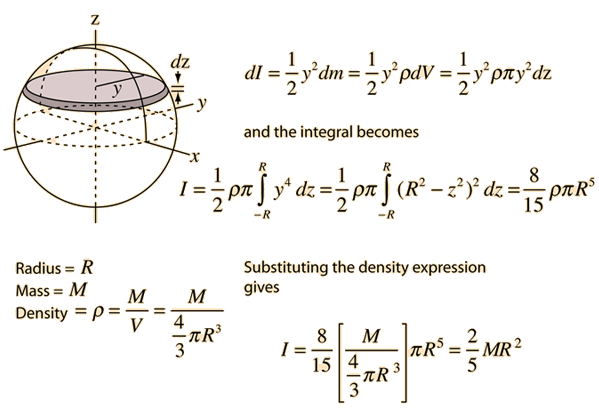
To calculate the moment of inertia for a solid sphere, we need to consider the mass distribution of the sphere. The moment of inertia is a measure of an object's resistance to changes in its rotational motion. For a solid sphere, the moment of inertia can be calculated using the formula: I = (2/5) m r^2, where I is the moment of inertia, m is the mass of the sphere, and r is the radius of the sphere.
Understanding the Formula
The formula I = (2/5) m r^2 is derived from the definition of moment of inertia, which is the sum of the products of the mass elements and the squared distances from the axis of rotation. For a solid sphere, the mass is uniformly distributed, and the distance from the axis of rotation is given by the radius of the sphere. The calculation involves integrating the mass elements over the entire sphere, resulting in the formula I = (2/5) m r^2. Some key points to consider are:
- The mass of the sphere is a critical parameter in the calculation, as it affects the overall moment of inertia.
- The radius of the sphere is also important, as it determines the distance from the axis of rotation.
- The density of the sphere is assumed to be uniform, which simplifies the calculation.
Derivation of the Formula
The derivation of the formula I = (2/5) m r^2 involves integral calculus, where the mass elements are integrated over the entire sphere. The calculation starts with the definition of moment of inertia, which is the sum of the products of the mass elements and the squared distances from the axis of rotation. The mass elements are given by the density of the sphere times the volume elements, and the squared distances are given by the radius of the sphere. Some key steps in the derivation are:
- Define the mass elements and the squared distances from the axis of rotation.
- Integrate the mass elements over the entire sphere using spherical coordinates.
- Evaluate the integral to obtain the final formula I = (2/5) m r^2.
Assumptions and Limitations
The calculation of the moment of inertia for a solid sphere assumes a uniform density and a spherical shape. The formula I = (2/5) m r^2 is only valid for rigid bodies, where the mass distribution remains unchanged during rotation. Some key assumptions and limitations are:
- The density of the sphere is assumed to be uniform, which may not be the case for real-world objects.
- The shape of the sphere is assumed to be perfectly spherical, which may not be the case for real-world objects.
- The rotation is assumed to be rigid, where the mass distribution remains unchanged during rotation.
Real-World Applications
The calculation of the moment of inertia for a solid sphere has many real-world applications, including engineering and physics. The moment of inertia is a critical parameter in the design of rotating systems, such as gyroscopes and flywheels. Some key applications are:
- Design of rotating systems, where the moment of inertia affects the stability and performance of the system.
- Analysis of rotational motion, where the moment of inertia affects the torque and angular acceleration of the object.
- Calculation of energy and work done by a rotating system, where the moment of inertia affects the kinetic energy of the system.
Comparison with Other Shapes
The calculation of the moment of inertia for a solid sphere can be compared with other shapes, such as cylinders and ellipsoids. The moment of inertia depends on the mass distribution and the shape of the object, and different shapes have different moment of inertia formulas. Some key comparisons are:
- The moment of inertia of a cylinder is given by I = (1/2) m r^2, which is different from the solid sphere formula.
- The moment of inertia of an ellipsoid is given by I = (2/5) m (a^2 + b^2 + c^2), which is more complex than the solid sphere formula.
- The moment of inertia of a hollow sphere is given by I = (2/3) m r^2, which is different from the solid sphere formula.
What is the moment of inertia of a cylinder of mass m?
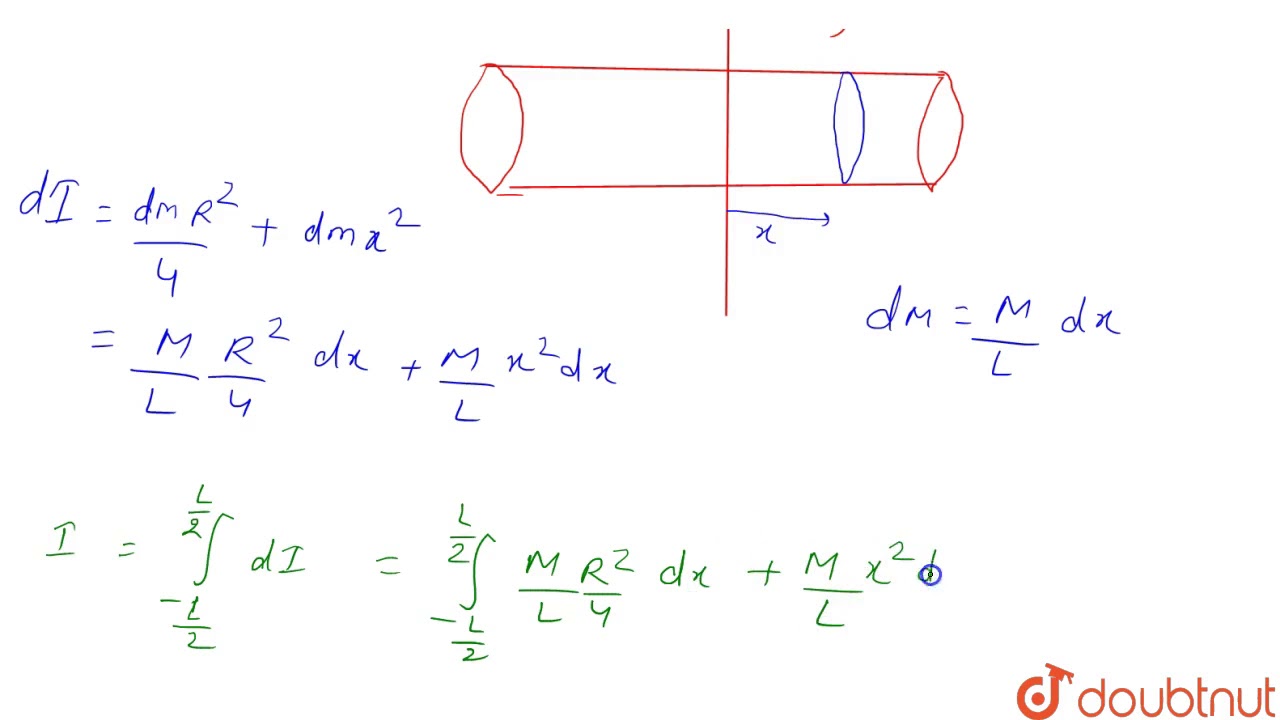
The moment of inertia of a cylinder of mass m is given by the formula I = (1/2)mr^2 for rotation around its central axis, where r is the radius of the cylinder. This formula is derived from the definition of moment of inertia as the sum of the products of the mass elements and the squares of their distances from the axis of rotation.
Moment of Inertia of a Cylinder
The moment of inertia of a cylinder is an important concept in physics and engineering, particularly in the study of rotational motion. The cylinder is a common shape in many machines and structures, and its moment of inertia plays a crucial role in determining its rotational behavior. Some key aspects of the moment of inertia of a cylinder include:
- Its dependence on the mass and radius of the cylinder, with a larger mass or radius resulting in a larger moment of inertia.
- Its variation with the axis of rotation, with the moment of inertia being different for rotation around different axes.
- Its relationship to the rotational kinetic energy of the cylinder, with a larger moment of inertia resulting in a larger rotational kinetic energy for a given angular velocity.
Derivation of the Moment of Inertia Formula
The formula for the moment of inertia of a cylinder can be derived by considering the cylinder as a collection of infinitesimal mass elements, each with a mass dm and a distance r from the axis of rotation. The moment of inertia of each mass element is given by dI = r^2dm, and the total moment of inertia of the cylinder is the sum of the moments of inertia of all the mass elements. By integrating over the entire cylinder, we can derive the formula I = (1/2)mr^2 for the moment of inertia.
Properties of the Moment of Inertia
The moment of inertia of a cylinder has several important properties that make it a useful concept in physics and engineering. Some of these properties include:
- Its additivity, which means that the moment of inertia of a system is the sum of the moments of inertia of its individual components.
- Its dependence on the axis of rotation, which means that the moment of inertia of a cylinder can be different for rotation around different axes.
- Its relationship to the rotational kinetic energy of the cylinder, which means that a larger moment of inertia results in a larger rotational kinetic energy for a given angular velocity.
Applications of the Moment of Inertia
The moment of inertia of a cylinder has many important applications in physics and engineering, particularly in the study of rotational motion. Some examples of these applications include:
- The design of rotating machines, such as engines and turbines, where the moment of inertia of the rotating components plays a crucial role in determining their performance.
- The analysis of rotational vibrations, where the moment of inertia of the vibrating system plays a key role in determining its frequency and amplitude.
- The study of gyroscopic effects, where the moment of inertia of a rotating system plays a crucial role in determining its behavior under the influence of external torques.
Calculating the Moment of Inertia
To calculate the moment of inertia of a cylinder, we need to know its mass and radius. The formula I = (1/2)mr^2 can be used to calculate the moment of inertia for rotation around the central axis. For rotation around other axes, we need to use more complex formulas that take into account the distribution of mass within the cylinder. Some key steps in calculating the moment of inertia include:
- Determining the mass of the cylinder, which can be done using a variety of methods, including measurement and calculation.
- Determining the radius of the cylinder, which can be done using a variety of methods, including measurement and calculation.
- Using the formula I = (1/2)mr^2 to calculate the moment of inertia, or using more complex formulas for rotation around other axes.
Frequently Asked Questions (FAQs)
What is the Solid Sphere Cylinder Equation and Calculator Mass Moment of Inertia?
The Solid Sphere Cylinder Equation is a mathematical formula used to calculate the mass moment of inertia of a solid sphere or cylinder. The mass moment of inertia is a measure of an object's resistance to changes in its rotational motion. It is an important concept in physics and engineering, as it is used to calculate the torque and angular acceleration of an object. The equation for the mass moment of inertia of a solid sphere is (2/5)mr^2, where m is the mass of the sphere and r is its radius. For a cylinder, the equation is (1/2)mr^2, where m is the mass of the cylinder and r is its radius. The calculator is a tool used to simplify the process of calculating the mass moment of inertia, by plugging in the values of mass and radius to obtain the result.
How is the Solid Sphere Cylinder Equation used in real-world applications?
The Solid Sphere Cylinder Equation has numerous real-world applications in physics, engineering, and design. For example, it is used to calculate the mass moment of inertia of a car wheel, which is essential for determining the torque and angular acceleration of the wheel. It is also used in the design of gyroscopes, which are devices that use the conservation of angular momentum to maintain their orientation in space. Additionally, the equation is used in the calculation of the mass moment of inertia of a robotic arm, which is crucial for determining the torque and angular acceleration of the arm. The calculator is a useful tool for these applications, as it allows users to quickly and easily calculate the mass moment of inertia of an object, without having to manually solve the equation.
What are the limitations of the Solid Sphere Cylinder Equation and Calculator?
The Solid Sphere Cylinder Equation and calculator have several limitations. One limitation is that the equation only applies to solid spheres and cylinders, and does not account for hollow or irregularly-shaped objects. Another limitation is that the equation assumes a uniform density of the object, which may not always be the case. Additionally, the calculator is only as accurate as the input values, and small errors in the mass or radius can result in significant errors in the calculated mass moment of inertia. Furthermore, the equation and calculator do not account for real-world factors such as friction and air resistance, which can affect the rotational motion of an object. Despite these limitations, the Solid Sphere Cylinder Equation and calculator are still useful tools for calculating the mass moment of inertia of simple objects.
How can I use the Solid Sphere Cylinder Equation and Calculator to solve problems in physics and engineering?
To use the Solid Sphere Cylinder Equation and calculator to solve problems in physics and engineering, you need to start by identifying the object and its mass and radius. Then, you can plug these values into the equation or calculator to obtain the mass moment of inertia. Next, you can use this value to calculate the torque and angular acceleration of the object, using the equations τ = Iα and α = τ/I, where τ is the torque, I is the mass moment of inertia, and α is the angular acceleration. Additionally, you can use the calculator to explore the effects of changing the mass or radius of the object on its mass moment of inertia and rotational motion. By using the Solid Sphere Cylinder Equation and calculator in this way, you can develop a deeper understanding of the physics and engineering principles that govern the behavior of rotating objects, and solve a wide range of problems in these fields.
Deja una respuesta
Entradas Relacionadas