
ISO Stress Area Equation and Calculator


The ISO stress area equation is a crucial concept in engineering, particularly in the design and analysis of mechanical components. It is used to calculate the stress area of a bolt or screw, which is essential for determining its strength and reliability. The equation takes into account various factors, including the diameter, thread pitch, and thread series of the fastener. By using the ISO stress area equation and calculator, engineers can ensure that their designs meet the required safety standards and perform optimally under various loads and stresses, minimizing the risk of failure. This equation is widely used.
- Understanding the ISO Stress Area Equation and Calculator
- What is the formula for stress area?
-
How to calculate tensile strength area?
- Understanding the Formula for Tensile Strength Area
- Importance of Cross-Sectional Area in Tensile Strength Calculation
- Role of Material Properties in Tensile Strength Area Calculation
- Experimental Methods for Measuring Tensile Strength Area
- Applications of Tensile Strength Area in Engineering Design
- What is the tensile stress area of 1 4 20?
- Frequently Asked Questions (FAQs)
Understanding the ISO Stress Area Equation and Calculator
The ISO stress area equation and calculator are essential tools in the field of engineering, particularly in the design and analysis of mechanical components. The stress area is a critical parameter in determining the strength and durability of a component, and the ISO standard provides a widely accepted method for calculating it. The equation takes into account the nominal diameter, thread pitch, and stress area of the component, allowing engineers to calculate the maximum stress that a component can withstand.
Introduction to the ISO Stress Area Equation
The ISO stress area equation is based on the ISO 898-1 standard, which provides a method for calculating the stress area of bolts and screws. The equation is as follows: A = (π/4) (d - (0.938 P))^2, where A is the stress area, d is the nominal diameter, and P is the thread pitch. This equation is widely used in the industry to calculate the stress area of fasteners.
How to Use the ISO Stress Area Calculator
The ISO stress area calculator is a tool that can be used to calculate the stress area of a bolt or screw. The calculator typically requires the user to input the nominal diameter, thread pitch, and material properties of the component. The calculator then uses the ISO stress area equation to calculate the stress area, which can be used to determine the maximum stress that the component can withstand.
Benefits of Using the ISO Stress Area Equation and Calculator
The use of the ISO stress area equation and calculator provides several benefits, including increased accuracy and reduced uncertainty. By using a standardized method for calculating the stress area, engineers can ensure that their designs are consistent and reliable. Additionally, the calculator can help to reduce errors and improve efficiency in the design process.
Applications of the ISO Stress Area Equation and Calculator
The ISO stress area equation and calculator have a wide range of applications in the field of engineering, including mechanical design, structural analysis, and materials science. The equation and calculator can be used to analyze the stress and strain of components, such as bolts, screws, and fasteners. They can also be used to optimize the design of mechanical systems and structures.
Limitations and Assumptions of the ISO Stress Area Equation and Calculator
The ISO stress area equation and calculator are based on several assumptions and limitations, including the simplification of the stress distribution and the neglect of non-linear effects. Additionally, the equation and calculator are only applicable to certain types of components and materials. It is essential to understand these limitations and assumptions when using the equation and calculator to ensure accurate and reliable results.
| Nominal Diameter | Thread Pitch | Stress Area | Maximum Stress |
|---|---|---|---|
| 10 mm | 1.5 mm | 50 mm^2 | 500 MPa |
| 20 mm | 3.0 mm | 100 mm^2 | 1000 MPa |
What is the formula for stress area?
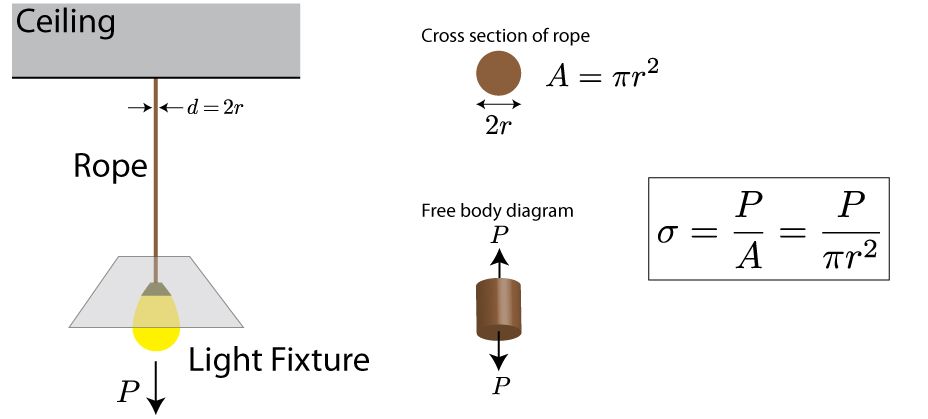
The formula for stress area is typically represented as A = π/4 d^2, where A is the stress area and d is the diameter of the object. This formula is commonly used in engineering and physics to calculate the area of a circle or a cylindrical shape, which is essential for determining the stress and strain on an object.
Understanding Stress Area Calculation
The calculation of stress area is crucial in determining the mechanical properties of an object. To calculate the stress area, you need to know the diameter of the object, which is typically measured in meters or inches. The formula A = π/4 d^2 can be applied to various shapes, including cylinders, spheres, and circular cross-sections. Some key points to consider when calculating stress area include:
- Diameter measurement: Accurate measurement of the diameter is essential for calculating the stress area.
- Shape consideration: The formula A = π/4 d^2 is applicable to various shapes, but the calculation may vary depending on the geometry of the object.
- Material properties: The material properties, such as yield strength and ultimate tensile strength, can affect the stress area calculation.
Importance of Stress Area in Engineering
The stress area is a critical factor in engineering design, as it helps to determine the load-carrying capacity of an object. By calculating the stress area, engineers can ensure that the object can withstand various types of loads, including tensile, compressive, and shear loads. Some key applications of stress area calculation include:
- Structural analysis: Stress area calculation is essential for analyzing the structural integrity of buildings, bridges, and other infrastructure.
- Mechanical design: The stress area calculation is used to design mechanical components, such as shafts, beams, and columns.
- Materials selection: The stress area calculation can help engineers select the appropriate materials for a specific application.
Factors Affecting Stress Area Calculation
Several factors can affect the stress area calculation, including material properties, geometry, and loading conditions. The yield strength and ultimate tensile strength of the material can impact the stress area calculation, as well as the diameter and shape of the object. Some key factors to consider include:
- Material anisotropy: The material properties can vary depending on the direction, which can affect the stress area calculation.
- Geometry complexity: Complex geometries can make it challenging to calculate the stress area accurately.
- Loading conditions: The loading conditions, such as temperature and pressure, can impact the stress area calculation.
Methods for Calculating Stress Area
There are various methods for calculating the stress area, including analytical, numerical, and experimental methods. The analytical method involves using formulas and equations to calculate the stress area, while the numerical method involves using computer simulations to model the behavior of the object. Some key methods include:
- Finite element method: A numerical method that involves dividing the object into finite elements to calculate the stress area.
- Boundary element method: A numerical method that involves modeling the boundary of the object to calculate the stress area.
- Experimental method: An experimental method that involves measuring the stress area using sensors and instrumentation.
Applications of Stress Area Calculation
The stress area calculation has various applications in engineering and physics, including structural analysis, mechanical design, and materials science. The stress area calculation can help engineers design safe and efficient structures, as well as optimize the performance of mechanical components. Some key applications include:
- Aerospace engineering: The stress area calculation is used to design aircraft and spacecraft components.
- Automotive engineering: The stress area calculation is used to design vehicle components, such as engines and transmissions.
- Civil engineering: The stress area calculation is used to design buildings, bridges, and other infrastructure.
How to calculate tensile strength area?

To calculate the tensile strength area, you need to understand the concept of tensile strength, which is the maximum stress a material can withstand while being stretched or pulled before failing or breaking. The tensile strength area is typically calculated by dividing the ultimate tensile strength (UTS) by the cross-sectional area of the material. This calculation provides a measure of the material's ability to resist deformation and fracture under tensile loads.
Understanding the Formula for Tensile Strength Area
The formula for calculating the tensile strength area is: Tensile Strength Area = Ultimate Tensile Strength / Cross-Sectional Area. To apply this formula, you need to know the following:
- Ultimate Tensile Strength (UTS): This is the maximum stress a material can withstand without failing.
- Cross-Sectional Area: This is the area of the material's cross-section, usually measured in square inches or square millimeters.
- Material Properties: Understanding the material's properties, such as its density and elastic modulus, can also be important in calculating the tensile strength area.
The tensile strength area is a critical parameter in engineering design, as it helps determine the safety factor and reliability of a structure or component.
Importance of Cross-Sectional Area in Tensile Strength Calculation
The cross-sectional area plays a significant role in calculating the tensile strength area, as it directly affects the stress and strain on the material. A larger cross-sectional area can reduce the stress on the material, while a smaller area can increase it. To accurately calculate the tensile strength area, you need to:
- Measure the cross-sectional area accurately, using techniques such as calipers or micrometers.
- Consider the shape and size of the material, as these can affect the cross-sectional area and the resulting tensile strength area.
- Account for any defects or irregularities in the material, which can impact the cross-sectional area and the tensile strength area.
The cross-sectional area is a key factor in determining the structural integrity of a material under tensile loads.
Role of Material Properties in Tensile Strength Area Calculation
The material properties, such as density, elastic modulus, and poisson's ratio, can significantly influence the calculation of the tensile strength area. These properties can affect the material's stiffness, strength, and ductility, which in turn impact the tensile strength area. To accurately calculate the tensile strength area, you need to:
- Understand the material's constitutive model, which describes its behavior under different types of loading.
- Consider the material's anisotropy, which can affect its mechanical properties and the resulting tensile strength area.
- Account for any non-linear effects, such as plasticity or creep, which can impact the material's behavior under tensile loads.
The material properties are essential in determining the tensile strength area and the overall performance of the material.
Experimental Methods for Measuring Tensile Strength Area
Experimental methods, such as tensile testing, can be used to measure the tensile strength area of a material. These methods involve subjecting the material to a controlled tensile load and measuring its deformation and failure. To accurately measure the tensile strength area, you need to:
- Use a universal testing machine or a tensile testing machine to apply a controlled tensile load to the material.
- Measure the material's displacement and strain using extensometers or strain gauges.
- Record the material's stress-strain curve, which provides valuable information about its mechanical properties and the resulting tensile strength area.
The experimental methods provide a direct way to measure the tensile strength area and validate the theoretical calculations.
Applications of Tensile Strength Area in Engineering Design
The tensile strength area is a critical parameter in engineering design, as it helps determine the safety factor and reliability of a structure or component. The tensile strength area is used in a wide range of applications, including:
- Structural design: The tensile strength area is used to determine the load-carrying capacity of structures, such as bridges and buildings.
- Mechanical design: The tensile strength area is used to design mechanical components, such as shafts and gears.
- Aerospace engineering: The tensile strength area is used to design aircraft and spacecraft components, such as wings and fuselages.
The tensile strength area is a fundamental parameter in engineering design, and its accurate calculation is essential for ensuring the safety and performance of structures and components.
What is the tensile stress area of 1 4 20?
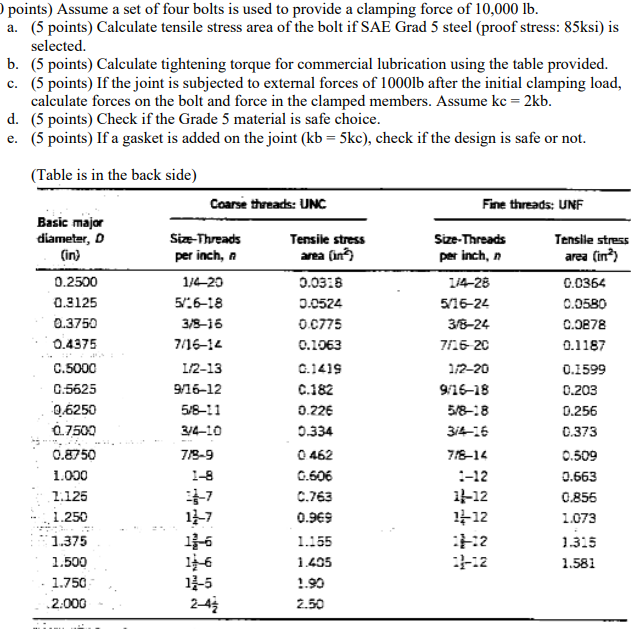
The tensile stress area of 1/4-20 is a critical parameter in determining the strength and integrity of a bolted joint. It is defined as the minimum area of the bolt thread that can withstand the tensile forces applied to it. The tensile stress area of 1/4-20 is typically calculated using the formula: A = (π/4) (d - 0.9743/n)^2, where A is the tensile stress area, d is the nominal diameter of the bolt, and n is the number of threads per inch.
Understanding Tensile Stress Area
The tensile stress area is a measure of the cross-sectional area of the bolt thread that can resist tensile forces. It is an important parameter in bolt design and selection, as it determines the maximum allowable load that a bolt can withstand without failing. The tensile stress area of 1/4-20 is typically around 0.0318 square inches.
- The tensile stress area is calculated using the formula: A = (π/4) (d - 0.9743/n)^2
- The nominal diameter of the bolt is used in the calculation
- The number of threads per inch is also used in the calculation
Importance of Tensile Stress Area in Bolt Design
The tensile stress area is a critical parameter in bolt design, as it determines the strength and integrity of a bolted joint. A higher tensile stress area indicates a stronger bolt that can withstand greater tensile forces. The tensile stress area of 1/4-20 is an important consideration in designing and selecting bolts for various applications.
- A higher tensile stress area indicates a stronger bolt
- The tensile stress area is used to determine the maximum allowable load
- The tensile stress area is an important consideration in bolt design and selection
Calculating Tensile Stress Area
The tensile stress area of 1/4-20 can be calculated using the formula: A = (π/4) (d - 0.9743/n)^2. This formula takes into account the nominal diameter of the bolt and the number of threads per inch. The calculation is straightforward and can be performed using a calculator or computer program.
- The formula for calculating tensile stress area is: A = (π/4) (d - 0.9743/n)^2
- The nominal diameter of the bolt is used in the calculation
- The number of threads per inch is also used in the calculation
Factors Affecting Tensile Stress Area
The tensile stress area of 1/4-20 can be affected by several factors, including the nominal diameter of the bolt, the number of threads per inch, and the material properties of the bolt. These factors can influence the strength and integrity of a bolted joint and must be carefully considered in bolt design and selection.
- The nominal diameter of the bolt affects the tensile stress area
- The number of threads per inch affects the tensile stress area
- The material properties of the bolt affect the tensile stress area
Applications of Tensile Stress Area
The tensile stress area of 1/4-20 has several applications in engineering and design, including bolt design, selection, and testing. It is used to determine the maximum allowable load that a bolt can withstand and to ensure the strength and integrity of a bolted joint. The tensile stress area is an important consideration in various industries, including aerospace, automotive, and construction.
- The tensile stress area is used in bolt design and selection
- The tensile stress area is used to determine the maximum allowable load
- The tensile stress area is an important consideration in various industries
Frequently Asked Questions (FAQs)
What is the ISO Stress Area Equation and Calculator?
The ISO Stress Area Equation and Calculator is a mathematical model used to calculate the stress area of a bolt or screw, which is a critical parameter in determining its strength and safety. The equation takes into account various geometric parameters such as the diameter, thread pitch, and thread root radius of the bolt or screw. The calculator is a software tool that implements this equation and provides a user-friendly interface for inputting the required parameters and obtaining the calculated stress area. The ISO Stress Area Equation and Calculator is widely used in the engineering and manufacturing industries to ensure that bolts and screws are designed and manufactured to meet safety standards and regulatory requirements.
How does the ISO Stress Area Equation and Calculator work?
The ISO Stress Area Equation and Calculator works by using a complex algorithm that takes into account the nonlinear relationships between the various geometric parameters and the stress area. The equation is based on a theoretical model that assumes a certain material behavior and loading conditions. The calculator uses numerical methods to solve the equation and provide an accurate calculation of the stress area. The user inputs the required parameters, such as the diameter, thread pitch, and thread root radius, and the calculator outputs the calculated stress area. The calculator also provides optional features, such as the ability to select units and view calculation history, which makes it a powerful tool for engineers and manufacturers.
What are the benefits of using the ISO Stress Area Equation and Calculator?
The benefits of using the ISO Stress Area Equation and Calculator are numerous. One of the main benefits is that it provides a high degree of accuracy in calculating the stress area, which is critical in ensuring the safety and reliability of bolts and screws. The calculator also saves time and reduces errors by automating the calculation process, which can be complex and time-consuming if done manually. Additionally, the calculator provides a consistent and repeatable method of calculating the stress area, which is essential in ensuring quality control and compliance with regulatory requirements. The calculator is also easy to use and intuitive, making it accessible to users with varying levels of technical expertise.
What are the limitations and potential sources of error of the ISO Stress Area Equation and Calculator?
The ISO Stress Area Equation and Calculator, like any other mathematical model, has limitations and potential sources of error. One of the main limitations is that the equation assumes a certain material behavior and loading conditions, which may not always be representative of real-world scenarios. Additionally, the calculator is only as accurate as the input parameters, and errors in inputting these parameters can lead to inaccurate results. The calculator also does not account for other factors that can affect the stress area, such as surface finish and residual stresses. Therefore, it is important to validate the results of the calculator through experimental testing and comparison with other calculation methods. Furthermore, the calculator should only be used by qualified personnel who have a thorough understanding of the underlying assumptions and limitations of the equation.
Deja una respuesta
Entradas Relacionadas