
Boussinesq Approximation for Buoyancy Formula and Calculator

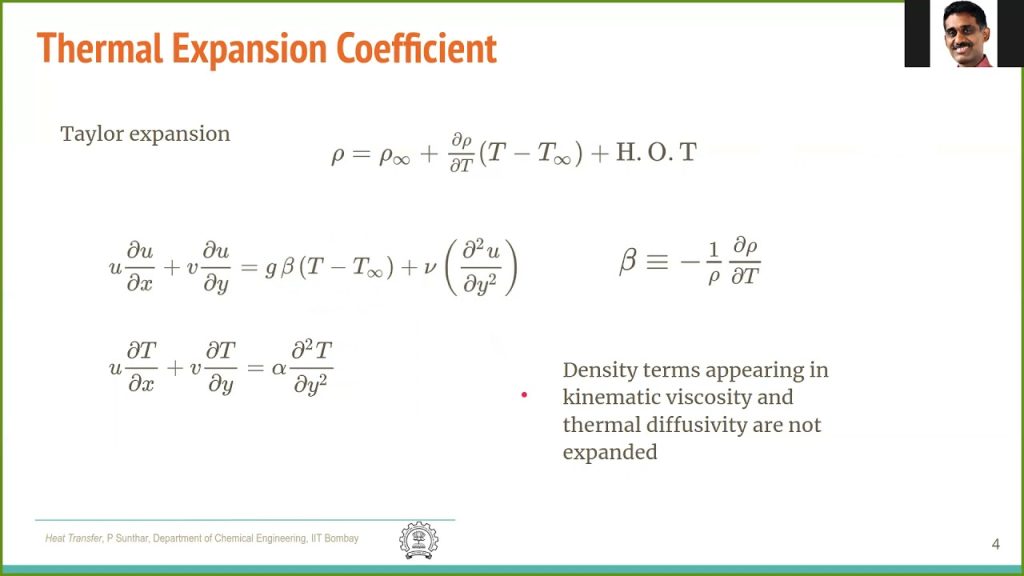
The Boussinesq approximation is a mathematical approach used to simplify the calculation of buoyancy forces in fluids. It assumes that density variations are small and can be neglected in certain terms of the Navier-Stokes equations. This approximation is commonly applied in oceanography and engineering to estimate the buoyancy of objects in water. The Boussinesq approximation for buoyancy formula provides a simplified way to calculate the buoyant force, and an online calculator can be used to facilitate these calculations. This article will explore the Boussinesq approximation and its application in buoyancy calculations.
- Boussinesq Approximation for Buoyancy Formula and Calculator
- What is the Boussinesq method?
- When to use Boussinesq approximation?
- What is Darcy Boussinesq approximation?
- What is the Boussinesq model of CFD?
-
Frequently Asked Questions (FAQs)
- What is the Boussinesq Approximation for Buoyancy Formula and how is it used?
- How does the Boussinesq Approximation for Buoyancy Formula account for variations in fluid density?
- What are the limitations of the Boussinesq Approximation for Buoyancy Formula and Calculator?
- How can the Boussinesq Approximation for Buoyancy Formula and Calculator be applied in real-world engineering and scientific applications?
Boussinesq Approximation for Buoyancy Formula and Calculator
The Boussinesq approximation is a fundamental concept in fluid dynamics, particularly when dealing with buoyancy and density variations in fluids. It is used to simplify the Navier-Stokes equations, which describe the motion of fluids, by assuming that the density of the fluid is constant except for the buoyancy term. This approximation is named after the French mathematician and physicist Joseph Valentin Boussinesq, who first introduced it in the late 19th century.
Introduction to Boussinesq Approximation
The Boussinesq approximation is a simplification of the Navier-Stokes equations that assumes the density of the fluid is constant, except for the buoyancy term, which is proportional to the temperature or concentration differences. This approximation is valid when the density variations are small compared to the average density of the fluid. The Boussinesq approximation is widely used in oceanography, meteorology, and engineering to model ocean currents, atmospheric circulation, and heat transfer.
Boussinesq Approximation for Buoyancy Formula
The Boussinesq approximation for buoyancy can be expressed as a formula: ρ = ρ0 (1 - β (T - T0)), where ρ is the density of the fluid, ρ0 is the reference density, β is the thermal expansion coefficient, T is the temperature, and T0 is the reference temperature. This formula shows that the density of the fluid is proportional to the temperature difference.
Calculator for Boussinesq Approximation
A calculator for the Boussinesq approximation can be used to estimate the buoyancy force or the density of a fluid. The calculator typically requires input values such as the temperature difference, the thermal expansion coefficient, and the reference density. The calculator then uses the Boussinesq approximation formula to calculate the density or buoyancy force.
Applications of Boussinesq Approximation
The Boussinesq approximation has numerous applications in various fields, including oceanography, meteorology, and engineering. Some examples of applications include:
| Application | Description |
|---|---|
| Ocean Currents | Modeling ocean currents and circulation patterns |
| Atmospheric Circulation | Modeling atmospheric circulation patterns and weather forecasting |
| Heat Transfer | Modeling heat transfer in fluids and engineering systems |
Limitations of Boussinesq Approximation
The Boussinesq approximation has some limitations, including the assumption of small density variations and the neglect of nonlinear effects. The approximation is valid only when the density variations are small compared to the average density of the fluid. In cases where the density variations are large, the Boussinesq approximation may not be accurate, and more advanced models may be required.
What is the Boussinesq method?
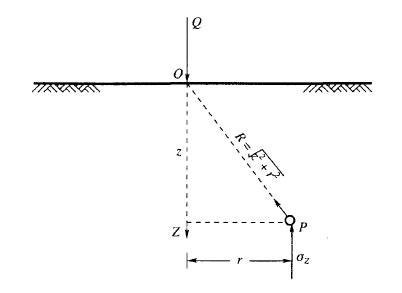
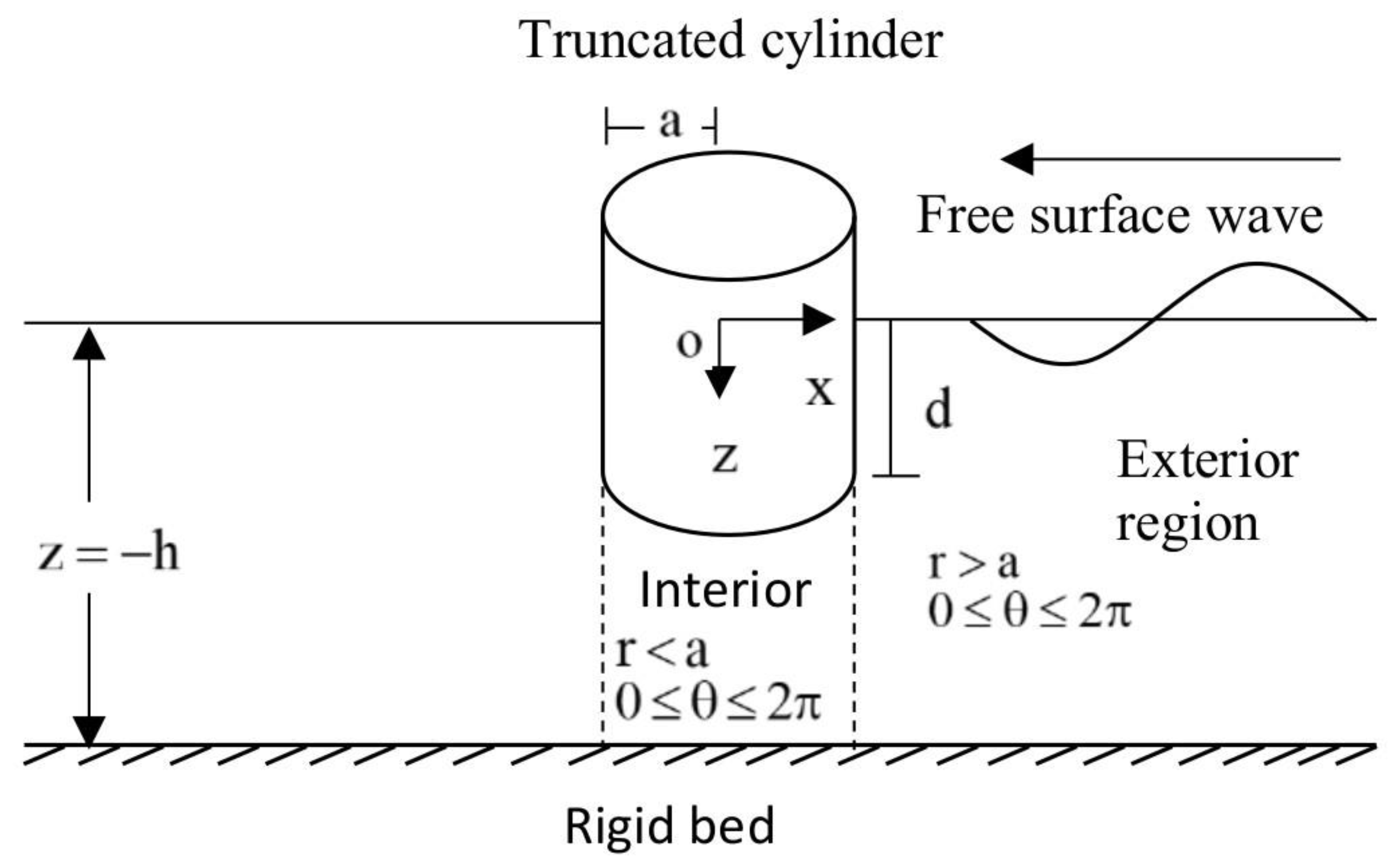
The Boussinesq method is a mathematical approach used to model and analyze the behavior of water waves and their interaction with coastal structures. This method is based on the Boussinesq equations, which are a set of nonlinear partial differential equations that describe the shallow water approximation of the Navier-Stokes equations. The Boussinesq method is widely used in coastal engineering and oceanography to study wave propagation, wave transformation, and wave-structure interaction.
Introduction to Boussinesq Equations
The Boussinesq equations are derived from the Navier-Stokes equations by assuming a shallow water approximation, where the water depth is much smaller than the wavelength. This approximation allows for the simplification of the Navier-Stokes equations into a set of nonlinear partial differential equations that can be solved using numerical methods. The Boussinesq equations are commonly used to model wave propagation and wave transformation in coastal areas. Some of the key features of the Boussinesq equations include:
- Nonlinearity: The Boussinesq equations are nonlinear, which means that they can capture the complex behavior of water waves and their interaction with coastal structures.
- Dispersion: The Boussinesq equations include dispersive terms that allow for the propagation of water waves with different frequencies and amplitudes.
- Shallow water approximation: The Boussinesq equations are based on the shallow water approximation, which assumes that the water depth is much smaller than the wavelength.
Applications of the Boussinesq Method
The Boussinesq method has a wide range of applications in coastal engineering and oceanography, including the study of wave propagation, wave transformation, and wave-structure interaction. Some of the key applications of the Boussinesq method include:
- Coastal protection: The Boussinesq method can be used to design and optimize coastal protection structures, such as seawalls and breakwaters.
- Wave energy conversion: The Boussinesq method can be used to study the wave energy conversion process and to design wave energy converters.
- Coastal erosion: The Boussinesq method can be used to study coastal erosion and to predict the impact of climate change on coastal areas.
Numerical Implementation of the Boussinesq Method
The Boussinesq method can be implemented numerically using a variety of methods, including the finite difference method, the finite element method, and the spectral method. The numerical implementation of the Boussinesq method requires the solution of a set of nonlinear partial differential equations, which can be challenging due to the nonlinearity and dispersion of the equations. Some of the key challenges of the numerical implementation of the Boussinesq method include:
- Stability: The numerical implementation of the Boussinesq method requires the use of stabilization techniques to prevent numerical instability.
- Accuracy: The numerical implementation of the Boussinesq method requires the use of high-order numerical methods to achieve high accuracy.
- Efficiency: The numerical implementation of the Boussinesq method requires the use of efficient numerical methods to reduce the computational cost.
Validation of the Boussinesq Method
The Boussinesq method has been validated using a variety of experimental and numerical methods, including laboratory experiments and field measurements. The validation of the Boussinesq method is important to ensure that the method is accurate and reliable. Some of the key methods used to validate the Boussinesq method include:
- Laboratory experiments: The Boussinesq method has been validated using laboratory experiments, which involve the measurement of wave propagation and wave transformation in a controlled environment.
- Field measurements: The Boussinesq method has been validated using field measurements, which involve the measurement of wave propagation and wave transformation in real-world environments.
- Numerical comparison: The Boussinesq method has been validated by comparing the results with other numerical methods, such as the Navier-Stokes equations.
Limitations of the Boussinesq Method
The Boussinesq method has several limitations, including the shallow water approximation, which assumes that the water depth is much smaller than the wavelength. The Boussinesq method also assumes that the wave amplitude is small compared to the water depth, which can limit the applicability of the method to high-amplitude waves. Some of the key limitations of the Boussinesq method include:
- Shallow water approximation: The Boussinesq method is based on the shallow water approximation, which can limit the applicability of the method to deep water environments.
- Wave amplitude: The Boussinesq method assumes that the wave amplitude is small compared to the water depth, which can limit the applicability of the method to high-amplitude waves.
- Nonlinearity: The Boussinesq method is nonlinear, which can make it challenging to solve the equations numerically.
When to use Boussinesq approximation?

The Boussinesq approximation is a mathematical model used to simplify the equations of motion for fluid flow in certain situations. It is commonly used in oceanography and atmospheric science to study wave propagation and turbulence. The Boussinesq approximation is applicable when the density of the fluid is approximately constant, and the amplitude of the waves is small compared to the wavelength. This approximation is useful for studying coastal oceanography, tidal currents, and atmospheric circulation.
Application in Oceanography
The Boussinesq approximation is widely used in oceanography to study wave dynamics, turbulence, and circulation. It is particularly useful for modeling coastal ocean processes, such as wave setup, runup, and inundation. The approximation is also used to study ocean currents, eddies, and mesoscale processes.
- The Boussinesq approximation is used to model surface wave dynamics, including wave refraction, diffraction, and breaking.
- It is also used to study internal waves, which are waves that propagate within the ocean and can play a significant role in mixing and transport.
- The approximation is applied to model tidal currents, residual currents, and storm surges, which are critical for coastal engineering and navigation.
Assumptions and Limitations
The Boussinesq approximation is based on several assumptions, including hydrostatic pressure, incompressibility, and negligible viscosity. These assumptions are not always valid, and the approximation has limitations. For example, it is not suitable for modeling high-speed flows, strong turbulence, or complex geometry.
- The Boussinesq approximation assumes hydrostatic pressure, which means that the pressure is proportional to the depth.
- It also assumes incompressibility, which means that the density of the fluid is constant.
- The approximation neglects viscosity, which can be significant in laminar flows or boundary layers.
Comparison with Other Models
The Boussinesq approximation is compared to other mathematical models, such as the Navier-Stokes equations, shallow water equations, and Korteweg-de Vries equation. Each model has its strengths and weaknesses, and the choice of model depends on the specific application.
- The Boussinesq approximation is more simplified than the Navier-Stokes equations, but it is more accurate than the shallow water equations.
- It is often used in combination with other models, such as the Korteweg-de Vries equation, to study nonlinear wave dynamics.
- The approximation is also compared to numerical models, such as finite element models, which can provide more detailed and accurate solutions.
Numerical Implementation
The Boussinesq approximation is implemented numerically using various methods”, such as finite difference methods, finite element methods, and spectral methods. The numerical solution depends on the discretization of the domain, the time step, and the boundary conditions.
- The Boussinesq approximation is often implemented using finite difference methods, which discretize the domain into grid points.
- Finite element methods are also used, which discretize the domain into elements and use _basis functions_ to approximate the solution.
- Spectral methods are used to solve the Boussinesq equations in the frequency domain, which can be more efficient than time-domain methods.
Real-World Applications
The Boussinesq approximation has real-world applications in coastal engineering, oceanography, and atmospheric science. It is used to study wave dynamics, turbulence, and circulation, which are critical for predicting weather patterns, ocean currents, and coastal erosion.
- The Boussinesq approximation is used to predict wave heights and periods, which are critical for coastal engineering and navigation.
- It is also used to study ocean currents, eddies, and mesoscale processes, which are important for oceanography and climate modeling.
- The approximation is applied to model atmospheric circulation, weather patterns, and climate change, which are critical for predicting future climate scenarios.
What is Darcy Boussinesq approximation?

The Darcy-Boussinesq approximation is a mathematical model used to describe the behavior of fluid flow in porous media. This approximation is a combination of two important concepts in fluid dynamics: Darcy's law and the Boussinesq approximation. Darcy's law describes the flow of fluids through porous media, while the Boussinesq approximation is a simplification of the Navier-Stokes equations that describes the behavior of fluids with variable density.
Introduction to Darcy's Law
Darcy's law is a fundamental concept in the study of fluid flow in porous media. It states that the flow rate of a fluid through a porous medium is proportional to the pressure gradient and inversely proportional to the viscosity of the fluid. The Darcy-Boussinesq approximation uses this law to describe the flow of fluids in porous media, taking into account the effects of gravity and density variations. Some key points about Darcy's law include:
- The law is based on the idea that the flow of fluid through a porous medium is laminar, meaning that it is smooth and continuous.
- The law is commonly used to describe the flow of groundwater through aquifers and other porous media.
- The law is a simplification of the Navier-Stokes equations, which are more complex and difficult to solve.
Derivation of the Boussinesq Approximation
The Boussinesq approximation is a simplification of the Navier-Stokes equations that describes the behavior of fluids with variable density. This approximation is based on the idea that the density variations in the fluid are small compared to the average density. The Boussinesq approximation is often used to study ocean currents and atmospheric circulation. Some key points about the derivation of the Boussinesq approximation include:
- The approximation is based on the idea that the density variations in the fluid are small compared to the average density.
- The approximation is commonly used to study ocean currents and atmospheric circulation.
- The approximation is a simplification of the Navier-Stokes equations, which are more complex and difficult to solve.
Applications of the Darcy-Boussinesq Approximation
The Darcy-Boussinesq approximation has a wide range of applications in fluid dynamics and geophysics. It is commonly used to study groundwater flow, ocean currents, and atmospheric circulation. The approximation is also used to model heat transfer and mass transport in porous media. Some key points about the applications of the Darcy-Boussinesq approximation include:
- The approximation is commonly used to study groundwater flow and contaminant transport in aquifers.
- The approximation is used to model ocean currents and atmospheric circulation.
- The approximation is also used to study heat transfer and mass transport in porous media.
Limitations of the Darcy-Boussinesq Approximation
The Darcy-Boussinesq approximation has several limitations that must be considered when using it to model fluid flow in porous media. One of the main limitations is that the approximation assumes that the density variations in the fluid are small compared to the average density. This means that the approximation may not be accurate for fluids with large density variations. Some key points about the limitations of the Darcy-Boussinesq approximation include:
- The approximation assumes that the density variations in the fluid are small compared to the average density.
- The approximation may not be accurate for fluids with large density variations.
- The approximation is a simplification of the Navier-Stokes equations, which are more complex and difficult to solve.
Mathematical Formulation of the Darcy-Boussinesq Approximation
The Darcy-Boussinesq approximation can be formulated mathematically using the governing equations of fluid dynamics. The approximation is based on the idea that the flow of fluid through a porous medium can be described using Darcy's law and the Boussinesq approximation. The mathematical formulation of the Darcy-Boussinesq approximation includes the continuity equation, the momentum equation, and the energy equation. Some key points about the mathematical formulation of the Darcy-Boussinesq approximation include:
- The continuity equation describes the conservation of mass in the fluid.
- The momentum equation describes the conservation of momentum in the fluid.
- The energy equation describes the conservation of energy in the fluid.
What is the Boussinesq model of CFD?
The Boussinesq model of CFD (Computational Fluid Dynamics) is a numerical method used to simulate turbulent flows and heat transfer in various engineering applications. This model is based on the Boussinesq approximation, which assumes that the eddy viscosity is proportional to the mean strain rate. The Boussinesq model is widely used in CFD to simulate complex flows, such as ocean currents, atmospheric flows, and industrial processes.
Introduction to the Boussinesq Model
The Boussinesq model is a simplified model that assumes a linear relationship between the Reynolds stresses and the mean strain rate. This model is based on the idea that the turbulent viscosity can be represented as a linear function of the mean flow. The Boussinesq model is often used in combination with other turbulence models, such as the k-epsilon model, to improve the accuracy of CFD simulations. Some of the key features of the Boussinesq model include:
- Linearization of the Reynolds stresses
- Simplification of the turbulence equations
- Improved computational efficiency
Assumptions of the Boussinesq Model
The Boussinesq model is based on several assumptions, including the assumption that the turbulent flow is isotropic and that the mean flow is steady. The model also assumes that the eddy viscosity is proportional to the mean strain rate. These assumptions can be summarized as follows:
- Isotropy of the turbulent flow
- Steady mean flow
- Linear relationship between the eddy viscosity and the mean strain rate
Applications of the Boussinesq Model
The Boussinesq model has a wide range of applications in CFD, including the simulation of ocean currents, atmospheric flows, and industrial processes. The model is particularly useful for simulating complex flows that involve turbulence and heat transfer. Some of the key applications of the Boussinesq model include:
- Ocean modeling
- Atmospheric modeling
- Industrial process modeling
Limitations of the Boussinesq Model
The Boussinesq model has several limitations, including the assumption that the turbulent flow is isotropic and that the mean flow is steady. The model also assumes that the eddy viscosity is proportional to the mean strain rate, which can be inaccurate in some cases. Some of the key limitations of the Boussinesq model include:
- Inaccuracy in complex flows
- Over-simplification of the turbulence equations
- Limited applicability to certain types of flows
Improvements to the Boussinesq Model
Several improvements have been made to the Boussinesq model, including the development of non-linear models that can more accurately capture the complexity of turbulent flows. Other improvements include the use of advanced numerical methods, such as large eddy simulation, to improve the accuracy of CFD simulations. Some of the key improvements to the Boussinesq model include:
- Non-linear modeling of the Reynolds stresses
- Advanced numerical methods, such as large eddy simulation
- Hybrid models that combine the Boussinesq model with other turbulence models
Frequently Asked Questions (FAQs)
What is the Boussinesq Approximation for Buoyancy Formula and how is it used?
The Boussinesq Approximation is a mathematical model used to calculate the buoyancy of an object in a fluid, such as water or air. This approximation is a simplification of the more complex Navier-Stokes equations, which describe the motion of fluids. The Boussinesq Approximation assumes that the density of the fluid is constant, except for small variations caused by temperature or salinity changes. This allows for a more straightforward calculation of the buoyancy force acting on an object. The formula for the Boussinesq Approximation is typically expressed as a function of the object's volume, the fluid's density, and the gravity acceleration. By using this approximation, engineers and scientists can quickly estimate the buoyancy of an object in a variety of situations, such as designing submarines or predicting the behavior of ocean currents.
How does the Boussinesq Approximation for Buoyancy Formula account for variations in fluid density?
The Boussinesq Approximation accounts for variations in fluid density by assuming that these variations are small and occur only in the vertical direction. This means that the density of the fluid is considered to be constant in the horizontal direction, but can vary with depth due to changes in temperature or pressure. By making this assumption, the Boussinesq Approximation can simplify the calculation of the buoyancy force by using an average density value for the fluid. This average density value is typically calculated based on the temperature and salinity of the fluid, as well as the pressure at a given depth. The Boussinesq Approximation also assumes that the density variations are linear, meaning that they change at a constant rate with depth. This allows for a more straightforward calculation of the buoyancy force using the Boussinesq Approximation formula.
What are the limitations of the Boussinesq Approximation for Buoyancy Formula and Calculator?
The Boussinesq Approximation has several limitations that must be considered when using it to calculate the buoyancy of an object. One of the main limitations is that it assumes a constant fluid density, except for small variations caused by temperature or salinity changes. In reality, fluid density can vary significantly due to a range of factors, including turbulence, currents, and stratification. The Boussinesq Approximation also assumes that the buoyancy force is proportional to the volume of the object, which may not be accurate for objects with complex shapes or porous materials. Additionally, the Boussinesq Approximation does not account for non-linear effects, such as vortex shedding or turbulent flow, which can significantly impact the buoyancy of an object. As a result, the Boussinesq Approximation should only be used for initial estimates or preliminary designs, and more advanced models, such as Computational Fluid Dynamics (CFD), should be used for detailed analysis and optimization.
How can the Boussinesq Approximation for Buoyancy Formula and Calculator be applied in real-world engineering and scientific applications?
The Boussinesq Approximation can be applied in a range of real-world engineering and scientific applications, including ocean engineering, aerospace engineering, and environmental science. For example, the Boussinesq Approximation can be used to design submarines or underwater vehicles that operate in deep water, where the pressure and temperature conditions are extreme. The Boussinesq Approximation can also be used to predict the behavior of ocean currents and tides, which is important for coastal engineering and marine conservation. In aerospace engineering, the Boussinesq Approximation can be used to calculate the buoyancy of aircraft or spacecraft that operate in thin atmospheres or vacuum conditions. Additionally, the Boussinesq Approximation can be used in environmental science to study the behavior of pollutants or sediments in waterways or atmospheres, which is important for pollution control and conservation efforts. By using the Boussinesq Approximation, engineers and scientists can quickly estimate the buoyancy of objects in a variety of situations, and make more informed decisions about design, operation, and conservation.
Deja una respuesta
Entradas Relacionadas