
Bolt Elongation Equation and Calculator while under Axial Stress

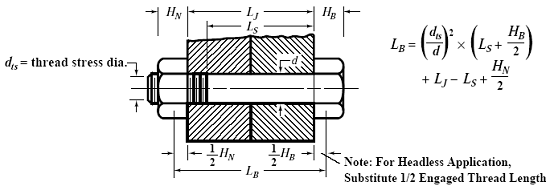
The bolt elongation equation is a crucial calculation in engineering, particularly when dealing with axial stress. As a bolt is subjected to tensile forces, it undergoes elongation, which can affect its performance and lifespan. The equation takes into account the bolt's material properties, such as its modulus of elasticity and cross-sectional area, as well as the applied axial stress. A bolt elongation calculator can simplify this process, providing accurate results and helping engineers design and optimize bolted joints for various applications. Understanding bolt elongation is essential for ensuring structural integrity and safety. Accurate calculations are vital.
- Bolt Elongation Equation and Calculator while under Axial Stress
- How do you calculate elongation from stress?
- How do you calculate the stress of a bolt?
- What is the allowable stress in bolting?
- What is the stress acting on a bolt?
-
Frequently Asked Questions (FAQs)
- What is the Bolt Elongation Equation and how is it used in engineering applications?
- How does the Bolt Elongation Calculator work, and what are its limitations?
- What are the key factors that affect the elongation of a bolt under axial stress?
- How can the Bolt Elongation Equation be used to optimize the design of bolted joints?
Bolt Elongation Equation and Calculator while under Axial Stress
The bolt elongation equation and calculator are essential tools in the field of mechanical engineering, particularly when dealing with axial stress. Axial stress occurs when a force is applied parallel to the axis of a bolt, causing it to stretch or compress. The bolt elongation equation is used to calculate the amount of elongation that occurs in a bolt when it is subjected to axial stress. This equation takes into account the stress applied to the bolt, the length of the bolt, and the material properties of the bolt.
Understanding the Bolt Elongation Equation
The bolt elongation equation is based on the principle of Hooke's Law, which states that the stress and strain of a material are proportional. The equation is as follows: δ = (F L) / (A E), where δ is the elongation, F is the force applied, L is the length of the bolt, A is the cross-sectional area of the bolt, and E is the modulus ofisticity of the material. This equation can be used to calculate the elongation of a bolt under axial stress, and is a crucial tool in the design and analysis of bolted joints.
Calculator for Bolt Elongation
A calculator for bolt elongation can be used to simplify the process of calculating the elongation of a bolt. These calculators can be found online or in engineering software, and typically require the user to input the force applied to the bolt, the length of the bolt, and the material properties of the bolt. The calculator then uses the bolt elongation equation to calculate the elongation of the bolt. These calculators can save time and reduce the risk of error, making them an essential tool for engineers and designers.
Factors Affecting Bolt Elongation
There are several factors that can affect the elongation of a bolt under axial stress. These include the material properties of the bolt, such as the modulus ofisticity and the yield strength, as well as the geometry of the bolt, such as the length and diameter. The surface finish of the bolt can also affect the elongation, as a rough surface can increase the friction between the bolt and the surrounding material. Additionally, the temperature of the bolt can affect the elongation, as some materials can expand or contract with changes in temperature.
Applications of Bolt Elongation Calculator
The bolt elongation calculator has a wide range of applications in the field of mechanical engineering. It can be used to design and analyze bolted joints, such as those found in bridges, buildings, and machinery. It can also be used to calculate the stress and strain on a bolt, allowing engineers to determine the safety factor of the bolt. Additionally, the calculator can be used to optimize the design of a bolted joint, by minimizing the weight and cost of the joint while maintaining the required strength and stiffness.
Limitations of Bolt Elongation Equation
While the bolt elongation equation is a powerful tool, it does have some limitations. It assumes that the stress and strain of the material are proportional, which is not always the case. Additionally, it does not take into account the dynamic effects of vibration and impact, which can affect the elongation of the bolt. Furthermore, the equation assumes that the material properties are isotropic, which is not always the case. To overcome these limitations, more advanced equations and calculators can be used, such as those that take into account the non-linear behavior of the material.
| Property | Unit | Description |
|---|---|---|
| Stress | Psi (lb/in^2) | The force per unit area applied to the bolt |
| Strain | in/in | The deformation per unit length of the bolt |
| Modulus of Elasticity | Psi (lb/in^2) | The ratio of stress to strain within the proportional limit of the material |
| Yield Strength | Psi (lb/in^2) | The stress at which the material begins to deform plastically |
| Ultimate Tensile Strength | Psi (lb/in^2) | The maximum stress that the material can withstand before failing |
How do you calculate elongation from stress?

To calculate elongation from stress, you need to understand the relationship between stress and strain. Stress is a measure of the force applied to a material, while strain is a measure of the resulting deformation. The elongation of a material can be calculated using the formula: elongation = (stress / Young's modulus) length. This formula shows that elongation is directly proportional to stress and length, and inversely proportional to Young's modulus.
Understanding the Relationship Between Stress and Strain
The relationship between stress and strain is fundamental to calculating elongation. Stress causes strain, and the amount of strain that occurs depends on the stress applied and the material properties. To calculate elongation, you need to know the stress applied, the length of the material, and the Young's modulus of the material. Here are the key factors to consider:
- Stress: The force applied to the material, typically measured in pascals (Pa) or pounds per square inch (psi).
- Strain: The resulting deformation of the material, typically measured as a percentage or fraction of the original length.
- Young's modulus: A measure of the material's stiffness, typically measured in pascals (Pa) or pounds per square inch (psi).
Calculating Elongation Using the Formula
The formula for calculating elongation is: elongation = (stress / Young's modulus) length. This formula can be used to calculate the elongation of a material under a given stress. For example, if a material has a Young's modulus of 200 GPa and a length of 10 meters, and a stress of 100 MPa is applied, the elongation can be calculated as follows:
- Stress: 100 MPa = 100,000,000 Pa
- Young's modulus: 200 GPa = 200,000,000,000 Pa
- Length: 10 meters
Factors Affecting Elongation Calculations
There are several factors that can affect elongation calculations, including material properties, temperature, and loading conditions. For example, temperature can affect the Young's modulus of a material, which in turn affects the elongation calculation. Additionally, loading conditions, such as tension or compression, can also affect the elongation calculation. Here are some key factors to consider:
- Material properties: Young's modulus, Poisson's ratio, and density can all affect elongation calculations.
- Temperature: Changes in temperature can affect the Young's modulus and other material properties.
- Loading conditions: Tension, compression, and torsion can all affect the elongation calculation.
Importance of Accurate Elongation Calculations
Accurate elongation calculations are critical in many engineering applications, such as designing structures and predicting material behavior. Inaccurate calculations can lead to unsafe or inefficient designs, which can have serious consequences. Therefore, it is essential to use reliable and tested formulas and material properties to ensure accurate elongation calculations. Here are some key considerations:
- Designing structures: Accurate elongation calculations are essential for designing safe and efficient structures.
- Predicting material behavior: Elongation calculations can help predict how materials will behave under different loading conditions.
- Material selection: Elongation calculations can help select the most suitable materials for a given application.
Common Applications of Elongation Calculations
Elongation calculations have numerous applications in engineering and materials science, including designing structures, predicting material behavior, and selecting materials. Here are some common applications:
- Aerospace engineering: Elongation calculations are used to design and analyze aircraft and spacecraft structures.
- Civil engineering: Elongation calculations are used to design and analyze buildings, bridges, and other structures.
- Materials science: Elongation calculations are used to study and predict the behavior of materials under different loading conditions.
How do you calculate the stress of a bolt?

To calculate the stress of a bolt, you need to consider the forces acting on it, including the tensile force, shear force, and torque. The stress calculation involves determining the axial stress, hoop stress, and radial stress. This is crucial in ensuring the bolt can withstand the loads and stresses imposed on it without failure.
Understanding Bolt Stress Calculation
The calculation of bolt stress is a critical aspect of mechanical engineering, as it helps determine the safety factor and reliability of the bolt. To calculate the stress, you need to know the bolt's material properties, such as its elastic modulus, poisson's ratio, and yield strength. The stress calculation involves the following steps:
- Determine the bolt's diameter and length to calculate its cross-sectional area.
- Calculate the tensile force acting on the bolt using the load and lever arm.
- Apply the stress formula, which is stress = force / area, to determine the axial stress.
Bolt Material Properties and Stress
The material properties of the bolt play a significant role in determining its stress. Properties such as yield strength, ultimate tensile strength, and elastic modulus affect the bolt's ability to withstand stress. The stress calculation must consider the bolt's material and its behavior under different loads. Key factors to consider include:
- Yield strength, which is the stress at which the bolt starts to deform plastically.
- Ultimate tensile strength, which is the maximum stress the bolt can withstand before failure.
- Elastic modulus, which is a measure of the bolt's stiffness and ability to resist deformation.
Types of Stress in Bolts
There are several types of stress that can act on a bolt, including axial stress, hoop stress, and radial stress. Axial stress occurs when the bolt is subjected to a tensile force, while hoop stress occurs when the bolt is subjected to a torque. Radial stress occurs when the bolt is subjected to a compressive force. Understanding the different types of stress is crucial in calculating the bolt's overall stress state, and includes:
- Axial stress, which is the stress acting in the direction of the bolt's axis.
- Hoop stress, which is the stress acting in the circumferential direction.
- Radial stress, which is the stress acting in the radial direction.
Calculating Bolt Stress Using Formulas
To calculate the stress of a bolt, you can use various formulas, including the stress formula and the torque formula. The stress formula is stress = force / area, while the torque formula is torque = force x lever arm. These formulas can be used to calculate the axial stress, hoop stress, and radial stress. Key formulas to consider include:
- Stress formula, which is used to calculate the axial stress and hoop stress.
- Torque formula, which is used to calculate the torque and hoop stress.
- Strain formula, which is used to calculate the strain and deformation of the bolt.
Importance of Accurate Bolt Stress Calculation
Accurate stress calculation is crucial in ensuring the reliability and safety of the bolt. Inaccurate stress calculation can lead to bolt failure, which can have serious consequences, including equipment damage and injury. Accurate stress calculation involves considering the bolt's material properties, geometry, and loading conditions. Key factors to consider include:
- Material properties, such as yield strength and elastic modulus.
- Geometry, such as diameter and length.
- Loading conditions, such as tensile force and torque.
What is the allowable stress in bolting?
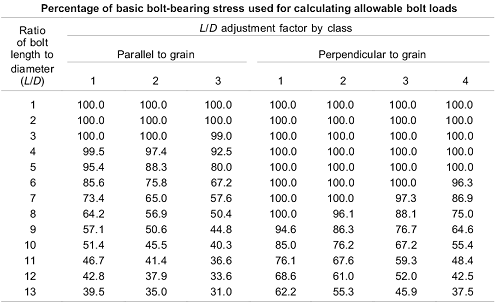
The allowable stress in bolting refers to the maximum stress that a bolt can withstand without failing. This value is crucial in determining the safety and reliability of a bolted joint. The allowable stress is typically calculated based on the material properties of the bolt, such as its yield strength and ultimate tensile strength. It is also influenced by factors like the bolt's diameter, thread pitch, and surface finish.
Understanding Bolt Material Properties
The material properties of a bolt play a significant role in determining its allowable stress. The yield strength and ultimate tensile strength of the bolt material are used to calculate the allowable stress. Other factors like the bolt's ductility and corrosion resistance also impact the allowable stress. Some common bolt materials and their properties include:
- Stainless steel: high corrosion resistance and strength
- Aluminum: low weight and high corrosion resistance
- Titanium: high strength-to-weight ratio and corrosion resistance
Calculating Allowable Stress
The allowable stress in bolting is typically calculated using a formula that takes into account the bolt's material properties and geometric parameters. The formula may include factors like the bolt's diameter, thread pitch, and surface finish. The allowable stress is usually expressed as a percentage of the bolt's yield strength. For example:
- Bolt diameter: larger diameters result in higher allowable stresses
- Thread pitch: finer thread pitches result in higher allowable stresses
- Surface finish: smoother surface finishes result in higher allowable stresses
Factors Affecting Allowable Stress
Several factors can affect the allowable stress in bolting, including temperature, corrosion, and fatigue. High temperatures can reduce the allowable stress by decreasing the bolt's strength. Corrosion can also reduce the allowable stress by weakening the bolt material. Fatigue can cause the bolt to fail prematurely, especially if it is subjected to repeated loading and unloading cycles. Some key factors to consider include:
- Temperature range: high temperatures can reduce the allowable stress
- Corrosion environment: aggressive environments can reduce the allowable stress
- Loading conditions: repeated loading and unloading can reduce the allowable stress
Importance of Allowable Stress in Design
The allowable stress is a critical parameter in the design of bolted joints. It helps to ensure that the joint can withstand the expected loads and stresses without failing. Design engineers must carefully calculate the allowable stress and select the appropriate bolt material and geometry to achieve a safe and reliable design. Some key considerations include:
- Load calculation: accurate load calculations are essential for determining the allowable stress
- Material selection: selecting the right bolt material is critical for achieving the desired allowable stress
- Geometry optimization: optimizing the bolt's geometry can help to maximize the allowable stress
Consequences of Exceeding Allowable Stress
Exceeding the allowable stress in bolting can have serious consequences, including bolt failure, joint leakage, and equipment damage. Bolt failure can occur due to yielding, fracture, or fatigue. Joint leakage can occur if the bolt is not properly torqued or if the gasket is not suitable for the application. Equipment damage can occur if the bolted joint is not properly designed or maintained. Some potential consequences of exceeding the allowable stress include:
- Bolt failure: yielding, fracture, or fatigue can occur if the allowable stress is exceeded
- Joint leakage: leakage can occur if the bolt is not properly torqued or if the gasket is not suitable
- Equipment damage: damage can occur if the bolted joint is not properly designed or maintained
What is the stress acting on a bolt?

The stress acting on a bolt is a critical factor in determining its suitability for a particular application. Stress refers to the internal forces that are distributed within a material, and it can be caused by various factors such as tension, compression, torsion, or shear. When a bolt is subjected to stress, it can lead to deformation or even failure if the stress exceeds the material's yield strength or ultimate tensile strength.
Types of Stress Acting on a Bolt
The stress acting on a bolt can be categorized into different types, including axial stress, torsional stress, and bending stress. These types of stress can occur individually or in combination, depending on the application and the loading conditions.
- The axial stress occurs when a bolt is subjected to a force that is parallel to its longitudinal axis, causing it to stretch or compress.
- The torsional stress occurs when a bolt is subjected to a twisting force, causing it to rotate or twist.
- The bending stress occurs when a bolt is subjected to a force that is perpendicular to its longitudinal axis, causing it to bend or flex.
Factors Affecting Stress on a Bolt
Several factors can affect the stress acting on a bolt, including the material properties, bolt geometry, and loading conditions. The material properties such as strength, stiffness, and ductility play a crucial role in determining the stress acting on a bolt.
- The bolt geometry, including its diameter, length, and thread pitch, can also affect the stress acting on a bolt.
- The loading conditions, including the magnitude and direction of the applied force, can also impact the stress acting on a bolt.
- The surface finish and coating of the bolt can also influence the stress acting on a bolt by affecting the friction and corrosion resistance.
Calculating Stress on a Bolt
Calculating the stress acting on a bolt is a complex task that requires a thorough understanding of the mechanics of materials and the loading conditions. The stress calculation typically involves using formulas and equations that take into account the bolt geometry, material properties, and loading conditions.
- The axial stress can be calculated using the formula: σ = F / A, where σ is the stress, F is the applied force, and A is the cross-sectional area of the bolt.
- The torsional stress can be calculated using the formula: τ = T / J, where τ is the stress, T is the applied torque, and J is the polar moment of inertia of the bolt.
- The bending stress can be calculated using the formula: σ = M / I, where σ is the stress, M is the applied bending moment, and I is the moment of inertia of the bolt.
Consequences of Excessive Stress on a Bolt
Excessive stress on a bolt can lead to failure, which! can have serious consequences, including equipment damage, injury, or even death. The failure mode can vary depending on the type of stress and the material properties of the bolt.
- The yielding of a bolt occurs when the stress exceeds the yield strength of the material, causing the bolt to deform plastically.
- The fracture of a bolt occurs when the stress exceeds the ultimate tensile strength of the material, causing the bolt to break or fail.
- The corrosion of a bolt can also occur when the stress causes the material to degrade or weaken over time.
Design Considerations for Bolts Under Stress
When designing bolts that will be subjected to stress, it is essential to consider several design factors to ensure that the bolt can withstand the loading conditions. The design process typically involves selecting the material, determining the bolt geometry, and specifying the surface finish and coating.
- The material selection should be based on the required strength, stiffness, and ductility of the bolt.
- The bolt geometry should be designed to minimize the stress concentration and maximize the strength and stiffness of the bolt.
- The surface finish and coating should be specified to reduce the friction and corrosion resistance of the bolt.
Frequently Asked Questions (FAQs)
What is the Bolt Elongation Equation and how is it used in engineering applications?
The Bolt Elongation Equation is a mathematical formula used to calculate the elongation of a bolt under axial stress. This equation is crucial in engineering applications, particularly in the design and analysis of bolted joints. The equation takes into account the material properties of the bolt, such as its elastic modulus and Poisson's ratio, as well as the applied load and bolt geometry. By using this equation, engineers can determine the elongation of the bolt, which is essential in ensuring the structural integrity of the joint. The Bolt Elongation Equation is widely used in various industries, including aerospace, automotive, and construction, where bolted joints are commonly used.
How does the Bolt Elongation Calculator work, and what are its limitations?
The Bolt Elongation Calculator is a tool used to calculate the elongation of a bolt under axial stress. It uses the Bolt Elongation Equation as its basis and requires input parameters such as the bolt diameter, bolt length, material properties, and applied load. The calculator then uses these inputs to calculate the elongation of the bolt. However, the calculator has some limitations, including the assumption of a linear elastic behavior of the bolt material, which may not be accurate for all loading conditions. Additionally, the calculator does not account for other factors that can affect the bolt behavior, such as friction and thread geometry. Therefore, the results obtained from the calculator should be used with caution and verified through experimental testing or finite element analysis.
What are the key factors that affect the elongation of a bolt under axial stress?
The elongation of a bolt under axial stress is affected by several key factors, including the material properties of the bolt, such as its elastic modulus and Poisson's ratio. The bolt geometry, including its diameter and length, also plays a significant role in determining the elongation. Additionally, the applied load and loading conditions, such as the rate of loading and temperature, can also impact the bolt behavior. Other factors, such as surface roughness and thread geometry, can also influence the frictional resistance of the bolt, which can affect its elongation. Understanding these key factors is essential in predicting the behavior of the bolt under axial stress and ensuring the structural integrity of the joint.
How can the Bolt Elongation Equation be used to optimize the design of bolted joints?
The Bolt Elongation Equation can be used to optimize the design of bolted joints by providing a quantitative basis for evaluating the performance of different bolt designs. By using the equation, engineers can analyze the effects of various design parameters, such as bolt diameter, bolt length, and material properties, on the elongation of the bolt. This information can then be used to optimize the design of the bolted joint, ensuring that it can withstand the applied loads and loading conditions while minimizing weight and cost. The equation can also be used to evaluate the effects of different material properties and manufacturing processes on the behavior of the bolt, allowing engineers to make informed design decisions. By using the Bolt Elongation Equation in conjunction with finite element analysis and experimental testing, engineers can create optimized designs for bolted joints that meet the required performance and safety standards.
Deja una respuesta
Entradas Relacionadas