
Bolt Single and Double Shear and Tension Stress Analysis Calculator per AISC 9th Edition

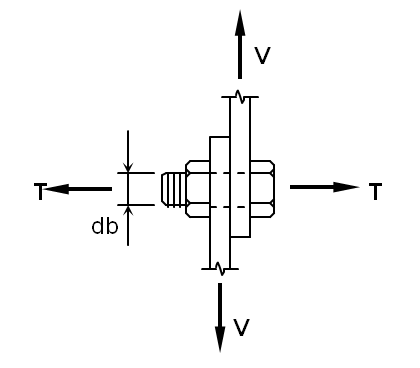
The Bolt Single and Double Shear and Tension Stress Analysis Calculator is a comprehensive tool designed to calculate the stress analysis of bolts according to the American Institute of Steel Construction (AISC) 9th Edition specifications. This calculator provides a straightforward and efficient method for determining the shear and tension stresses in bolts, taking into account various parameters such as bolt diameter, thread length, and material properties. The calculator's accuracy and reliability make it an essential resource for structural engineers and designers working on steel construction projects, ensuring compliance with AISC standards and regulations. Engineers can easily calculate stresses.
- Bolt Single and Double Shear and Tension Stress Analysis Calculator per AISC 9th Edition
- What is the formula for the shear capacity of a bolt in AISC?
- What is bolt single shear vs double shear?
- What is the formula for shear load of a bolt?
- What is the maximum shear stress in a bolt?
-
Frequently Asked Questions (FAQs)
- What is the purpose of the Bolt Single and Double Shear and Tension Stress Analysis Calculator per AISC 9th Edition?
- How does the Bolt Single and Double Shear and Tension Stress Analysis Calculator per AISC 9th Edition account for different types of bolts and materials?
- What are the key input parameters required for the Bolt Single and Double Shear and Tension Stress Analysis Calculator per AISC 9th Edition?
- How can the Bolt Single and Double Shear and Tension Stress Analysis Calculator per AISC 9th Edition be used to optimize bolted connections in structural designs?
Bolt Single and Double Shear and Tension Stress Analysis Calculator per AISC 9th Edition
The Bolt Single and Double Shear and Tension Stress Analysis Calculator per AISC 9th Edition is a tool used to calculate the stress and load capacity of bolts in various structural applications. This calculator is based on the guidelines set forth in the 9th edition of the American Institute of Steel Construction (AISC) manual. The calculator takes into account factors such as bolt diameter, bolt material, thread length, and preload to determine the shear and tension capacity of the bolts.
Introduction to Bolt Shear and Tension Stress Analysis
Bolt shear and tension stress analysis is a critical aspect of structural engineering design. The AISC manual provides guidelines for calculating the shear and tension capacity of bolts, which is essential for ensuring the safety and stability of structures. The calculator uses formulas and equations based on the AISC manual to determine the stress and load capacity of bolts.
Key Factors Affecting Bolt Shear and Tension Capacity
Several factors affect the shear and tension capacity of bolts, including:
| Factor | Description |
|---|---|
| Bolt Diameter | The diameter of the bolt affects its shear and tension capacity. |
| Bolt Material | The material properties of the bolt, such as its yield strength and ultimate strength, affect its shear and tension capacity. |
| Thread Length | The length of the thread affects the preload and clamping force of the bolt. |
| Preload | The preload applied to the bolt affects its stress and load capacity. |
Single Shear and Double Shear Bolt Capacity
The calculator can determine the single shear and double shear capacity of bolts. Single shear occurs when the bolt is subjected to a load that causes it to shear in one plane, while double shear occurs when the bolt is subjected to a load that causes it to shear in two planes. The calculator uses formulas based on the AISC manual to determine the shear capacity of bolts in both single shear and double shear conditions.
Importance of Accurate Bolt Stress Analysis
Accurate bolt stress analysis is crucial for ensuring the safety and stability of structures. The calculator helps engineers and designers to determine the stress and load capacity of bolts, which is essential for preventing bolt failure and ensuring the integrity of structures.
Limitations and Assumptions of the Calculator
The calculator is based on the guidelines set forth in the AISC manual and makes certain assumptions about the bolt and structural properties. The calculator assumes that the bolt is made of a homogeneous material and that the load is applied axially to the bolt. The calculator also assumes that the bolt is properly installed and torqued to the recommended preload. Users should consult the AISC manual and other reference materials to ensure that the calculator is used correctly and that the results are valid and reliable.
What is the formula for the shear capacity of a bolt in AISC?

The formula for the shear capacity of a bolt in AISC (American Institute of Steel Construction) is given by the equation: nominal shear strength = Ft x An, where Ft is the shear strength of the bolt material and An is the net area of the bolt. This formula is used to determine the maximum load that a bolt can resist in shear without failing.
Introduction to Shear Capacity
The shear capacity of a bolt is an important consideration in the design of structural connections. The shear capacity of a bolt is the maximum load that it can resist in shear without failing. This is typically calculated using the AISC specification, which provides a set of equations and guidelines for determining the shear capacity of bolts. Some key factors that affect the shear capacity of a bolt include:
- The material properties of the bolt, such as its shear strength and yield strength.
- The geometry of the bolt, including its diameter and length.
- The type of connection being used, such as a lap splice or a butt splice.
Shear Strength of Bolt Materials
The shear strength of a bolt material is a critical factor in determining its shear capacity. Different materials have different shear strengths, which are typically measured in units of pounds per square inch (psi). For example, A325 bolts have a shear strength of 90,000 psi, while A490 bolts have a shear strength of 120,000 psi. Some key considerations when selecting a bolt material include:
- The required shear strength of the connection.
- The corrosion resistance of the material.
- The availability and cost of the material.
Net Area of the Bolt
The net area of a bolt is the area of the bolt that is available to resist shear forces. This is typically calculated by subtracting the area of the bolt hole from the gross area of the bolt. The net area is an important factor in determining the shear capacity of a bolt, as it affects the amount of load that the bolt can resist. Some key considerations when calculating the net area of a bolt include:
- The diameter and length of the bolt.
- The size and shape of the bolt hole.
- The type of connection being used.
Types of Bolt Connections
There are several types of bolt connections that can be used in structural design, each with its own unique characteristics and requirements. Some common types of bolt connections include lap splices, butt splices, and beam-to-column connections. The type of connection being used can affect the shear capacity of the bolt, as well as the installation and inspection requirements. Some key considerations when selecting a type of bolt connection include:
- The required shear strength of the connection.
- The geometry of the connection, including the bolt spacing and edge distance.
- The type of loading being applied to the connection.
Design Considerations for Bolted Connections
When designing bolted connections, there are several key considerations that must be taken into account. These include the shear capacity of the bolt, as well as the tension capacity, bearing capacity, and slip resistance. The AISC specification provides a set of guidelines and equations for designing bolted connections, including the shear capacity equation. Some key considerations when designing bolted connections include:
- The required strength of the connection, including the shear strength and tension strength.
- The type of loading being applied to the connection, including static and dynamic loads.
- The geometry of the connection, including the bolt spacing and edge distance.
What is bolt single shear vs double shear?

Bolt single shear and double shear refer to the way a bolt is loaded when it is subjected to a shear force. In single shear, the bolt is loaded in such a way that the shear force is applied to one area of the bolt, typically at the thread interface between the bolt and the nut or threaded hole. This can lead to a higher stress concentration and potentially cause the bolt to fail more easily. On the other hand, double shear occurs when the bolt is loaded in such a way that the shear force is applied to two areas of the bolt, typically at two thread interfaces. This can help to distribute the load more evenly and reduce the stress concentration, making the bolt more resistant to failure.
What is Bolt Single Shear?
Bolt single shear is a type of loading condition where the bolt is subjected to a shear force at one point. This can occur when the bolt is used to join two plates or members together and is loaded in such a way that the shear force is applied to one area of the bolt. The single shear condition can lead to a higher stress concentration and potentially cause the bolt to fail more easily. Some key characteristics of bolt single shear include:
- The bolt is loaded in a single shear plane
- The shear force is applied to one area of the bolt
- The stress concentration is higher in single shear compared to double shear
What is Bolt Double Shear?
Bolt double shear is a type of loading condition where the bolt is subjected to a shear force at two points. This can occur when the bolt is used to join two plates or members together and is loaded in such a way that the shear force is applied to two areas of the bolt. The double shear condition can help to distribute the load more evenly and reduce the stress concentration, making the bolt more resistant to failure. Some key characteristics of bolt double shear include:
- The bolt is loaded in two shear planes
- The shear force is applied to two areas of the bolt
- The stress concentration is lower in double shear compared to single shear
Key Differences Between Single and Double Shear
There are several key differences between bolt single shear and double shear. One of the main differences is the way the load is distributed across the bolt. In single shear, the load is concentrated at one point, while in double shear, the load is distributed across two points. This can affect the stress concentration and the resistance of the bolt to failure. Some key differences between single and double shear include:
- Load distribution: Single shear has a concentrated load, while double shear has a distributed load
- Stress concentration: Single shear has a higher stress concentration than double shear
- Resistance to failure: Double shear is more resistant to failure than single shear
Applications of Single and Double Shear
Both single and double shear have various applications in engineering and construction. Single shear is often used in simple joints and connections, while double shear is used in more complex structures and assemblies. Some examples of applications of single and double shear include:
- Structural connections: Single shear is used in simple structural connections, while double shear is used in more complex structural connections
- Machine components: Single shear is used in simple machine components, while double shear is used in more complex machine components
- Aerospace engineering: Double shear is often used in aerospace engineering due to its high resistance to failure
Design Considerations for Single and Double Shear
When designing a bolted joint or connection, it is essential to consider the loading conditions and the stress concentration. For single shear, the design should take into account the concentrated load and the potential for high stress concentrations. For double shear, the design should take into account the distributed load and the reduced stress concentration. Some key design considerations for single and double shear include:
- Material selection: The material selection should be based on the loading conditions and the stress concentration
- Thread engagement: The thread engagement should be sufficient to resist the shear force
- Preload: The preload should be sufficient to ensure the joint or connection is secure
What is the formula for shear load of a bolt?

The formula for shear load of a bolt is given by the equation: F = (A τ) / n, where F is the shear force acting on the bolt, A is the cross-sectional area of the bolt, τ is the shear stress of the material, and n is the number of bolts sharing the load. This formula is used to calculate the maximum shear load that a bolt can withstand before failing.
Understanding Shear Load Calculation
To calculate the shear load of a bolt, it is essential to understand the mechanics of materials and the properties of the bolt material. The calculation involves determining the cross-sectional area of the bolt and the shear stress of the material. The following steps are involved in the calculation:
- Determine the diameter and thread pitch of the bolt to calculate the cross-sectional area.
- Find the shear stress of the material, which is typically provided in the material specifications.
- Calculate the shear load using the formula F = (A τ) / n, where n is the number of bolts sharing the load.
Factors Affecting Shear Load
Several factors can affect the shear load of a bolt, including the bolt material, diameter, and thread pitch. The surface finish and bolt lubrication can also impact the shear load. Additionally, the load distribution and bolt spacing can influence the shear load on individual bolts. The following factors can affect the shear load:
- Bolt material: The shear strength of the material affects the shear load.
- Bolt diameter: The cross-sectional area of the bolt affects the shear load.
- Thread pitch: The thread pitch affects the shear load by changing the cross-sectional area.
Shear Load vs. Tensile Load
The shear load and tensile load are two different types of loads that can act on a bolt. The tensile load is the force that tends to stretch the bolt, while the shear load is the force that tends to cut the bolt. The shear load is typically more critical than the tensile load because it can cause the bolt to fail more easily. The following are key differences between shear load and tensile load:
- Load type: Shear load is a cutting force, while tensile load is a stretching force.
- Failure mode: Shear load can cause the bolt to fail by cutting, while tensile load can cause the bolt to fail by stretching.
- Calculation: The shear load is calculated using the formula F = (A τ) / n, while the tensile load is calculated using the formula F = (A σ) / n.
Design Considerations for Shear Load
When designing a bolted joint, it is essential to consider the shear load to ensure that the bolts can withstand the forces acting on them. The design should take into account the material properties, bolt size, and load distribution. The following are key design considerations for shear load:
- Material selection: Choose a material with high shear strength to ensure that the bolts can withstand the shear load.
- Bolt sizing: Select bolts with a diameter and thread pitch that can withstand the shear load.
- Load distribution: Ensure that the load is evenly distributed among the bolts to minimize the shear load on individual bolts.
Testing and Validation for Shear Load
To ensure that a bolted joint can withstand the shear load, it is essential to perform testing and validation. The testing should involve applying a shear load to the bolted joint and measuring the deformation and stress on the bolts. The following are key testing and validation methods for shear load:
- Tensile testing: Perform tensile testing to determine the ultimate tensile strength of the bolt material.
- Shear testing: Perform shear testing to determine the shear strength of the bolt material.
- Finite element analysis: Use finite element analysis to simulate the shear load on the bolted joint and predict the stress and deformation on the bolts.
What is the maximum shear stress in a bolt?

The maximum shear stress in a bolt is a critical factor in determining its ability to withstand external forces without failing. The shear stress is calculated by dividing the shear force by the cross-sectional area of the bolt. The maximum shear stress occurs when the bolt is subjected to a torque or a tensile force that causes the bolt to deform and potentially fail.
Factors Affecting Shear Stress in Bolts
The shear stress in a bolt is affected by several factors, including the material properties of the bolt, the bolt diameter, and the thread pitch. The material properties, such as the yield strength and ultimate strength, play a significant role in determining the maximum shear stress that a bolt can withstand. The bolt diameter and thread pitch also affect the shear stress by changing the cross-sectional area and the thread engagement. Some key factors that affect the shear stress in bolts are:
- The bolt material and its mechanical properties
- The bolt geometry, including the diameter and thread pitch
- The applied load, including tensile forces and torques
Calculating Maximum Shear Stress
To calculate the maximum shear stress in a bolt, engineers use a combination of mathematical models and experimental data. The shear stress is calculated using the shear force and the cross-sectional area of the bolt. The shear force is determined by the applied load and the bolt geometry, while the cross-sectional area is calculated using the bolt diameter and thread pitch. Some key steps in calculating the maximum shear stress are:
- Determine the applied load and the bolt geometry
- Calculate the shear force using the applied load and bolt geometry
- Calculate the cross-sectional area using the bolt diameter and thread pitch
Consequences of Exceeding Maximum Shear Stress
When a bolt is subjected to a shear stress that exceeds its maximum limit, it can fail catastrophically, leading to equipment damage and personal injury. The failure mode can be either ductile or brittle, depending on the material properties and the loading conditions. In general, ductile failures occur when the bolt material is able to deform and absorb energy before failing, while brittle failures occur when the bolt material is unable to deform and fails suddenly. Some key consequences of exceeding the maximum shear stress are:
- Equipment damage and downtime
- Personal injury or fatality
- Financial losses due to repair or replacement costs
Design Considerations for Shear Stress
To minimize the risk of shear stress-related failures, engineers must carefully consider the design parameters of the bolt, including the material selection, bolt geometry, and thread engagement. The design parameters must be optimized to ensure that the shear stress is within the safe limits of the bolt material. Some key design considerations for shear stress are:
- Material selection based on mechanical properties
- Bolt geometry optimization for minimum weight and maximum strength
- Thread engagement optimization for maximum shear resistance
Testing and Validation of Shear Stress
To ensure that the shear stress calculations are accurate and reliable, engineers must validate their designs using experimental testing and numerical simulation. The testing and validation process involves subjecting the bolt to controlled loads and measuring the resulting shear stress and deformation. Some key steps in testing and validating the shear stress are:
- Experimental testing using tensile testing machines or torque testing rigs
- Numerical simulation using finite element analysis or computational fluid dynamics
- Data analysis and comparison with theoretical predictions
Frequently Asked Questions (FAQs)
What is the purpose of the Bolt Single and Double Shear and Tension Stress Analysis Calculator per AISC 9th Edition?
The Bolt Single and Double Shear and Tension Stress Analysis Calculator is a tool designed to analyze the stress and load capacity of bolts in various structural applications. The calculator is based on the American Institute of Steel Construction (AISC) 9th Edition specifications, which provide guidelines for the design and analysis of steel structures. The main purpose of this calculator is to help engineers and designers determine the shear and tension stresses in bolts and ensure that they can withstand the loads and forces applied to them. By using this calculator, users can optimize their designs and ensure that their structures are safe and reliable. The calculator takes into account various parameters such as bolt diameter, thread length, material properties, and load conditions to provide accurate and reliable results.
How does the Bolt Single and Double Shear and Tension Stress Analysis Calculator per AISC 9th Edition account for different types of bolts and materials?
The Bolt Single and Double Shear and Tension Stress Analysis Calculator accounts for different types of bolts and materials by incorporating various material properties and bolt characteristics into its calculations. The calculator allows users to select from a range of bolt types, including ASTM A325, ASTM A490, and ASTM A307, each with its own unique material properties and strength characteristics. Additionally, the calculator considers the diameter, thread length, and grade of the bolt, as well as the type of steel or alloy used in the structure. By taking into account these variables, the calculator can provide accurate and reliable results for a wide range of bolt and material combinations. The calculator also includes default values for common bolt and material combinations, making it easy for users to quickly and efficiently analyze their designs. Furthermore, the calculator's user-friendly interface allows users to easily input their own custom material properties and bolt characteristics, giving them flexibility and control over their designs.
What are the key input parameters required for the Bolt Single and Double Shear and Tension Stress Analysis Calculator per AISC 9th Edition?
The Bolt Single and Double Shear and Tension Stress Analysis Calculator requires several key input parameters to perform an accurate analysis. These parameters include the bolt diameter, thread length, material properties, load conditions, and structural configuration. The bolt diameter and thread length are used to determine the shear and tension areas of the bolt, while the material properties are used to determine the strength and stiffness of the bolt. The load conditions, including the applied loads and forces, are used to determine the stresses and strains in the bolt. Additionally, the calculator requires information about the structural configuration, including the type of connection, member sizes, and boundary conditions. By providing these key input parameters, users can ensure that the calculator provides accurate and reliable results for their designs. The calculator's user-friendly interface makes it easy for users to input these parameters, and the calculator's built-in checks and validations help to ensure that the input parameters are correct and consistent.
How can the Bolt Single and Double Shear and Tension Stress Analysis Calculator per AISC 9th Edition be used to optimize bolted connections in structural designs?
The Bolt Single and Double Shear and Tension Stress Analysis Calculator can be used to optimize bolted connections in structural designs by helping users to identify the most critical parameters that affect the performance of the connection. By analyzing the stresses and strains in the bolts, users can determine the optimal bolt size, material, and configuration for their design. The calculator can also be used to evaluate the effectiveness of different connection types, such as single shear or double shear, and to compare the performance of different bolt types and materials. Additionally, the calculator can be used to investigate the sensitivity of the connection to various parameters, such as load conditions and material properties, allowing users to optimize their designs for maximum efficiency and reliability. By using the calculator to optimize their bolted connections, users can improve the overall performance of their structures, reduce the risk of failure, and minimize costs associated with rework or repair. The calculator's fast and accurate analysis capabilities make it an essential tool for engineers and designers working on complex structural projects.
Deja una respuesta
Entradas Relacionadas