
How to define a good SLA for early stage startup SaaS products

Defining a good Service Level Agreement (SLA) is a critical step for early-stage SaaS startups aiming to build trust and credibility with their customers. An SLA outlines the expected performance, availability, and support standards, serving as a foundation for customer relationships. For startups, striking the right balance between ambitious promises and realistic capabilities is key. Overpromising can strain resources, while underdelivering may harm reputation. A well-crafted SLA should align with the product’s maturity, prioritize customer needs, and allow room for scalability. By focusing on transparency, flexibility, and measurable metrics, startups can create SLAs that foster long-term growth and customer satisfaction.
How to Define a Good SLA for Early Stage Startup SaaS Products
Defining a Service Level Agreement (SLA) for an early-stage SaaS (Software as a Service) product is a critical step in building trust with customers while ensuring the business can meet its commitments. An SLA outlines the expected performance, availability, and support standards of the service, which are crucial for customer satisfaction and retention. For startups, it’s essential to strike a balance between offering competitive guarantees and maintaining realistic expectations, as overpromising can lead to operational strain and reputational damage.
1. Understanding the Core Components of an SLA
An SLA typically includes key performance indicators (KPIs) such as uptime percentage, response time, and resolution time. For early-stage SaaS startups, it’s important to focus on metrics that align with the product’s current capabilities and customer expectations. For example, a 99.9% uptime guarantee might be unrealistic for a startup with limited infrastructure, whereas a 99% uptime guarantee could be more achievable.
| Component | Description |
|---|---|
| Uptime | The percentage of time the service is operational. |
| Response Time | The time taken to acknowledge a customer issue. |
| Resolution Time | The time taken to resolve a customer issue. |
2. Setting Realistic Uptime Guarantees
For early-stage startups, setting a realistic uptime guarantee is crucial. While established companies might promise 99.99% uptime, startups should aim for a balance between reliability and feasibility. A 99% uptime guarantee translates to approximately 7 hours of downtime per month, which is more manageable for startups with limited resources.
| Uptime Percentage | Downtime Per Month |
|---|---|
| 99% | 7 hours |
| 99.9% | 43 minutes |
| 99.99% | 4 minutes |
3. Defining Clear Response and Resolution Times
Response and resolution times are critical components of an SLA. Startups should define these based on their team size and operational capacity. For instance, a 24-hour response time and a 72-hour resolution time might be reasonable for a small team. Clearly communicating these timelines helps manage customer expectations and builds trust.
| Metric | Timeframe |
|---|---|
| Response Time | 24 hours |
| Resolution Time | 72 hours |
4. Incorporating Scalability into the SLA
As a startup grows, its SLA should evolve to reflect improved infrastructure and capabilities. Including scalability clauses allows the business to adjust its commitments as it matures. For example, a startup might start with a 99% uptime guarantee and increase it to 99.9% after scaling its resources.
| Stage | Uptime Guarantee |
|---|---|
| Early Stage | 99% |
| Growth Stage | 99.9% |
5. Communicating SLA Terms Effectively
Clear communication of SLA terms is essential to avoid misunderstandings. Startups should ensure that their SLA is written in simple, non-technical language and is easily accessible to customers. Providing examples and explanations for key terms can help customers understand what to expect.
| Term | Explanation |
|---|---|
| Uptime | The percentage of time the service is available. |
| Downtime | The period when the service is unavailable. |
What is a standard SLA for SaaS?

What is a Standard SLA for SaaS?
A Standard SLA (Service Level Agreement) for SaaS (Software as a Service) is a formal contract between a service provider and a customer that outlines the expected level of service, including performance metrics, uptime guarantees, and support responsiveness. It ensures that the SaaS provider meets specific standards, such as availability, reliability, and customer support, while also defining remedies or penalties if the agreed-upon service levels are not met.
Key Components of a SaaS SLA
A SaaS SLA typically includes several critical components to ensure clarity and accountability:
- Uptime Guarantee: Specifies the percentage of time the service will be available, often expressed as 99.9% or higher.
- Performance Metrics: Defines measurable criteria like response time, latency, and throughput.
- Support and Response Times: Outlines how quickly the provider will respond to and resolve issues.
- Data Security and Backup: Details the provider's commitment to data protection and recovery processes.
- Penalties and Remedies: Describes compensation or actions if the SLA terms are not met.
Why is Uptime Critical in a SaaS SLA?
Uptime is one of the most critical aspects of a SaaS SLA because it directly impacts the customer's ability to use the service. A high uptime percentage ensures minimal downtime, which is essential for business continuity and customer satisfaction.
- Business Continuity: Ensures uninterrupted access to the software, which is vital for daily operations.
- Customer Trust: High uptime builds trust and reliability in the SaaS provider.
- Financial Impact: Downtime can lead to lost revenue and productivity, making uptime a key metric.
How Are Performance Metrics Defined in a SaaS SLA?
Performance metrics in a SaaS SLA are defined to measure the quality and efficiency of the service. These metrics ensure that the software performs as expected and meets the customer's needs.
- Response Time: Measures how quickly the system responds to user requests.
- Latency: Tracks the delay between a user action and the system's response.
- Throughput: Indicates the number of transactions or operations the system can handle within a specific timeframe.
What Role Does Support Play in a SaaS SLA?
Support is a crucial element of a SaaS SLA, as it ensures that customers receive timely assistance when issues arise. This includes both technical support and customer service.
- Response Time: Defines how quickly the provider will acknowledge and address support requests.
- Resolution Time: Specifies the maximum time allowed to resolve issues.
- Support Channels: Outlines the available methods for contacting support, such as email, phone, or chat.
How Are Penalties and Remedies Structured in a SaaS SLA?
Penalties and remedies in a SaaS SLA are designed to hold the provider accountable and compensate the customer if service levels are not met. These provisions ensure fairness and encourage compliance.
- Service Credits: Refunds or discounts provided to the customer as compensation for downtime or poor performance.
- Termination Rights: Allows the customer to terminate the contract if the provider consistently fails to meet SLA terms.
- Escalation Procedures: Outlines steps for resolving disputes or escalating issues to higher management.
What is an acceptable SLA?
What is an Acceptable SLA?
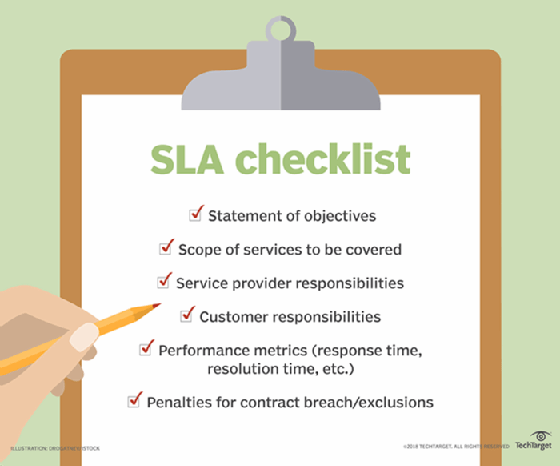
An acceptable Service Level Agreement (SLA) is a formal commitment between a service provider and a client that outlines the expected level of service, performance metrics, and responsibilities. It ensures that both parties have a clear understanding of the quality and reliability of the services being provided. An acceptable SLA typically includes:
- Uptime Guarantees: Specifies the percentage of time the service will be available, often expressed as 99.9% or higher.
- Response Times: Defines how quickly the provider will respond to issues or requests, such as within 2 hours for critical problems.
- Resolution Times: Outlines the maximum time allowed to resolve issues, ensuring minimal disruption to the client.
- Penalties for Non-Compliance: Details consequences if the provider fails to meet the agreed-upon standards, such as service credits or refunds.
- Clear Metrics and Reporting: Establishes measurable performance indicators and regular reporting to monitor compliance.
Key Components of an SLA
An effective SLA includes several critical components to ensure clarity and accountability. These components are:
- Service Scope: Clearly defines the services covered under the agreement.
- Performance Metrics: Specifies measurable criteria like uptime, speed, and accuracy.
- Responsibilities: Outlines the roles and duties of both the provider and the client.
- Escalation Procedures: Provides a roadmap for addressing unresolved issues or disputes.
- Review and Update Mechanisms: Ensures the SLA remains relevant and adaptable to changing needs.
How to Define Acceptable SLA Metrics
Defining acceptable SLA metrics requires a thorough understanding of the client's needs and the provider's capabilities. Key steps include:
- Identify Critical Services: Determine which services are most important to the client's operations.
- Set Realistic Targets: Establish achievable performance goals based on historical data and industry standards.
- Prioritize Metrics: Focus on metrics that directly impact the client's business, such as uptime and response times.
- Incorporate Flexibility: Allow room for adjustments as business needs evolve.
- Document Everything: Ensure all metrics and expectations are clearly written and agreed upon.
Common SLA Performance Indicators
Performance indicators in an SLA are essential for measuring the quality of service. Common indicators include:
- Uptime Percentage: Measures the availability of the service over a specific period.
- Mean Time to Repair (MTTR): Tracks the average time taken to resolve issues.
- First Response Time: Indicates how quickly the provider acknowledges a service request.
- Error Rates: Monitors the frequency of errors or failures in the service.
- Customer Satisfaction Scores: Gauges client feedback on the quality of service provided.
Factors Influencing SLA Acceptability
Several factors determine whether an SLA is acceptable to both parties. These factors include:
- Business Requirements: The SLA must align with the client's operational and strategic goals.
- Provider Capabilities: The provider must have the resources and expertise to meet the agreed-upon standards.
- Industry Standards: The SLA should reflect benchmarks and best practices within the industry.
- Risk Management: Both parties must assess and mitigate potential risks associated with service delivery.
- Communication and Transparency: Open and regular communication ensures trust and accountability.
What is the standard uptime for SaaS?
What is the Standard Uptime for SaaS?
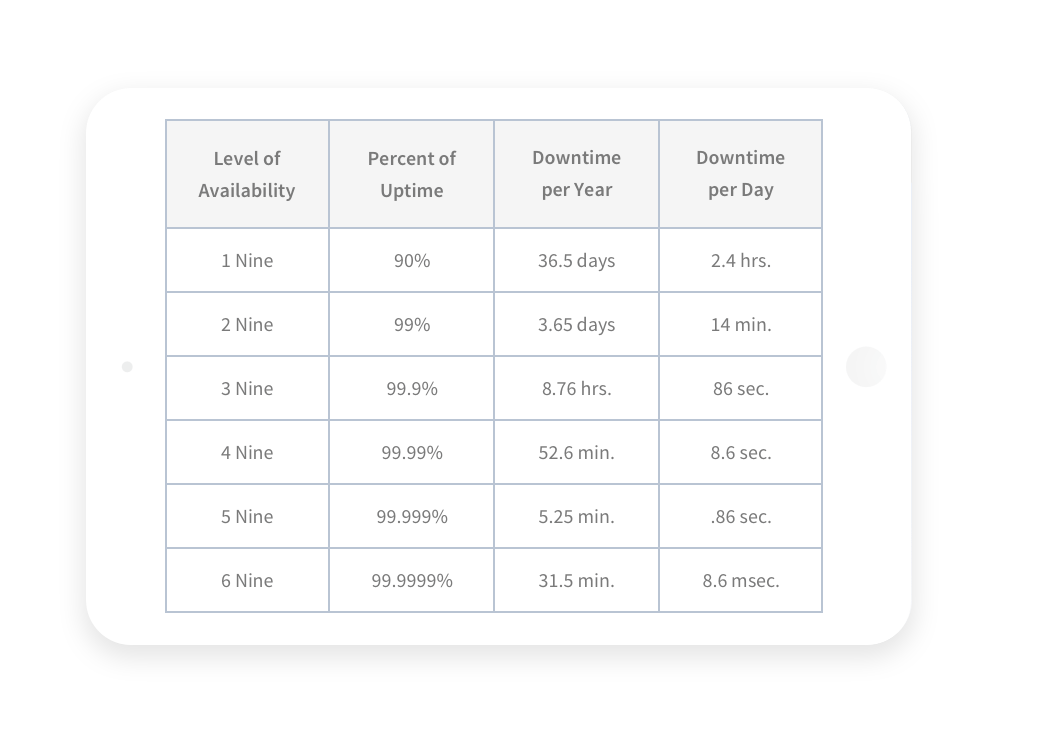
The standard uptime for SaaS (Software as a Service) platforms typically ranges between 99.9% to 99.99%, which translates to approximately 8.76 hours to 52.56 minutes of downtime per year, respectively. This level of reliability is crucial for businesses that depend on continuous access to their applications and data. Achieving this uptime requires robust infrastructure, redundancy, and proactive monitoring.
Why is Uptime Critical for SaaS Platforms?
Uptime is a key performance indicator for SaaS platforms because it directly impacts user trust, productivity, and revenue. Here’s why:
- User Trust: Frequent downtime can erode customer confidence and lead to churn.
- Business Continuity: Downtime disrupts operations, especially for businesses relying on SaaS for critical functions.
- Revenue Impact: Prolonged outages can result in financial losses due to service interruptions.
How is Uptime Measured in SaaS?
Uptime is measured as a percentage of the total time a service is operational over a specific period. Key metrics include:
- Availability Percentage: Calculated as (Total Uptime / Total Time) 100.
- Mean Time Between Failures (MTBF): The average time between system failures.
- Mean Time to Recovery (MTTR): The average time taken to restore service after a failure.
What Factors Affect SaaS Uptime?
Several factors influence the uptime of SaaS platforms, including:
- Infrastructure Quality: High-quality servers, data centers, and network connections reduce downtime risks.
- Redundancy: Backup systems and failover mechanisms ensure continuity during failures.
- Maintenance Practices: Regular updates and proactive monitoring prevent unexpected outages.
How Do SaaS Providers Ensure High Uptime?
SaaS providers implement various strategies to maintain high uptime, such as:
- Load Balancing: Distributing traffic across multiple servers to prevent overload.
- Disaster Recovery Plans: Preparing for worst-case scenarios to minimize downtime.
- 24/7 Monitoring: Using automated tools to detect and resolve issues in real-time.
What is a good example of SLA?

What is a Service Level Agreement (SLA)?
A Service Level Agreement (SLA) is a formal contract between a service provider and a customer that outlines the expected level of service, performance metrics, and responsibilities. A good example of an SLA is one used by cloud service providers like Amazon Web Services (AWS), which guarantees uptime, response times, and support availability. This ensures transparency and accountability for both parties.
- Uptime Guarantee: AWS offers a 99.9% uptime SLA for its services, ensuring minimal downtime.
- Response Times: The SLA specifies how quickly the provider will respond to and resolve issues.
- Support Availability: It includes 24/7 customer support to address any service disruptions or technical issues.
Key Components of an Effective SLA
An effective SLA includes several critical components that ensure clarity and enforceability. These components help both parties understand their roles and responsibilities.
- Service Scope: Clearly defines the services being provided and their limitations.
- Performance Metrics: Includes measurable criteria like uptime, response time, and resolution time.
- Penalties and Remedies: Outlines consequences for failing to meet agreed-upon service levels, such as refunds or credits.
Benefits of Implementing an SLA
Implementing an SLA provides numerous benefits for both service providers and customers. It ensures a clear understanding of expectations and fosters trust.
- Improved Accountability: Both parties are held accountable for their commitments.
- Enhanced Communication: Establishes clear communication channels for reporting and resolving issues.
- Customer Satisfaction: Ensures customers receive the level of service they expect, leading to higher satisfaction.
Common Challenges in SLA Management
While SLAs are beneficial, managing them can present challenges. These challenges often arise from unclear terms or unrealistic expectations.
- Ambiguity in Terms: Vague language can lead to misunderstandings and disputes.
- Unrealistic Expectations: Setting unachievable performance metrics can strain the provider-customer relationship.
- Monitoring and Enforcement: Ensuring compliance with SLA terms requires robust monitoring systems.
Best Practices for Drafting an SLA
Drafting an effective SLA requires careful planning and attention to detail. Following best practices ensures the agreement is fair and enforceable.
- Define Clear Objectives: Clearly state the goals and expectations of the agreement.
- Use Measurable Metrics: Include quantifiable performance indicators to avoid subjectivity.
- Regular Reviews: Periodically review and update the SLA to reflect changing needs and circumstances.
Frequently Asked Questions (FAQ)
What is an SLA and why is it important for early-stage SaaS startups?
An SLA (Service Level Agreement) is a formal commitment between a service provider and a customer that outlines the expected level of service, including metrics like uptime, response times, and resolution times. For early-stage SaaS startups, defining a good SLA is crucial because it sets clear expectations with customers, builds trust, and helps establish credibility in a competitive market. A well-crafted SLA ensures that both parties are aligned on what constitutes acceptable performance and provides a framework for addressing issues when they arise.
How can early-stage SaaS startups balance ambitious SLAs with limited resources?
Early-stage SaaS startups often operate with limited resources, making it challenging to meet overly ambitious SLAs. To strike a balance, startups should focus on setting realistic and achievable targets that reflect their current capabilities. For example, instead of promising 99.99% uptime, a startup might commit to 99% uptime with clear communication about potential limitations. Additionally, startups can include grace periods or escalation clauses in their SLAs to account for unforeseen challenges, ensuring they don't overpromise and underdeliver.
What key metrics should be included in an SLA for a SaaS product?
When defining an SLA for a SaaS product, it's essential to include key performance metrics that directly impact the customer experience. These typically include uptime percentage, response time for customer support inquiries, and resolution time for reported issues. Additionally, startups may consider including metrics related to system performance, such as API response times or data processing speeds. By focusing on these critical areas, startups can ensure their SLA addresses the most important aspects of their service.
How can startups ensure their SLA evolves as the product and company grow?
As a SaaS startup grows, its SLA should evolve to reflect improvements in infrastructure, processes, and customer expectations. Startups should regularly review and update their SLA to align with their current capabilities and market standards. This might involve increasing uptime guarantees, reducing response times, or adding new metrics as the product matures. Additionally, startups should gather feedback from customers to identify areas for improvement and ensure the SLA remains relevant and valuable as the company scales.
Deja una respuesta
Entradas Relacionadas