
Abrasive Water Jet Material Rate Equation and Calculator

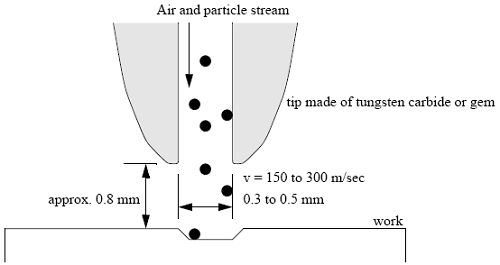
The Abrasive Water Jet Material Rate Equation and Calculator is a crucial tool in the field of machining and manufacturing. It enables engineers to predict the rate at which material is removed during the abrasive water jet cutting process. This equation takes into account various parameters such as water pressure, nozzle diameter, and abrasive flow rate. By understanding and applying this equation, manufacturers can optimize their cutting processes, reducing costs and improving efficiency. The calculator provides a convenient means of applying the equation to real-world scenarios, allowing for precise calculations and informed decision-making. Accurate predictions are essential.
- Abrasive Water Jet Material Rate Equation and Calculator
- What is the formula for material removal rate in abrasive jet machining?
- What is the formula for the waterjet?
-
What is MRR in abrasive water jet machining?
- Factors Affecting MRR in Abrasive Water Jet Machining
- Importance of MRR in Abrasive Water Jet Machining
- Methods for Improving MRR in Abrasive Water Jet Machining
- Challenges and Limitations of MRR in Abrasive Water Jet Machining
- Future Developments and Research Directions for MRR in Abrasive Water Jet Machining
- What is abrasive material for water jet?
-
Frequently Asked Questions (FAQs)
- What is the Abrasive Water Jet Material Rate Equation and how does it work?
- How is the Abrasive Water Jet Material Rate Equation used in practice?
- What are the key factors that affect the Abrasive Water Jet Material Rate Equation?
- What are the advantages of using an Abrasive Water Jet Material Rate Equation and Calculator?
Abrasive Water Jet Material Rate Equation and Calculator
The Abrasive Water Jet (AWJ) Material Rate Equation and Calculator is a tool used to estimate the rate at which material is removed by an abrasive water jet cutting process. This equation takes into account various parameters such as the water pressure, orifice diameter, focusing tube diameter, abrasive flow rate, and standoff distance. By understanding these parameters and their relationships, manufacturers can optimize their AWJ cutting processes to achieve higher material removal rates and improve overall efficiency.
Introduction to Abrasive Water Jet Cutting
Abrasive water jet cutting is a non-traditional machining process that uses a high-pressure stream of water and abrasive particles to cut through materials. This process is commonly used to cut ceramics, glass, metals, and composites. The AWJ Material Rate Equation and Calculator is essential in determining the optimal parameters for cutting these materials efficiently.
Parameters Affecting Material Removal Rate
Several parameters affect the material removal rate in AWJ cutting, including:
- Water pressure: The pressure of the water jet, which affects the kinetic energy of the abrasive particles.
- Orifice diameter: The diameter of the nozzle through which the water jet exits, which affects the velocity of the water jet.
- Focusing tube diameter: The diameter of the tube that focuses the water jet, which affects the concentration of the abrasive particles.
- Abrasive flow rate: The rate at which abrasive particles are fed into the water jet, which affects the erosion of the material.
- Standoff distance: The distance between the nozzle and the workpiece, which affects the focusing of the water jet.
Abrasive Water Jet Material Rate Equation
The AWJ Material Rate Equation is given by:
MRR = (K (P^0.5 d_o^1.5 d_f^0.5 AFR^0.5)) / (SOD^0.5)
where MRR is the material removal rate, K is a constant, P is the water pressure, d_o is the orifice diameter, d_f is the focusing tube diameter, AFR is the abrasive flow rate, and SOD is the standoff distance.
Calculator for AWJ Material Rate
A calculator for the AWJ Material Rate Equation can be used to estimate the material removal rate based on the input parameters. The calculator takes into account the units of the parameters and provides the result in the desired units.
Applications of AWJ Material Rate Equation and Calculator
The AWJ Material Rate Equation and Calculator have various applications in industries such as:
| Industry | Application |
|---|---|
| Aerospace | Cutting composites and titanium alloys |
| Automotive | Cutting glass and ceramics |
| Manufacturing | Cutting metals and plastics |
The water pressure, orifice diameter, focusing tube diameter, abrasive flow rate, and standoff distance are all critical parameters in determining the material removal rate in AWJ cutting. By understanding these parameters and using the AWJ Material Rate Equation and Calculator, manufacturers can optimize their AWJ cutting processes to achieve higher material removal rates and improve overall efficiency.
What is the formula for material removal rate in abrasive jet machining?
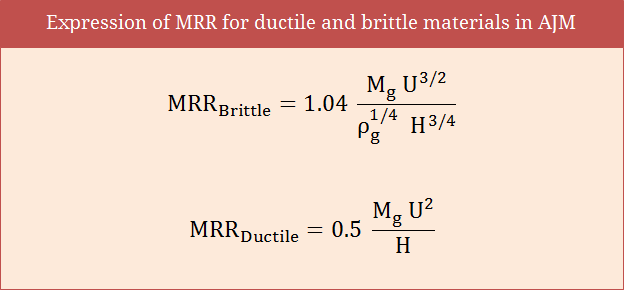
The formula for material removal rate in abrasive jet machining is given by the equation: MRR = (ρ V η d^2 v) / (2 A), where MRR is the material removal rate, ρ is the density of the abrasive particles, V is the volume flow rate of the abrasive jet, η is the efficiency of the process, d is the diameter of the nozzle, v is the volumetric fraction of the abrasive particles, and A is the cross-sectional area of the workpiece.
Introduction to Abrasive Jet Machining
Abrasive jet machining is a non-traditional machining process that uses a high-velocity jet of abrasive particles to remove material from a workpiece. The process is commonly used to remove small amounts of material from delicate surfaces or to deburr and clean complex shapes. The material removal rate is an important parameter in abrasive jet machining, as it determines the efficiency and effectiveness of the process. Some key factors that affect the material removal rate include:
- Abrasive particle size and shape, which affect the abrasive action and material removal rates.
- Jet velocity and pressure, which determine the kinetic energy of the abrasive particles and the material removal rates.
- Standoff distance and nozzle diameter, which affect the jet spread and material removal rates.
Factors Affecting Material Removal Rate
The material removal rate in abrasive jet machining is affected by several factors, including the type and size of the abrasive particles, the jet velocity and pressure, and the standoff distance and nozzle diameter. The abrasive particle size and shape play a significant role in determining the material removal rate, as larger particles tend to remove more material than smaller particles. The jet velocity and pressure also affect the material removal rate, as higher velocities and pressures result in higher kinetic energies and material removal rates. Some other factors that affect the material removal rate include:
- Workpiece material and hardness, which affect the abrasive action and material removal rates.
- Abrasive particle concentration, which affects the abrasive action and material removal rates.
- Jet angle and orientation, which affect the jet spread and material removal rates.
Importance of Material Removal Rate
The material removal rate is an important parameter in abrasive jet machining, as it determines the efficiency and effectiveness of the process. A higher material removal rate indicates a more efficient process, while a lower material removal rate indicates a less efficient process. The material removal rate also affects the surface finish and dimensional accuracy of the workpiece, as higher material removal rates can result in rougher surfaces and lower accuracy. Some key applications of abrasive jet machining include:
- Deburring and cleaning of complex shapes and surfaces.
- Surface finishing and polishing of delicate surfaces.
- Material removal from delicate or hard-to-reach areas.
Calculating Material Removal Rate
The material removal rate in abrasive jet machining can be calculated using the formula: MRR = (ρ V η d^2 v) / (2 A), where MRR is the material removal rate, ρ is the density of the abrasive particles, V is the volume flow rate of the abrasive jet, η is the efficiency of the process, d is the diameter of the nozzle, v is the volumetric fraction of the abrasive particles, and A is the cross-sectional area of the workpiece. The material removal rate can also be affected by other factors, such as the workpiece material and hardness, the abrasive particle concentration, and the jet angle and orientation. Some key considerations when calculating the material removal rate include:
- Accurate measurement of the abrasive particle size and shape.
- Precise control of the jet velocity and pressure.
- Optimization of the standoff distance and nozzle diameter.
Optimizing Material Removal Rate
The material removal rate in abrasive jet machining can be optimized by adjusting several parameters, including the type and size of the abrasive particles, the jet velocity and pressure, and the standoff distance and nozzle diameter. The abrasive particle size and shape can be optimized to achieve the highest material removal rate, while the jet velocity and pressure can be adjusted to achieve the best balance between material removal rate and surface finish. Some other factors that can be optimized to improve the material removal rate include:
- Workpiece material and hardness, which can be optimized to achieve the best material removal rates.
- Abrasive particle concentration, which can be adjusted to achieve the best material removal rates.
- Jet angle and orientation, which can be optimized to achieve the best material removal rates and surface finish.
What is the formula for the waterjet?
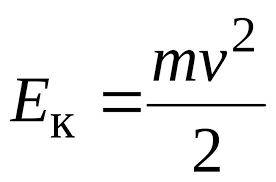
The formula for the waterjet is based on the principle of conservation of energy, which states that the total energy of a closed system remains constant. In the case of a waterjet, the energy is converted from pressure energy to kinetic energy. The formula is:
P = (1/2) ρ v^2 A
Where P is the power of the waterjet, ρ is the density of water, v is the velocity of the waterjet, and A is the area of the nozzle.
Waterjet Components
The waterjet formula can be broken down into several components, including the pump, nozzle, and cutoff system. These components work together to create a high-pressure stream of water that can cut through various materials. Some key points to consider are:
- The pump is responsible for generating the high pressure needed to create the waterjet.
- The nozzle is designed to focus the waterjet and increase its velocity.
- The cutoff system is used to control the waterjet and optimize its performance.
Waterjet Applications
Waterjets have a wide range of applications, including cutting, drilling, and cleaning. They are particularly useful for precision cutting and can be used to cut through a variety of materials, including metals, plastics, and composites. Some key points to consider are:
- Precision cutting is a key application of waterjets, as they can make complex cuts with high accuracy.
- Waterjets can be used to cut through thick materials, making them ideal for industrial applications.
- They can also be used for cleaning and surface preparation, as they can remove dirt and debris without damaging the underlying material.
Waterjet Safety
Waterjets can be hazardous if not used properly, and safety precautions should always be taken when operating one. Some key points to consider are:
- Personal protective equipment should always be worn when operating a waterjet, including gloves, goggles, and ear protection.
- Proper training is essential for operating a waterjet, as it can be dangerous if not used correctly.
- Regular maintenance should be performed on the waterjet to ensure it is working properly and safely.
Waterjet Maintenance
Regular maintenance is necessary to ensure the waterjet is working properly and efficiently. Some key points to consider are:
- Regular cleaning should be performed on the waterjet to remove dirt and debris that can clog the system.
- Pump maintenance is essential, as it can fail if not properly maintained.
- Nozzle maintenance is also important, as it can become worn or clogged over time.
Waterjet Technology
Waterjet technology is continuously evolving, with new advances being made in pump design, nozzle materials, and control systems. Some key points to consider are:
- New materials are being developed for use in waterjet nozzles, which can improve their performance and durability.
- Advanced control systems are being developed, which can optimize the performance of the waterjet and improve its accuracy.
- Research is being conducted on new applications for waterjets, including medical and aerospace industries.
What is MRR in abrasive water jet machining?
MRR in abrasive water jet machining stands for Material Removal Rate, which is a crucial parameter in evaluating the efficiency of the machining process. It refers to the volume of material removed from the workpiece per unit time. In abrasive water jet machining, the MRR is influenced by various factors, including the pressure of the water jet, the flow rate of the abrasive particles, and the type of abrasive material used. The MRR is typically measured in units of volume per unit time, such as cubic meters per minute.
Factors Affecting MRR in Abrasive Water Jet Machining
The MRR in abrasive water jet machining is affected by several factors, including the velocity of the water jet, the concentration of abrasive particles, and the angle of incidence. The following are some of the key factors:
- The pressure of the water jet, which influences the velocity of the abrasive particles and the resulting MRR.
- The type of abrasive material used, which affects the hardness and toughness of the particles and the resulting MRR.
- The flow rate of the abrasive particles, which influences the concentration of particles in the water jet and the resulting MRR.
Importance of MRR in Abrasive Water Jet Machining
The MRR is a critical parameter in abrasive water jet machining, as it determines the productivity and efficiency of the machining process. A higher MRR indicates a faster removal of material, which can lead to increased throughput and reduced production costs. The following are some of the importance of MRR:
- The MRR affects the surface finish of the machined surface, with higher MRRs resulting in rougher surfaces.
- The MRR influences the kerf width, with higher MRRs resulting in wider kerfs.
- The MRR determines the edge quality, with higher MRRs resulting in poorer edge quality.
Methods for Improving MRR in Abrasive Water Jet Machining
There are several methods for improving the MRR in abrasive water jet machining, including optimizing the pressure and flow rate of the water jet, selecting the optimal abrasive material, and adjusting the angle of incidence. The following are some of the methods:
- Increasing the pressure of the water jet to increase the velocity of the abrasive particles.
- Using a more aggressive abrasive material to increase the removal rate.
- Optimizing the concentration of abrasive particles to achieve the optimal MRR.
Challenges and Limitations of MRR in Abrasive Water Jet Machining
There are several challenges and limitations associated with achieving high MRRs in abrasive water jet machining, including the wear and tear of the nozzle, the clogging of the abrasive feed system, and the instability of the water jet. The following are some of the challenges:
- The high pressure and flow rate required to achieve high MRRs can lead to excessive wear and tear of the nozzle.
- The aggressive nature of the abrasive particles can lead to clogging of the abrasive feed system.
- The instability of the water jet can lead to inconsistent MRRs and poor surface finish.
Future Developments and Research Directions for MRR in Abrasive Water Jet Machining
There are several future developments and research directions for improving the MRR in abrasive water jet machining, including the development of new abrasive materials, the investigation of alternative machining parameters, and the application of advanced sensing and control technologies. The following are some of the future developments:
- The development of new abrasive materials with improved properties, such as higher hardness and toughness.
- The investigation of alternative machining parameters, such as pulsating water jets and rotating abrasive particles.
- The application of advanced sensing and control technologies to monitor and control the MRR in real-time.
What is abrasive material for water jet?
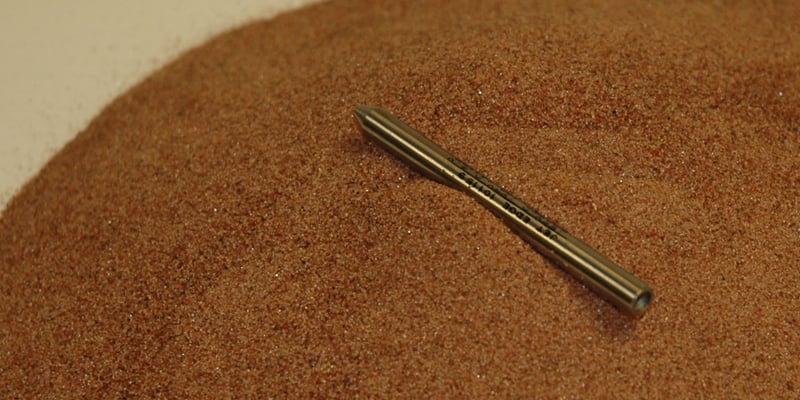
Abrasive materials for water jet cutting are specialized substances used to enhance the cutting process. These materials are added to the water jet stream to increase its abrasive properties, allowing it to cut through harder and thicker materials. The most common abrasive materials used in water jet cutting are garnet, aluminum oxide, and silicon carbide. These materials are chosen for their high hardness and density, which allow them to effectively erode and cut through various materials.
Types of Abrasive Materials
The choice of abrasive material depends on the specific application and the type of material being cut. Some common types of abrasive materials include:
- Garnet: a natural mineral with a high hardness and density, often used for cutting metals and stones.
- Aluminum oxide: a synthetic abrasive material with a high melting point and chemical resistance, often used for cutting ceramics and glass.
- Silicon carbide: a synthetic abrasive material with a high hardness and thermal conductivity, often used for cutting composites and plastics.
Properties of Abrasive Materials
The properties of abrasive materials play a crucial role in determining their effectiveness in water jet cutting. Some key properties include:
- Hardness: the ability of the abrasive material to resist wear and tear, and to effectively erode and cut through the workpiece.
- Density: the mass per unit volume of the abrasive material, which affects its kinetic energy and cutting ability.
- Size and shape: the particle size and shape of the abrasive material, which can affect its flowability and cutting ability.
Applications of Abrasive Materials
Abrasive materials are used in a variety of applications, including:
- Water jet cutting: the use of high-pressure water jets to cut through various materials, including metals, stones, and composites.
- Surface preparation: the use of abrasive materials to prepare surfaces for coating or painting, by removing rust, scale, or other surface contaminants.
- Cleaning: the use of abrasive materials to remove dirt, grime, or other substances from surfaces.
Benefits of Abrasive Materials
The use of abrasive materials in water jet cutting offers several benefits, including:
- Increased cutting speed: the use of abrasive materials can increase the cutting speed and efficiency of the water jet cutting process.
- Improved accuracy: the use of abrasive materials can improve the accuracy and precision of the water jet cutting process.
- Reduced wear: the use of abrasive materials can reduce the wear and tear on the water jet nozzle and other equipment.
Challenges and Limitations
Despite the benefits of abrasive materials, there are also some challenges and limitations to their use, including:
- Cost: the use of abrasive materials can be expensive, especially for high-volume applications.
- Environmental concerns: the use of abrasive materials can generate waste and pollution, which must be managed and mitigated.
- Maintenance: the use of abrasive materials requires regular maintenance and inspection of the water jet equipment and nozzle.
Frequently Asked Questions (FAQs)
What is the Abrasive Water Jet Material Rate Equation and how does it work?
The Abrasive Water Jet Material Rate Equation is a mathematical formula used to calculate the rate at which material is removed by an Abrasive Water Jet (AWJ) cutting system. This equation takes into account several key factors, including the water pressure, flow rate, abrasive flow rate, and cutting speed, to determine the material removal rate. The equation is based on the principles of erosion and abrasion, which occur when the high-velocity water jet and abrasive particles interact with the material being cut. By understanding the relationships between these factors, the Abrasive Water Jet Material Rate Equation can be used to optimize the cutting process and improve the efficiency of AWJ systems.
How is the Abrasive Water Jet Material Rate Equation used in practice?
In practice, the Abrasive Water Jet Material Rate Equation is used to calculate the material removal rate and predict the cutting time required to cut through a specific material. This information is essential for manufacturers and engineers who need to optimize their AWJ cutting systems for maximum efficiency and productivity. By inputting the relevant parameters, such as water pressure, flow rate, and abrasive flow rate, into the equation, users can determine the optimal cutting speed and abrasive feed rate required to achieve the desired material removal rate. Additionally, the equation can be used to compare the performance of different AWJ systems and abrasive materials, allowing users to select the most suitable configuration for their specific application.
What are the key factors that affect the Abrasive Water Jet Material Rate Equation?
Several key factors affect the Abrasive Water Jet Material Rate Equation, including water pressure, flow rate, abrasive flow rate, cutting speed, and material properties. The water pressure and flow rate determine the kinetic energy of the water jet, which in turn affects the material removal rate. The abrasive flow rate also plays a crucial role, as it determines the amount of abrasive particles available to interact with the material. The cutting speed and material properties, such as hardness and toughness, also influence the material removal rate. Furthermore, the angle of incidence and standoff distance can also impact the material removal rate. Understanding the relationships between these factors is essential for optimizing the AWJ cutting process and achieving the desired material removal rate.
What are the advantages of using an Abrasive Water Jet Material Rate Equation and Calculator?
The Abrasive Water Jet Material Rate Equation and Calculator offers several advantages, including improved accuracy, increased efficiency, and enhanced productivity. By using the equation and calculator, users can optimize their AWJ cutting systems and predict the material removal rate with high accuracy. This enables manufacturers and engineers to streamline their production processes, reduce waste and scrap, and minimize costs. Additionally, the calculator can help users to identify the most suitable AWJ system and abrasive material for their specific application, ensuring that they achieve the desired material removal rate and surface finish. Overall, the Abrasive Water Jet Material Rate Equation and Calculator is a powerful tool that can help users to unlock the full potential of their AWJ cutting systems and achieve exceptional results.
Deja una respuesta
Entradas Relacionadas