
Pressure Conversion Table and Calculator


Pressure conversion is a crucial process in various fields, including engineering, physics, and chemistry. A pressure conversion table and calculator are essential tools for converting between different units of pressure, such as pounds per square inch (psi), pascals (Pa), and atmospheres (atm). These tools enable accurate calculations and conversions, ensuring safety and efficiency in industrial, scientific, and technical applications. With a comprehensive pressure conversion table and calculator, users can easily switch between units, making it a vital resource for professionals and students alike, simplifying complex calculations and enhancing overall productivity. Accurate conversions are vital for success.
Understanding Pressure Conversion Table and Calculator
Pressure conversion is a crucial process in various fields, including physics, engineering, and chemistry. It involves converting pressure values from one unit to another, which is essential for accurate calculations and measurements. A pressure conversion table and calculator are tools used to facilitate this process. The table provides a comprehensive list of pressure units and their equivalent values, while the calculator allows users to input a value in one unit and obtain the equivalent value in another unit.
Introduction to Pressure Units
Pressure is measured in various units, including Pascals (Pa), atmospheres (atm), bars, and pounds per square inch (psi). Each unit has its own definition and application. For instance, Pascals are commonly used in scientific and technical applications, while pounds per square inch are often used in mechanical and industrial contexts. Understanding the different pressure units and their relationships is essential for accurate pressure conversion.
How to Use a Pressure Conversion Table
A pressure conversion table is a useful tool for converting pressure values from one unit to another. The table typically lists the pressure units in the left column and the equivalent values in the right column. To use the table, simply find the unit you want to convert from, locate the equivalent value in the desired unit, and multiply or divide the value accordingly. For example, if you want to convert 10 psi to Pascals, you would look up the equivalent value in the table and multiply 10 by the conversion factor.
Pressure Conversion Calculator
A pressure conversion calculator is a more convenient and efficient tool for converting pressure values. The calculator typically requires users to input the value to be converted, select the unit, and choose the desired output unit. The calculator then performs the conversion and displays the result. Online pressure conversion calculators are widely available and can be used for free. These calculators often provide additional features, such as unit conversion for other physical quantities, like length and temperature.
Common Pressure Conversion Factors
To perform pressure conversion, it is essential to know the common conversion factors between different units. Some of the most commonly used conversion factors include:
| Unit | Conversion Factor |
|---|---|
| Pascals (Pa) | 1 Pa = 0.0001450377 psi |
| Atmospheres (atm) | 1 atm = 101325 Pa |
| Bars | 1 bar = 100000 Pa |
| Pounds per square inch (psi) | 1 psi = 6894.76 Pa |
These conversion factors can be used to convert pressure values from one unit to another.
Applications of Pressure Conversion
Pressure conversion has numerous applications in various fields, including engineering, physics, and chemistry. For instance, in mechanical engineering, pressure conversion is used to design and optimize systems, such as pipelines and pumps. In physics, pressure conversion is used to calculate the pressure of gases and liquids. In chemistry, pressure conversion is used to measure the pressure of chemical reactions and processes. Accurate pressure conversion is essential for ensuring the safety and efficiency of these systems and processes.
What is the formula for pressure conversion?
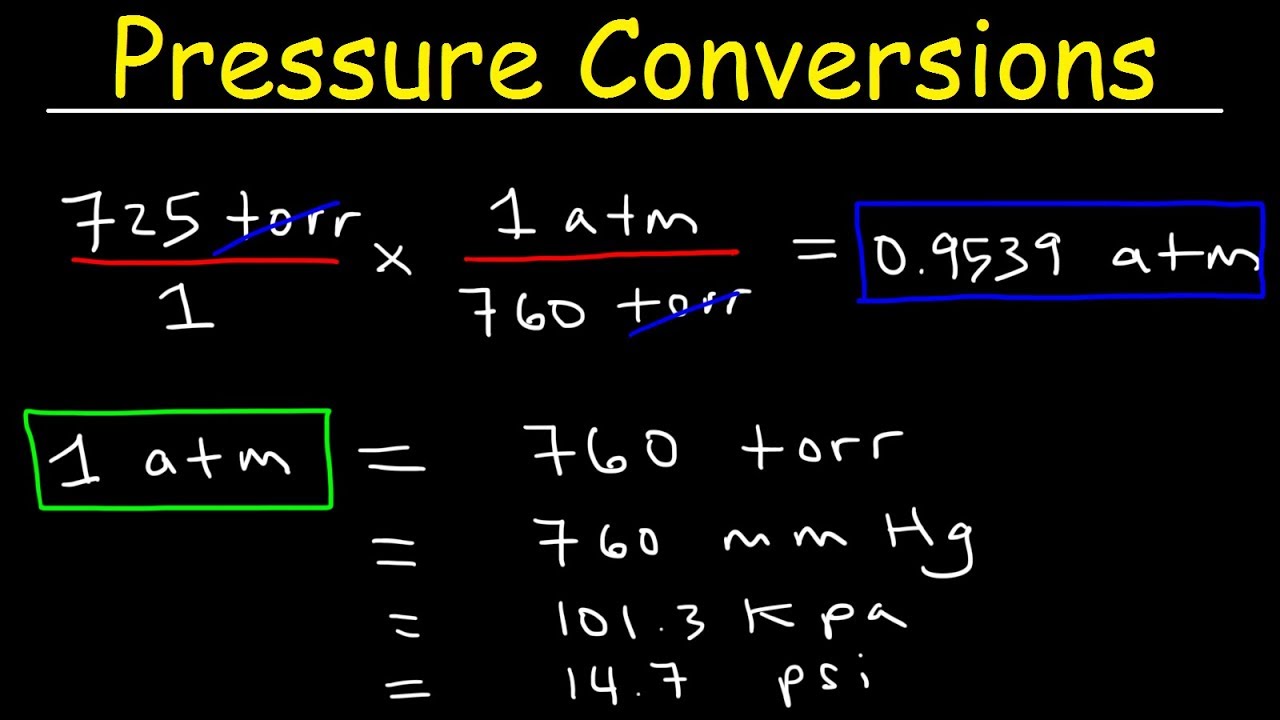
The formula for pressure conversion is P = F/A, where P is the pressure, F is the force applied, and A is the area over which the force is applied. This formula is used to convert between different units of pressure, such as pounds per square inch (psi) to pascals (Pa).
Understanding Pressure Units
Pressure units are used to express the amount of force applied to a given area. The most common units of pressure are pascals (Pa), pounds per square inch (psi), atmospheres (atm), and bars. To convert between these units, you need to know the conversion factors. For example:
- 1 pascal (Pa) is equal to 1 newton per square meter (N/m²)
- 1 pound per square inch (psi) is equal to 6894.76 pascals (Pa)
- 1 atmosphere (atm) is equal to 101325 pascals (Pa)
Conversion Factors
Conversion factors are used to convert between different units of pressure. These factors are based on the definition of each unit and the relationships between them. For example, to convert from pounds per square inch (psi) to pascals (Pa), you would use the conversion factor of 6894.76 pascals (Pa) per pound per square inch (psi). The conversion factors can be used to create conversion tables or conversion charts to make it easier to convert between different units.
- The conversion factor from pounds per square inch (psi) to pascals (Pa) is 6894.76
- The conversion factor from atmospheres (atm) to pascals (Pa) is 101325
- The conversion factor from bars to pascals (Pa) is 100000
Pressure Conversion Applications
Pressure conversion is crucial in various fields, including engineering, physics, and chemistry. It is used to design and operate systems, such as pipelines, tanks, and pumps, that involve the flow of fluids. Pressure conversion is also used to measure and control pressure in various applications, such as industrial processes, medical devices, and aerospace engineering.
- Engineering: pressure conversion is used to design and operate systems that involve the flow of fluids
- Physics: pressure conversion is used to measure and control pressure in various applications
- Chemistry: pressure conversion is used to understand and control chemical reactions that involve changes in pressure
Pressure Conversion Tools
There are various tools and software available to perform pressure conversions, including online conversion calculators, spreadsheet programs, and computer-aided design (CAD) software. These tools can be used to perform complex conversions and to create conversion tables and charts. They can also be used to simulate and analyze systems that involve the flow of fluids and pressure changes.
- Online conversion calculators: can be used to perform simple and complex conversions
- Spreadsheet programs: can be used to create conversion tables and charts
- Computer-aided design (CAD) software: can be used to simulate and analyze systems that involve the flow of fluids and pressure changes
Common Pressure Conversion Mistakes
There are several common mistakes that can be made when performing pressure conversions, including using the wrong conversion factor, forgetting to square the units, and not accounting for temperature and humidity changes. These mistakes can lead to inaccurate results and unsafe operating conditions. It is therefore essential to double-check the conversions and to use reliable sources for the conversion factors.
- Using the wrong conversion factor: can lead to inaccurate results
- Forgetting to square the units: can lead to incorrect conversions
- Not accounting for temperature and humidity changes: can lead to unsafe operating conditions
How to convert pressure to PSI?
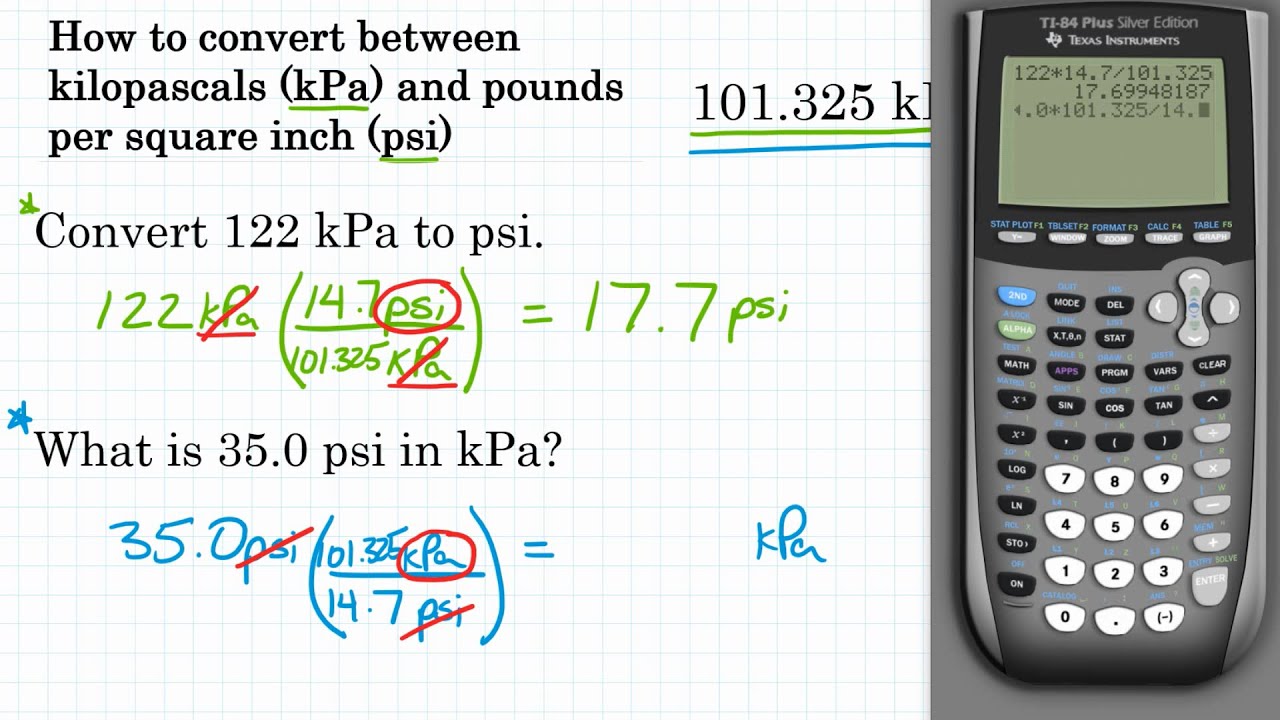
To convert pressure to PSI (Pounds per Square Inch), you need to understand the unit of measurement you are starting with and apply the appropriate conversion factor. Pressure is a measure of the force exerted per unit area on an object, and there are several units used to express it, including pascals (Pa), atmospheres (atm), bars, and millimeters of mercury (mmHg). The conversion to PSI involves knowing the conversion factors between these units and PSI.
Understanding Pressure Units
Understanding the various units of pressure measurement is crucial for accurate conversion. The International System of Units (SI) defines the pascal (Pa) as the standard unit of pressure, where 1 Pa equals 1 newton per square meter. To convert from Pa to PSI, you use the conversion factor: 1 PSI = 6894.76 Pa. This means that to convert Pa to PSI, you divide the pressure in Pa by 6894.76. For example:
- Start with the pressure in Pa.
- Divide this value by 6894.76 to get the pressure in PSI.
- For instance, 6894.76 Pa equals 1 PSI.
Converting from Atmospheres to PSI
The atmosphere (atm) is another common unit of pressure, with 1 atm equal to 101,325 Pa or approximately 14.696 PSI. To convert from atm to PSI, you multiply the pressure in atm by 14.696. This conversion is useful in various applications, including weather forecasting and industrial processes. For example:
- Take the pressure reading in atm.
- Multiply this value by 14.696 to convert it to PSI.
- For example, 1 atm equals approximately 14.696 PSI.
Bars to PSI Conversion
The bar is a unit of pressure defined as 100,000 Pa, which is slightly less than the atm. To convert from bars to PSI, knowing that 1 bar equals 14.504 PSI is essential. The conversion involves multiplying the pressure in bars by 14.504. This is particularly useful in engineering and scientific applications. For instance:
- Start with the pressure in bars.
- Multiply this value by 14.504 to get the pressure in PSI.
- For example, 1 bar equals 14.504 PSI.
Millimeters of Mercury to PSI
Millimeters of mercury (mmHg) is a unit of pressure formerly defined as the extra pressure generated by a column of mercury one millimeter high. Given that 1 mmHg equals approximately 0.0193368 PSI (or 1 PSI equals about 51.7149 mmHg), converting from mmHg to PSI involves multiplying the pressure in mmHg by 0.0193368. This conversion is commonly used in medical and physiological measurements. For example:
- Take the pressure reading in mmHg.
- Multiply this value by 0.0193368 to convert it to PSI.
- For instance, 51.7149 mmHg equals approximately 1 PSI.
Using Conversion Factors for Accuracy
Using the correct conversion factors is critical for accurate conversion from any unit of pressure to PSI. These factors are derived from the definitions of the units and are used in calculations to ensure that the converted value is correct. For practical applications, having a list of common conversion factors handy can be very useful. This includes knowing that 1 PSI is equal to 6894.76 Pa, 0.068046 atm, 0.068948 bar, or 51.7149 mmHg. For example:
- Identify the unit you are converting from.
- Find the appropriate conversion factor to PSI.
- Apply the conversion factor to calculate the pressure in PSI.
How do you convert 55 psig to absolute pressure?
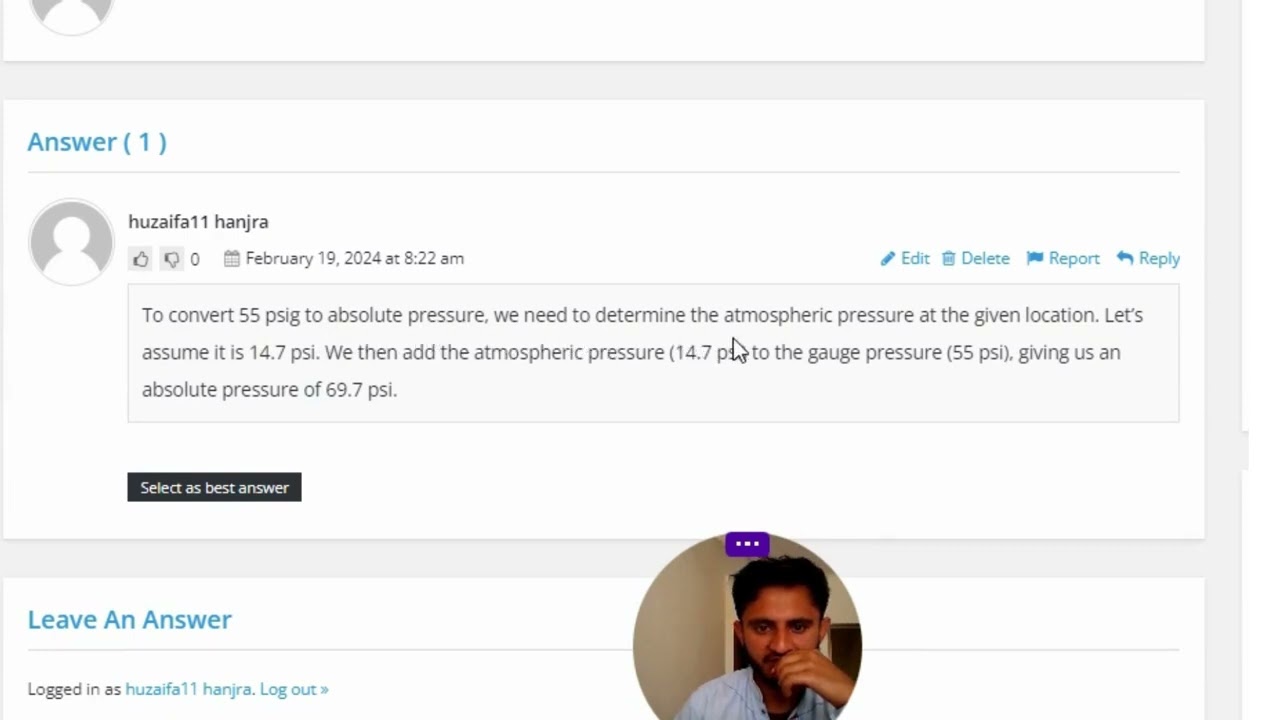
To convert 55 psig (pounds per square inch gauge) to absolute pressure, you need to add the atmospheric pressure to the gauge pressure. The atmospheric pressure at sea level is approximately 14.7 psia (pounds per square inch absolute). So, the absolute pressure would be 55 psig + 14.7 psia = 69.7 psia.
Understanding Gauge and Absolute Pressure
Gauge pressure and absolute pressure are two different ways to measure pressure. Gauge pressure is the pressure relative to the surrounding atmosphere, while absolute pressure is the pressure relative to a perfect vacuum. To convert between the two, you need to know the atmospheric pressure. The conversion is done by adding the atmospheric pressure to the gauge pressure.
- The gauge pressure is the pressure measured relative to the surrounding atmosphere.
- The absolute pressure is the pressure measured relative to a perfect vacuum.
- The atmospheric pressure is the pressure exerted by the weight of the atmosphere at a given location.
Importance of Converting to Absolute Pressure
Converting psig to absolute pressure is crucial in various engineering and scientific applications. Absolute pressure is used in calculations involving the behavior of gases and fluids, and it is essential for ensuring the safety and efficiency of systems. For example, in the design of pipelines and vessels, absolute pressure is used to determine the required material strength and thickness.
- Safety is a critical concern, as incorrect pressure calculations can lead to explosions or collapses.
- Efficiency is also important, as absolute pressure is used to optimize the performance of pumps and turbines.
- Material selection is another area where absolute pressure plays a key role, as it determines the required strength and durability of materials.
Common Applications of Absolute Pressure
Absolute pressure has numerous applications in various fields, including engineering, chemistry, and physics. It is used in the design of pressure vessels, piping systems, and control systems. Additionally, absolute pressure is used in the calculation of flow rates, pressure drops, and energy losses.
- Pressure vessels require absolute pressure calculations to ensure their structural integrity.
- Piping systems rely on absolute pressure to determine the required pipe size and material.
- Control systems use absolute pressure to regulate flow rates and pressures.
Challenges in Converting to Absolute Pressure
Converting psig to absolute pressure can be challenging, especially when dealing with complex systems or high-pressure applications. One of the main challenges is ensuring accurate measurements of gauge pressure and atmospheric pressure. Additionally, temperature variations and fluid properties can affect the conversion.
- Accurate measurements are crucial for ensuring the reliability of the conversion.
- Temperature variations can affect the density and viscosity of fluids, which in turn affect the conversion.
- Fluid properties, such as compressibility and expansivity, can also impact the conversion.
Best Practices for Converting to Absolute Pressure
To ensure accurate conversions from psig to absolute pressure, it is essential to follow best practices, such as using reliable measurement instruments and accounting for temperature variations. Additionally, using standardized units and consulting relevant references can help minimize errors.
- Using reliable measurement instruments ensures accurate measurements of gauge pressure and atmospheric pressure.
- Accounting for temperature variations helps to minimize errors caused by thermal expansion and contraction.
- Using standardized units ensures consistency and comparability of results.
Frequently Asked Questions (FAQs)
What is a Pressure Conversion Table and Calculator?
A Pressure Conversion Table and Calculator is a tool used to convert pressure values from one unit to another. This is particularly useful in various fields such as engineering, physics, and chemistry, where pressure measurements are crucial. The conversion table provides a comprehensive list of different pressure units, including Pascals (Pa), atmospheres (atm), bars, millibars (mbar), and pounds per square inch (psi), among others. The calculator function allows users to input a pressure value in one unit and convert it to another unit, making it a convenient and efficient tool for pressure conversions.
How does a Pressure Conversion Table and Calculator work?
A Pressure Conversion Table and Calculator works by using conversion factors to transform pressure values from one unit to another. These conversion factors are based on the definitions of each pressure unit and are used to calculate the equivalent value in the desired unit. For example, to convert pressure from Pascals (Pa) to pounds per square inch (psi), the calculator would use the conversion factor of 1 Pa = 0.0001450377 psi. By inputting the pressure value in Pascals (Pa), the calculator can calculate the equivalent value in pounds per square inch (psi) using this conversion factor. This process is repeated for each pressure unit, allowing users to convert between different units with ease.
What are the benefits of using a Pressure Conversion Table and Calculator?
Using a Pressure Conversion Table and Calculator offers several benefits, particularly in fields where pressure measurements are critical. One of the main advantages is that it saves time and reduces the likelihood of errors when converting pressure values. By providing a comprehensive list of pressure units and conversion factors, the table and calculator enable users to quickly and accurately convert pressure values. Additionally, the calculator function allows users to perform complex calculations with ease, making it an essential tool for engineers, scientists, and researchers who work with pressure measurements on a daily basis. Furthermore, the table and calculator can also be used as a reference guide for students and professionals who need to understand the different pressure units and their conversions.
What are some common applications of a Pressure Conversion Table and Calculator?
A Pressure Conversion Table and Calculator has a wide range of applications in various fields, including engineering, physics, chemistry, and meteorology. In engineering, it is used to convert pressure values in design and analysis of systems and equipment, such as pumps, turbines, and pipelines. In physics and chemistry, it is used to convert pressure values in experiments and calculations, such as gas laws and chemical reactions. In meteorology, it is used to convert pressure values in weather forecasting and climate modeling, such as atmospheric pressure and sea level pressure. Additionally, the table and calculator can also be used in industrial and commercial settings, such as in manufacturing and quality control, where pressure measurements are critical to ensure product quality and safety.
Deja una respuesta
Entradas Relacionadas