
Degrees Baume', Relative Density, lb/gal. Calculator

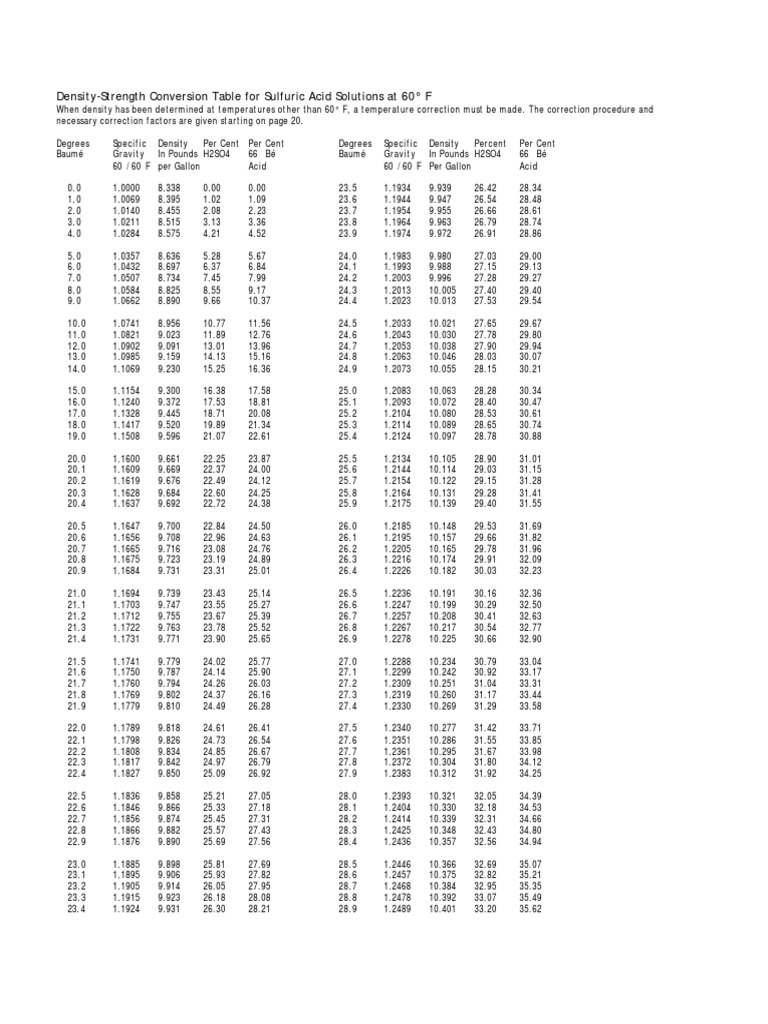
The Degrees Baume calculator is a tool used to measure the relative density of a liquid, typically expressed in terms of pounds per gallon (lb/gal). Relative density, also known as specific gravity, is the ratio of the density of a substance to the density of water at a given temperature and pressure. The Degrees Baume scale is commonly used in industries such as chemistry, physics, and engineering to quickly and accurately determine the density of liquids. This calculator provides a convenient way to convert between different units of measurement. It is widely used in various applications.
- Degrees Baume', Relative Density, lb/gal. Calculator: Understanding the Relationship Between Density and Concentration
- How is Baumé calculated?
- What is the density of Baume degrees?
-
How do I calculate relative density?
- Understanding Relative Density
- Units and Dimensions
- Methods for Measuring Density
- Applications of Relative Density
- When calculating relative density, there are several common pitfalls and challenges to be aware of, including measurement errors, instrumentation errors, and sampling errors. Here are some key points to consider: Make sure to use accurate and precise instruments to measure the mass and volume of the substance. Be aware of the limits of precision and accuracy of the instruments used. Use statistical methods to analyze and interpret the data. What is the difference between API and Baumé?
- Density Measurement
- Industry Applications
- Measurement Techniques
- Chemical Properties
- Standardization
- Frequently Asked Questions (FAQs)
Degrees Baume', Relative Density, lb/gal. Calculator: Understanding the Relationship Between Density and Concentration
The Degrees Baume' calculator is a tool used to determine the density of a liquid based on its concentration. It is commonly used in the petroleum and chemical industries to measure the relative density of liquids. The calculator takes into account the temperature and pressure of the liquid, as well as its composition, to provide an accurate measurement of its density.
What is Degrees Baume'?
Degrees Baume' is a unit of measurement used to express the density of a liquid. It is defined as the density of a liquid at a temperature of 60°F (15.56°C) and a pressure of 1 atm. The Degrees Baume' scale is used to measure the density of liquids that are heavier or lighter than water. The density of a liquid is an important property that can affect its behavior and performance in various applications.
Relative Density and its Importance
Relative density is the ratio of the density of a liquid to the density of water at the same temperature and pressure. It is an important property that can affect the behavior and performance of a liquid in various applications. The relative density of a liquid can be used to determine its concentration, viscosity, and surface tension.
Density and Concentration Relationship
The density of a liquid is directly related to its concentration. As the concentration of a liquid increases, its density also increases. This is because the molecules of the liquid are packed more closely together, resulting in a higher density. The density of a liquid can be used to determine its concentration by using a density-concentration curve.
lb/gal. Calculator and its Applications
The lb/gal. calculator is a tool used to convert the density of a liquid from degrees Baume' to pounds per gallon. It is commonly used in the petroleum and chemical industries to measure the density of liquids. The calculator takes into account the temperature and pressure of the liquid, as well as its composition, to provide an accurate measurement of its density.
Table of Density and Concentration Values
The following table shows the density and concentration values for a range of liquids:
| Liquid | Density (g/cm³) | Concentration (%) |
|---|---|---|
| Water | 1.00 | 0 |
| Ethanol | 0.79 | 95 |
| Glycerin | 1.26 | 99 |
| Sulfuric Acid | 1.83 | 98 |
| Acetic Acid | 1.05 | 99 |
The table shows the density and concentration values for a range of liquids, including water, ethanol, glycerin, sulfuric acid, and acetic acid. The density values are given in g/cm³ and the concentration values are given in %.
How is Baumé calculated?
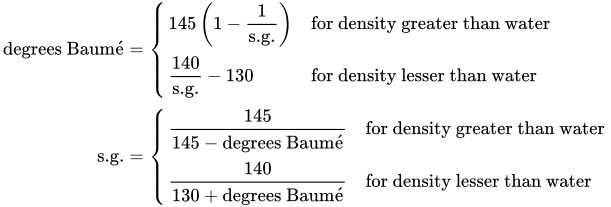
The Baumé scale is a method of measuring the density of a liquid, and it is calculated by using a hydrometer, which is a device that measures the density of a liquid by floating in it. The Baumé scale is defined as the difference between the density of the liquid and the density of water, and it is expressed in degrees Baumé (°Bé). The calculation of Baumé is based on the density of the liquid, which is measured in grams per cubic centimeter (g/cm³) or megapascals (MPa).
What is the Baumé Scale?
The Baumé scale is a density scale that is used to measure the density of a liquid, and it is expressed in degrees Baumé (°Bé). The Baumé scale is defined as the difference between the density of the liquid and the density of water, and it is used to determine the concentration of a solution. The calculation of Baumé is based on the density of the liquid, which is measured in grams per cubic centimeter (g/cm³) or megapascals (MPa).
- The Baumé scale is used to measure the density of a liquid.
- The density of the liquid is measured in grams per cubic centimeter (g/cm³) or megapascals (MPa).
- The concentration of a solution can be determined using the Baumé scale.
How to Calculate Baumé?
The calculation of Baumé is based on the density of the liquid, which is measured in grams per cubic centimeter (g/cm³) or megapascals (MPa). The Baumé scale is defined as the difference between the density of the liquid and the density of water, and it is expressed in degrees Baumé (°Bé). To calculate Baumé, you need to know the density of the liquid and the density of water, and then apply the following formula: Baumé = (144.3 / density) - (132.8 / density).
- The density of the liquid is measured in grams per cubic centimeter (g/cm³) or megapascals (MPa).
- The density of water is measured in grams per cubic centimeter (g/cm³) or megapascals (MPa).
- The formula to calculate Baumé is: Baumé = (144.3 / density) - (132.8 / density).
What is the Relationship Between Baumé and Density?
The Baumé scale is a method of measuring the density of a liquid, and it is expressed in degrees Baumé (°Bé). The Baumé scale is defined as the difference between the density of the liquid and the density of water, and it is used to determine the concentration of a solution. The density of a liquid is measured in grams per cubic centimeter (g/cm³) or megapascals (MPa), and it is used to calculate the Baumé scale.
- The Baumé scale is a method of measuring the density of a liquid.
- The density of a liquid is measured in grams per cubic centimeter (g/cm³) or megapascals (MPa).
- The density of a liquid is used to calculate the Baumé scale.
What are the Applications of Baumé?
The Baumé scale has several applications in various industries, including the petroleum industry, the chemical industry, and the food industry. The Baumé scale is used to measure the density of a liquid, which is used to determine the concentration of a solution. The Baumé scale is also used to measure the viscosity of a liquid, which is used to determine the flowability of a liquid.
- The Baumé scale is used in the petroleum industry to measure the density of petroleum products.
- The Baumé scale is used in the chemical industry to measure the density of chemicals.
- The Baumé scale is used in the food industry to measure the density of food products.
What are the Limitations of Baumé?
The Baumé scale has several limitations, including the fact that it is not accurate for high-density liquids and low-density liquids. The Baumé scale is also not suitable for viscous liquids, as it is difficult to measure the density of such liquids. Additionally, the Baumé scale is not calibrated for high-temperature applications, which can affect the accuracy of the measurement.
- The Baumé scale is not accurate for high-density liquids.
- The Baumé scale is not suitable for viscous liquids.
- The Baumé scale is not calibrated for high-temperature applications.
What is the density of Baume degrees?
The density of Baume degrees is a measure of the density of a liquid compared to the density of water. It is defined as the weight of a liquid per unit volume, with the weight of water being the reference point. The Baume scale is used to measure the density of liquids, and it is commonly used in the petroleum industry, chemical industry, and pharmaceutical industry.
What is the Baume Scale?
The Baume scale is a hydrometer scale used to measure the density of liquids. It is defined as the ratio of the weight of a liquid to the weight of an equal volume of water. The Baume scale is calculated using the following formula: Baume degrees = (144.3 / specific gravity) - 131.5. The Baume scale is used to measure the density of liquids, and it is commonly used in the petroleum industry, chemical industry, and pharmaceutical industry.
- The Baume scale is used to measure the density of liquids.
- The Baume scale is defined as the ratio of the weight of a liquid to the weight of an equal volume of water.
- The Baume scale is calculated using the formula: Baume degrees = (144.3 / specific gravity) - 131.5.
How to Measure Baume Degrees?
To measure Baume degrees, a hydrometer is used. A hydrometer is a floating device that is used to measure the density of a liquid. The hydrometer is calibrated to read Baume degrees, and it is used to measure the density of liquids in various industries. The hydrometer is placed in the liquid, and the Baume degrees are read from the scale.
- A hydrometer is used to measure Baume degrees.
- The hydrometer is calibrated to read Baume degrees.
- The hydrometer is used to measure the density of liquids in various industries.
What is the Specific Gravity of Baume Degrees?
The specific gravity of Baume degrees is the ratio of the weight of a liquid to the weight of an equal volume of water. The specific gravity is used to calculate the Baume degrees, and it is an important factor in determining the density of a liquid. The specific gravity of a liquid is calculated by dividing the weight of the liquid by the weight of an equal volume of water.
- The specific gravity is the ratio of the weight of a liquid to the weight of an equal volume of water.
- The specific gravity is used to calculate the Baume degrees.
- The specific gravity is an important factor in determining the density of a liquid.
What are the Applications of Baume Degrees?
The Baume degrees have various applications in different industries. The Baume degrees are used to measure the density of liquids, and they are commonly used in the petroleum industry, chemical industry, and pharmaceutical industry. The Baume degrees are used to determine the quality of a liquid, and they are an important factor in determining the purity of a liquid.
- The Baume degrees are used to measure the density of liquids.
- The Baume degrees are commonly used in the petroleum industry, chemical industry, and pharmaceutical industry.
- The Baume degrees are used to determine the quality of a liquid.
What are the Limitations of Baume Degrees?
The Baume degrees have some limitations. The Baume degrees are only applicable to liquids, and they are not applicable to gases or solids. The Baume degrees are also affected by temperature and pressure, and they must be calibrated to account for these factors. The Baume degrees are an important tool for measuring the density of liquids, but they must be used with caution and in conjunction with other measurement tools.
- The Baume degrees are only applicable to liquids.
- The Baume degrees are affected by temperature and pressure.
- The Baume degrees must be calibrated to account for these factors.
How do I calculate relative density?

To calculate relative density, you need to know the density of the substance and the density of water. The formula for relative density is: relative density = density of substance / density of water.
Understanding Relative Density
Relative density is a dimensionless quantity that describes the ratio of the density of a substance to the density of water. It is an important concept in physics and engineering. To calculate relative density, you need to know the density of the substance and the density of water. Here are the steps:
- Measure the mass of the substance using a balance.
- Measure the volume of the substance using a graduated cylinder or displacement method.
- Calculate the density of the substance using the formula: density = mass / volume.
Units and Dimensions
When calculating relative density, it is essential to use the same units for the density of the substance and the density of water. The most common units for density are kilograms per cubic meter (kg/m³) or grams per cubic centimeter (g/cm³). Here are some key points to consider:
- Make sure to use the same units for the density of the substance and the density of water.
- Use a consistent system of units, such as the metric system or the imperial system.
- Be aware of the dimensions of the quantities involved, such as mass, volume, and density.
Methods for Measuring Density
There are several methods for measuring the density of a substance, including the displacement method, hydrometer method, and digital density meter method. Each method has its advantages and disadvantages. Here are some key points to consider:
- The displacement method involves measuring the volume of a substance by displacing a known volume of water.
- The hydrometer method involves using a hydrometer to measure the density of a substance.
- The digital density meter method involves using a digital density meter to measure the density of a substance.
Applications of Relative Density
Relative density has many practical applications in engineering, physics, and chemistry. It is used to design and optimize systems, such as pipelines, tanks, and vessels. Here are some key points to consider:
- Relative density is used to design and optimize systems that involve the flow of fluids.
- It is used to predict the behavior of fluids in different environments.
- Relative density is also used in quality control and quality assurance applications.
When calculating relative density, there are several common pitfalls and challenges to be aware of, including measurement errors, instrumentation errors, and sampling errors. Here are some key points to consider:
- Make sure to use accurate and precise instruments to measure the mass and volume of the substance.
- Be aware of the limits of precision and accuracy of the instruments used.
- Use statistical methods to analyze and interpret the data.
What is the difference between API and Baumé?
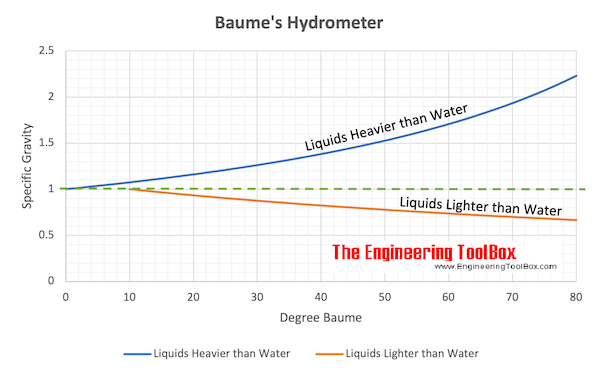
The difference between API and Baumé lies in their measurement scales and applications. API (American Petroleum Institute) gravity is a measure of the density of crude oil and other petroleum products, while Baumé is a scale used to measure the density of liquids, particularly in the context of chemistry and petrochemistry. The API scale is widely used in the oil and gas industry to determine the quality and characteristics of petroleum products, whereas the Baumé scale is used in various applications, including the measurement of sulfuric acid and other chemicals.
Density Measurement
The density of a liquid is a critical parameter in various industrial applications. In the case of API gravity, it is measured using a hydrometer, which is a device that measures the density of a liquid by its buoyancy. The Baumé scale, on the other hand, uses a Baumé hydrometer, which is specifically designed to measure the density of liquids in the range of 0 to 40 Baumé degrees. The key differences between the two scales are:
- The API scale measures density in degrees API, while the Baumé scale measures density in degrees Baumé.
- The API scale is used primarily in the oil and gas industry, whereas the Baumé scale is used in various applications, including chemistry and petrochemistry.
- The API scale is more precise and accurate than the Baumé scale, particularly at higher densities.
Industry Applications
The API and Baumé scales have different applications in various industries. The API scale is widely used in the oil and gas industry to determine the quality and characteristics of crude oil and other petroleum products. In contrast, the Baumé scale is used in various applications, including the measurement of sulfuric acid and other chemicals. The key differences between the two scales are:
- The API scale is used to determine the quality and characteristics of petroleum products, while the Baumé scale is used to measure the density of liquids.
- The API scale is more widely used in the oil and gas industry, whereas the Baumé scale is used in various applications, including chemistry and petrochemistry.
- The API scale is more relevant to the oil and gas industry, while the Baumé scale is more relevant to the chemical and petrochemical industries.
Measurement Techniques
The API and Baumé scales use different measurement techniques to determine the density of liquids. The API scale uses a hydrometer, which is a device that measures the density of a liquid by its buoyancy. The Baumé scale, on the other hand, uses a Baumé hydrometer, which is specifically designed to measure the density of liquids in the range of 0 to 40 Baumé degrees. The key differences between the two scales are:
- The API scale uses a hydrometer to measure density, while the Baumé scale uses a Baumé hydrometer.
- The API scale measures density at a specific temperature, while the Baumé scale measures density at a range of temperatures.
- The API scale is more precise and accurate than the Baumé scale, particularly at higher densities.
Chemical Properties
The API and Baumé scales have different chemical properties that affect their measurements. The API scale is affected by the viscosity ... and surface tension of the liquid, while the Baumé scale is affected by the temperature and pressure of the liquid. The key differences between the two scales are:
- The API scale is affected by the viscosity and surface tension of the liquid, while the Baumé scale is affected by the temperature and pressure of the liquid.
- The API scale is more sensitive to changes in temperature and pressure, while the Baumé scale is more sensitive to changes in viscosity and surface tension.
- The API scale is more relevant to the measurement of petroleum products, while the Baumé scale is more relevant to the measurement of chemicals and petrochemicals.
Standardization
The API and Baumé scales have different standardization procedures that affect their measurements. The API scale is standardized by the American Petroleum Institute, while the Baumé scale is standardized by the International Organization for Standardization. The key differences between the two scales are:
- The API scale is standardized by the American Petroleum Institute, while the Baumé scale is standardized by the International Organization for Standardization.
- The API scale has a more precise and accurate standardization procedure, while the Baumé scale has a more generalized standardization procedure.
- The API scale is more widely accepted in the oil and gas industry, while the Baumé scale is more widely accepted in the chemical and petrochemical industries.
Frequently Asked Questions (FAQs)
What is Degrees Baume and how does it relate to Relative Density?
The Degrees Baume is a unit of measurement used to express the density of a liquid in relation to the density of water. It is an important concept in various fields such as chemistry, physics, and engineering, where the relative density of a substance is crucial in determining its properties and behavior. The Degrees Baume scale is used to measure the density of liquids, and it is defined as the weight of a liquid per unit volume, with water being the reference point. The relative density of a liquid is then calculated by comparing its density to that of water, which is assigned a value of 1. This allows for the determination of the concentration of a solution and its buoyancy in water. The Degrees Baume scale is widely used in industries such as petroleum, chemical, and pharmaceutical, where the density and relative density of liquids are critical parameters in the production and processing of various products.
How does the Degrees Baume Calculator work and what are its applications?
The Degrees Baume Calculator is a tool used to calculate the relative density of a liquid based on its weight per unit volume. It uses the Degrees Baume scale to determine the density of a liquid and then calculates its relative density by comparing it to the density of water. The calculator is commonly used in various industries such as petroleum, chemical, and pharmaceutical, where the density and relative density of liquids are critical parameters in the production and processing of various products. The Degrees Baume Calculator is also used in laboratories and research institutions to determine the concentration of solutions and the buoyancy of liquids in water. Additionally, the calculator is useful in quality control and quality assurance applications, where the density and relative density of liquids must be accurately measured to ensure compliance with industry standards.
What is the relationship between Degrees Baume and lb/gal?
The Degrees Baume and lb/gal (pounds per gallon) are two units of measurement that are related to the density of a liquid. The Degrees Baume scale is used to measure the density of a liquid in relation to the density of water, while lb/gal is a unit of measurement that expresses the weight of a liquid per unit volume. The relationship between Degrees Baume and lb/gal is that they both measure the density of a liquid, but in different units. The Degrees Baume scale is commonly used in industries such as petroleum and chemical, while lb/gal is widely used in industries such as construction and manufacturing. The conversion between Degrees Baume and lb/gal can be made using a conversion factor, which allows for the equivalence of the two units to be established. This is important in applications where the density of a liquid must be accurately measured and expressed in different units.
How can the Degrees Baume Calculator be used to determine the concentration of a solution?
The Degrees Baume Calculator can be used to determine the concentration of a solution by measuring its relative density. The calculator uses the Degrees Baume scale to determine the density of the solution and then calculates its relative density by comparing it to the density of water. The relative density of the solution is then used to determine its concentration, which is expressed as a percentage or ratio of the solute to the solvent. The Degrees Baume Calculator is commonly used in laboratories and research institutions to determine the concentration of solutions, particularly in applications such as chemistry and pharmacology. The calculator is also used in quality control and quality assurance applications, where the concentration of solutions must be accurately measured to ensure compliance with industry standards. By using the Degrees Baume Calculator, users can quickly and accurately determine the concentration of a solution, which is essential in many industrial and scientific applications.
Deja una respuesta
Entradas Relacionadas