
What are the methods for measuring growth in a B2B SaaS company?

Measuring growth in a B2B SaaS company is critical for understanding performance, identifying opportunities, and making data-driven decisions. Unlike traditional businesses, SaaS companies rely on recurring revenue models, customer retention, and scalable solutions, which require unique metrics to evaluate success. Key performance indicators (KPIs) such as Monthly Recurring Revenue (MRR), Customer Acquisition Cost (CAC), and Churn Rate provide insights into financial health and operational efficiency. Additionally, tracking customer engagement, lifetime value (LTV), and expansion revenue can reveal deeper trends. This article explores the most effective methods for measuring growth in a B2B SaaS company, offering actionable strategies to optimize performance and drive long-term success.
What are the methods for measuring growth in a B2B SaaS company?
Measuring growth in a B2B SaaS company involves tracking key performance indicators (KPIs) that reflect the health and scalability of the business. These metrics help companies understand their progress, identify areas for improvement, and make data-driven decisions. Below are some of the most effective methods for measuring growth in this sector.
1. Monthly Recurring Revenue (MRR)
Monthly Recurring Revenue (MRR) is one of the most critical metrics for B2B SaaS companies. It represents the predictable revenue generated from subscriptions each month. Tracking MRR helps businesses understand their financial stability and growth trajectory.
| Component | Description |
|---|---|
| New MRR | Revenue from new customers. |
| Expansion MRR | Revenue from existing customers upgrading their plans. |
| Churned MRR | Revenue lost due to cancellations or downgrades. |
2. Customer Acquisition Cost (CAC)
Customer Acquisition Cost (CAC) measures the total cost of acquiring a new customer, including marketing and sales expenses. A lower CAC indicates efficient growth strategies, while a high CAC may signal the need for optimization.
| Element | Impact |
|---|---|
| Marketing Spend | Cost of campaigns and lead generation. |
| Sales Expenses | Salaries, tools, and other sales-related costs. |
3. Customer Lifetime Value (CLTV)
Customer Lifetime Value (CLTV) estimates the total revenue a company can expect from a single customer over their lifetime. A high CLTV relative to CAC indicates a sustainable business model.
| Factor | Description |
|---|---|
| Average Revenue Per User (ARPU) | Revenue generated per customer. |
| Customer Retention Rate | Percentage of customers retained over time. |
4. Churn Rate
Churn Rate measures the percentage of customers who cancel their subscriptions within a given period. A high churn rate can negatively impact growth and revenue, making it essential to monitor and address.
| Type | Impact |
|---|---|
| Customer Churn | Loss of customers. |
| Revenue Churn | Loss of revenue due to downgrades or cancellations. |
5. Net Promoter Score (NPS)
Net Promoter Score (NPS) gauges customer satisfaction and loyalty by asking how likely customers are to recommend the product or service. A high NPS indicates strong customer relationships and potential for organic growth.
| Score Range | Interpretation |
|---|---|
| 0-6 | Detractors (unhappy customers). |
| 7-8 | Passives (satisfied but unenthusiastic). |
| 9-10 | Promoters (loyal enthusiasts). |
How do you calculate growth rate in SaaS?

What is SaaS Growth Rate?
The SaaS growth rate measures how quickly a Software-as-a-Service company is expanding its revenue over a specific period. It is a critical metric for evaluating the health and scalability of a SaaS business. To calculate it, you need to compare the revenue from two different periods and determine the percentage increase or decrease.
- Identify the revenue for the current period (e.g., this month or quarter).
- Identify the revenue for the previous period (e.g., last month or quarter).
- Use the formula: Growth Rate = ((Current Revenue - Previous Revenue) / Previous Revenue) 100.
Why is SaaS Growth Rate Important?
The SaaS growth rate is crucial because it helps businesses understand their performance and scalability. A high growth rate indicates strong market demand and effective business strategies, while a low or negative growth rate may signal issues that need addressing.
- Investor confidence: A strong growth rate attracts investors and funding.
- Strategic planning: It helps in setting realistic goals and allocating resources effectively.
- Market positioning: It provides insights into how well the company is competing in the market.
How to Calculate Monthly Recurring Revenue (MRR) Growth Rate
Monthly Recurring Revenue (MRR) is a key metric for SaaS companies, and calculating its growth rate helps track revenue stability and expansion. The MRR growth rate focuses on the recurring revenue generated each month.
- Determine the MRR for the current month.
- Determine the MRR for the previous month.
- Use the formula: MRR Growth Rate = ((Current MRR - Previous MRR) / Previous MRR) 100.
How to Calculate Annual Recurring Revenue (ARR) Growth Rate
Annual Recurring Revenue (ARR) is another vital metric for SaaS businesses, especially for companies with annual subscription models. The ARR growth rate provides a long-term view of revenue trends.
- Calculate the ARR for the current year.
- Calculate the ARR for the previous year.
- Use the formula: ARR Growth Rate = ((Current ARR - Previous ARR) / Previous ARR) 100.
Factors Influencing SaaS Growth Rate
Several factors can impact the SaaS growth rate, including customer acquisition, retention, and pricing strategies. Understanding these factors helps businesses optimize their growth.
- Customer acquisition: Increasing the number of new customers boosts growth.
- Customer retention: Reducing churn ensures steady revenue growth.
- Pricing strategy: Adjusting pricing models can impact revenue and growth rate.
What is the 3 3 2 2 2 rule of SaaS?

What is the 3 3 2 2 2 Rule of SaaS?
The 3 3 2 2 2 rule is a framework used in the SaaS (Software as a Service) industry to guide businesses in achieving sustainable growth and operational efficiency. It focuses on balancing key metrics and priorities to ensure long-term success. The rule is broken down into specific components that address different aspects of a SaaS business, such as customer acquisition, retention, and revenue optimization.
Understanding the 3 3 2 2 2 Rule Components
The 3 3 2 2 2 rule consists of five distinct components, each representing a critical area of focus for SaaS companies. These components are designed to help businesses allocate resources effectively and maintain a balanced approach to growth. Below is a detailed breakdown:
- 3x Customer Acquisition: Focus on acquiring three times the number of customers needed to break even. This ensures a buffer for churn and unexpected losses.
- 3x Customer Retention: Aim to retain three times the number of customers compared to the industry average. Retention is critical for recurring revenue.
- 2x Revenue Growth: Strive to double your revenue annually. This is a common benchmark for high-growth SaaS companies.
- 2x Operational Efficiency: Improve operational processes to double efficiency, reducing costs while maintaining quality.
- 2x Team Productivity: Enhance team productivity by implementing tools, training, and workflows that double output without overburdening employees.
Why is the 3 3 2 2 2 Rule Important for SaaS Companies?
The 3 3 2 2 2 rule is crucial for SaaS companies because it provides a structured approach to managing growth and sustainability. By focusing on these key areas, businesses can avoid common pitfalls such as overextending resources or neglecting customer retention. The rule emphasizes the importance of balancing growth with operational efficiency, ensuring that companies can scale effectively without compromising quality or customer satisfaction.
How to Implement the 3 3 2 2 2 Rule in Your SaaS Business
Implementing the 3 3 2 2 2 rule requires a strategic approach and careful planning. Below are steps to integrate this framework into your SaaS business:
- Set Clear Goals: Define specific targets for customer acquisition, retention, revenue growth, operational efficiency, and team productivity.
- Track Key Metrics: Use analytics tools to monitor progress in each area and identify areas for improvement.
- Invest in Technology: Leverage automation and SaaS tools to streamline operations and enhance productivity.
- Focus on Customer Success: Build a robust customer success team to improve retention and reduce churn.
- Regularly Review Performance: Conduct quarterly reviews to assess progress and adjust strategies as needed.
Common Challenges in Applying the 3 3 2 2 2 Rule
While the 3 3 2 2 2 rule offers a clear framework, SaaS companies often face challenges in its implementation. These challenges can hinder progress and require proactive solutions:
- Resource Allocation: Balancing investments across acquisition, retention, and operations can be difficult, especially for startups with limited budgets.
- Data Accuracy: Inaccurate or incomplete data can lead to misguided decisions and ineffective strategies.
- Team Alignment: Ensuring all teams are aligned with the rule’s objectives requires clear communication and collaboration.
- Market Competition: High competition can make it challenging to achieve 3x customer acquisition and retention goals.
- Scaling Operations: Doubling operational efficiency and team productivity often requires significant changes in processes and tools.
Examples of SaaS Companies Using the 3 3 2 2 2 Rule
Several successful SaaS companies have adopted the 3 3 2 2 2 rule to drive growth and efficiency. These examples highlight how the rule can be applied in real-world scenarios:
- Company A: Achieved 3x customer acquisition by leveraging targeted marketing campaigns and partnerships.
- Company B: Improved retention by implementing a customer success program that reduced churn by 30%.
- Company C: Doubled revenue growth by expanding into new markets and upselling to existing customers.
- Company D: Enhanced operational efficiency by automating repetitive tasks and optimizing workflows.
- Company E: Boosted team productivity by investing in training and collaboration tools.
How to scale a B2B SaaS business?

1. Focus on Customer Success and Retention
Scaling a B2B SaaS business requires a strong emphasis on customer success and retention. Happy customers are more likely to renew their subscriptions and recommend your product to others. To achieve this:
- Implement a robust onboarding process to ensure customers understand and utilize your product effectively.
- Provide ongoing customer support through multiple channels, such as chat, email, and phone.
- Regularly collect and analyze customer feedback to identify areas for improvement and address pain points.
2. Optimize Your Sales and Marketing Strategies
Effective sales and marketing strategies are critical for scaling a B2B SaaS business. You need to attract and convert high-quality leads while maximizing your return on investment. Consider the following steps:
- Leverage account-based marketing (ABM) to target high-value accounts with personalized campaigns.
- Invest in content marketing to establish thought leadership and build trust with your audience.
- Use data-driven insights to refine your sales funnel and improve conversion rates.
3. Build a Scalable Product Infrastructure
To scale your B2B SaaS business, your product must be able to handle increased demand without compromising performance. This requires a scalable infrastructure that supports growth. Key actions include:
- Adopt cloud-based solutions to ensure flexibility and scalability as your user base grows.
- Regularly update and optimize your software architecture to improve efficiency and reduce downtime.
- Implement automation tools to streamline processes and reduce manual workloads.
4. Expand Your Market Reach
Scaling a B2B SaaS business often involves entering new markets or expanding your presence in existing ones. To achieve this, you need a clear market expansion strategy. Steps to consider:
- Conduct thorough market research to identify new opportunities and understand local regulations.
- Localize your product and marketing materials to resonate with regional audiences.
- Partner with local distributors or resellers to accelerate your market entry.
5. Invest in Talent and Company Culture
As your B2B SaaS business grows, so does the need for a skilled and motivated team. Building a strong company culture and investing in talent are essential for sustainable scaling. Focus on:
- Hiring top-tier talent with expertise in areas like product development, sales, and customer success.
- Fostering a collaborative and inclusive work environment to retain employees and boost productivity.
- Providing ongoing training and development opportunities to help your team grow alongside the business.
What metrics are important for a B2B SaaS company to be successful in today's market?
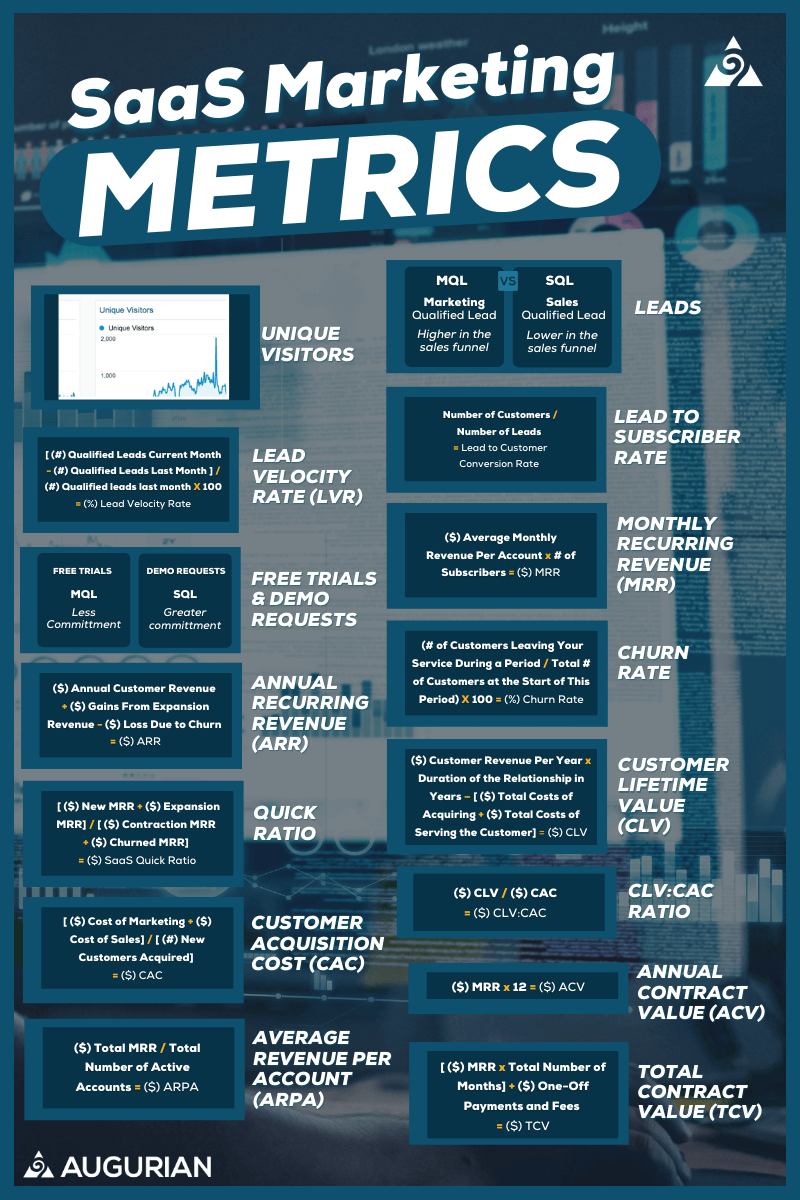
Customer Acquisition Cost (CAC)
Customer Acquisition Cost (CAC) is a critical metric for B2B SaaS companies as it measures the cost of acquiring a new customer. This metric helps businesses understand how much they are spending to attract each customer and whether their marketing and sales strategies are cost-effective. To calculate CAC, divide the total sales and marketing expenses by the number of new customers acquired during a specific period.
- Track marketing and sales expenses: Include all costs related to advertising, salaries, and tools used for customer acquisition.
- Analyze CAC trends: Monitor changes over time to identify inefficiencies or improvements in your strategies.
- Compare CAC with customer lifetime value (LTV): Ensure that the cost of acquiring a customer is significantly lower than the revenue they generate over time.
Monthly Recurring Revenue (MRR)
Monthly Recurring Revenue (MRR) is a key metric for SaaS companies as it represents the predictable revenue generated from subscriptions each month. This metric is essential for understanding the financial health and growth trajectory of the business. MRR helps in forecasting future revenue and making informed decisions about scaling operations.
- Calculate MRR: Multiply the number of active subscribers by the average revenue per user (ARPU).
- Monitor MRR growth: Track increases or decreases to assess the effectiveness of your sales and retention strategies.
- Segment MRR: Break down MRR by customer type, plan, or region to identify high-performing segments.
Churn Rate
Churn Rate measures the percentage of customers who cancel their subscriptions within a given period. A high churn rate can indicate dissatisfaction with the product or service, making it a crucial metric for SaaS companies to monitor. Reducing churn is vital for maintaining steady revenue growth and improving customer retention.
- Calculate churn rate: Divide the number of customers lost during a period by the total number of customers at the start of that period.
- Identify reasons for churn: Conduct surveys or interviews to understand why customers are leaving.
- Implement retention strategies: Offer incentives, improve customer support, or enhance product features to reduce churn.
Customer Lifetime Value (LTV)
Customer Lifetime Value (LTV) estimates the total revenue a business can expect from a single customer over the duration of their relationship. This metric is crucial for understanding the long-term value of customers and making informed decisions about customer acquisition and retention strategies.
- Calculate LTV: Multiply the average revenue per user (ARPU) by the average customer lifespan.
- Compare LTV with CAC: Ensure that the lifetime value of a customer is significantly higher than the cost of acquiring them.
- Increase LTV: Focus on upselling, cross-selling, and improving customer satisfaction to extend the customer lifespan.
Net Promoter Score (NPS)
Net Promoter Score (NPS) is a metric used to gauge customer satisfaction and loyalty by asking customers how likely they are to recommend the product or service to others. A high NPS indicates strong customer loyalty and satisfaction, which can lead to increased referrals and organic growth.
- Calculate NPS: Subtract the percentage of detractors (customers who wouldn't recommend) from the percentage of promoters (customers who would recommend).
- Analyze feedback: Use customer comments to identify areas for improvement.
- Improve NPS: Address customer concerns, enhance product features, and provide exceptional customer service to boost your score.
Frequently Asked Questions (FAQ)
What are the key metrics used to measure growth in a B2B SaaS company?
Measuring growth in a B2B SaaS company involves tracking several key metrics that provide insights into performance and scalability. Some of the most important metrics include Monthly Recurring Revenue (MRR), which reflects predictable revenue streams, and Annual Recurring Revenue (ARR), which annualizes MRR for a broader perspective. Additionally, Customer Acquisition Cost (CAC) helps determine the cost of acquiring new customers, while Customer Lifetime Value (CLTV) measures the total revenue a company can expect from a single customer. Other critical metrics include churn rate, which indicates customer retention, and net revenue retention (NRR), which shows how well a company retains and grows revenue from existing customers.
How does MRR contribute to understanding growth in a B2B SaaS company?
Monthly Recurring Revenue (MRR) is a cornerstone metric for B2B SaaS companies because it provides a clear picture of predictable and stable income. By tracking MRR, companies can assess their ability to generate consistent revenue over time. Growth in MRR indicates that the company is successfully acquiring new customers, upselling to existing ones, or reducing churn. Additionally, MRR can be broken down into components like new MRR (from new customers), expansion MRR (from upsells or cross-sells), and churned MRR (lost due to cancellations). This granularity helps identify specific areas driving or hindering growth.
Why is churn rate a critical factor in measuring B2B SaaS growth?
The churn rate is a vital metric for B2B SaaS companies because it directly impacts revenue and customer retention. A high churn rate indicates that customers are leaving the platform, which can negate the gains from new customer acquisition. Conversely, a low churn rate suggests strong customer satisfaction and loyalty. To measure growth effectively, companies must not only focus on acquiring new customers but also on retaining existing ones. Reducing churn through improved customer support, product enhancements, and personalized engagement strategies can significantly boost long-term growth and profitability.
How do CAC and CLTV help in evaluating the sustainability of growth in B2B SaaS?
Customer Acquisition Cost (CAC) and Customer Lifetime Value (CLTV) are essential metrics for evaluating the sustainability of growth in a B2B SaaS company. CAC measures the cost of acquiring a new customer, including marketing and sales expenses, while CLTV estimates the total revenue a customer will generate during their relationship with the company. A healthy ratio of CLTV to CAC (typically 3:1 or higher) indicates that the company is spending efficiently to acquire customers who will generate significant revenue over time. Monitoring these metrics ensures that growth is not only rapid but also sustainable and profitable in the long run.
Deja una respuesta
Entradas Relacionadas